Aluminum CNC Machining: Processes, Challenges, & Benefits [2026]
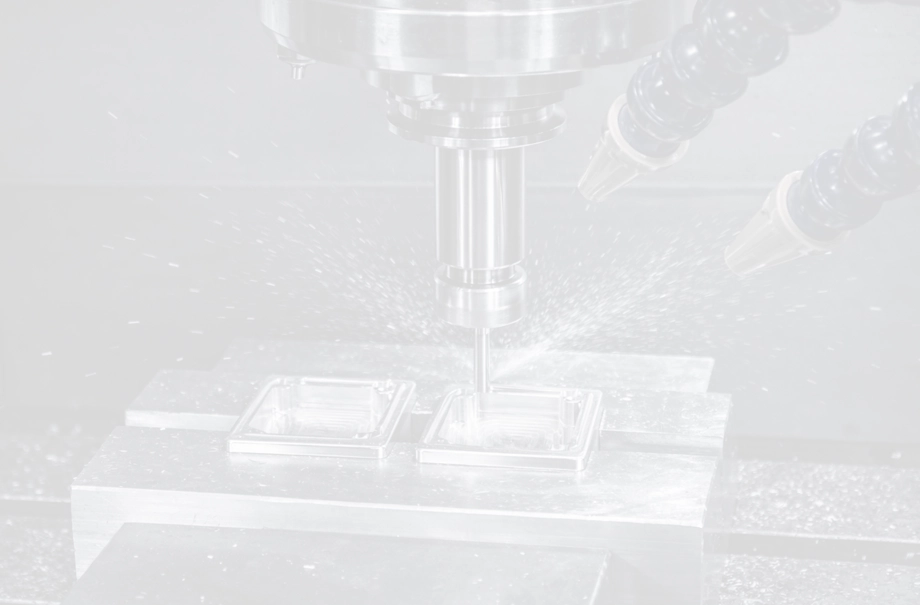
Aluminum CNC Machining is a revolutionary way to make things. Computer-controlled machines precisely cut and shape aluminum alloys into custom parts. This method combines the natural benefits of the material—its low weight, high strength, and ease of machining—with digital accuracy to create parts that are perfectly accurate. This technology is used by many industries, from aerospace to medical devices, to make everything from prototypes to full-scale production runs. It solves important problems like weight reduction, corrosion resistance, and accurate measurements that are hard to solve with traditional methods.
Understanding Aluminum CNC Machining: Process and Materials
Why Aluminum Dominates Precision Manufacturing
Aluminum alloys are now the material of choice for engineers who need to make designs that are light without sacrificing strength. The metal naturally resists corrosion, which makes parts last longer in tough settings. Its thermal conductivity also helps electronics and car systems get rid of heat. Machinability is what makes aluminum unique—cutting forces are still lower than in steel, which means that production steps can be completed faster and tools wear out less quickly.
Our engineering team often helps clients switch from heavy materials to lighter ones. Compared to steel versions, the weight savings are usually between 60 and 70%. In direct terms, this means better fuel economy for cars and higher cargo capacities for flight parts.
The Complete CNC Workflow
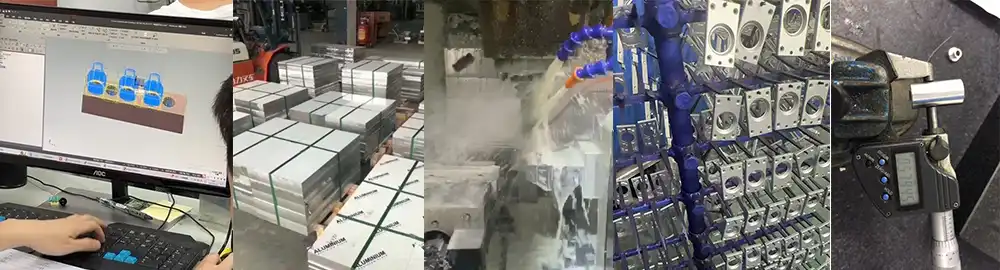
The process starts with CAD modeling, where design engineers make the part they want to make in three dimensions. During the quotation phase, our technical staff looks over these drawings to find any problems that might come up with production before the metal cutting starts. After that, CAM programming turns digital designs into machine instructions that tell the machine how to move the tools, set the cutting paths, and speed up or slow down the spindle.
Milling removes material with spinning cutters to make surfaces with complicated shapes, pockets, and features. Multi-axis machines can handle complex angles and undercuts in a single setup, so there are no mistakes made when repositioning the parts. On CNC lathes, turning processes make cylinder-shaped parts, making it possible to achieve concentricity tolerances that are important for shaft systems and rotating parts.
Finishing the surface completes the work. Anodizing adds a protective oxide layer that makes the metal more resistant to rust and lets you change the color. Chemical film processes make coats that are thinner and better for parts that need to be accurate in terms of their dimensions. Bead blasting makes matte finishes that are uniform and hide small flaws in the surface.
Common Aluminum Alloys and Their Applications
The choice of material has a direct effect on how well the machine works and how well the part works. The 6061 alloy is the workhorse of the industry because it is strong, easy to shape, and reacts well to anodizing. Procurement managers like how easy it is to get and how cheap it is for general structure uses, bracket systems, and covers.
When projects need more strength, 7075 aluminum has tensile qualities that are similar to some steel types. Aerospace engineers use this alloy for parts that need to be strong under a lot of stress, but they have to use more aggressive cutting parameters to make it work. When anodized, the material reacts a little differently than 6061, sometimes creating darker gray finishes.
6082 aluminum has a 10-15% higher tensile strength than 6061 aluminum, making it better for uses that need better rust protection and weldability. European customers often ask for this alloy to be used in building frames and marine equipment. From what we've seen, 6082 works best in open settings where it is constantly exposed to the elements.
Medical device makers often choose 2024 aluminum for parts of instruments that need to be very resistant to wear. The alloy is easy to work with, but it can't be anodized to look as nice as 6000-series materials.
Tolerance Capabilities and Quality Standards
On important parts like bores and mating surfaces, Precision Aluminum CNC Machining frequently achieves tolerances of 0.005mm. Standard ISO 2768-m standards are used for non-critical measurements, which makes sure that cost-effectiveness and functionality are both met. Our quality records include material certifications that link aluminum stock to mill test reports, data from coordinate measuring machines used for dimension checks, and confirmation of the surface finish.
Challenges and Solutions in Aluminum CNC Machining
Managing Material Characteristics During Production
Because aluminum is not as hard as steel, it needs to be machined with certain care. The material often sticks to the cutting edges, making a built-up edge that hurts the surface finish and accuracy of the measurements. To fix this, we've optimized the shape of our tools so that they have sharp cutting edges and smooth rake faces that help chips fall off. Choosing the right cutting fluid is very important. High-pressure coolant systems remove chips from the cutting zone while controlling the effects of heat.
When high-speed machining, heat is made, which causes thermal expansion. This can affect the stability of dimensions, especially in structures with thin walls. Our method uses both water cooling and special toolpaths that spread the heat evenly across the piece being worked on. Between rough and finish machining, stress-relieving heat processes get rid of any remaining stresses that could lead to distortion after cutting.
Achieving Superior Surface Quality
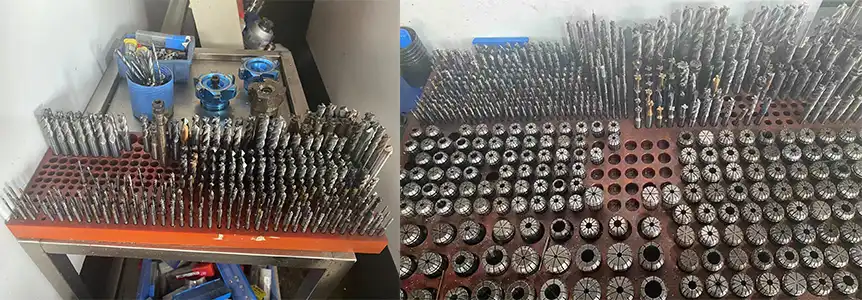
The needs for surface finish are very different depending on the purpose. Finishes with a Ra of 3.2µm might work on electronic enclosures, but hydraulic valve bodies need Ra of 0.8µm or higher. The most important thing is choosing the right tool. For example, carbide end mills with adjustable helix angles cut down on chatter vibrations that leave patterns on machined surfaces. To keep tool deflection to a minimum, feed rates and spindle speeds need to be carefully balanced when optimizing cutting parameters.
Anodizing makes surface flaws stand out even more, so pre-treatment is very important for artistic uses. Before anodizing, we machine parts to finer finishes, usually Ra 1.6µm or better, to make sure the oxide layer forms evenly. For better wear resistance, hard-coat anodizing makes layers that are thicker, but the dimensions will grow by 0.025 to 0.050 mm, which needs to be taken into account during the design review process.
Comparing Manufacturing Methods
A lot of the time, procurement managers compare Aluminum CNC Machining to other options. Casting is a cheap way to make a lot of near-net shapes, but it's hard to work with tight standards and thin wall sections. Because cast structures are porous, pressure-containing parts can't be trusted to work properly.
It is not possible to make complicated shapes with subtractive methods, but additive manufacturing can make them. However, the surface finish and material properties are not as good as CNC-machined parts. Larger parts take a lot longer to build, so it can only be used for low-volume production.
For enclosures and brackets, sheet metal fabrication is cheaper, but the shapes that can be bent are still the most complex. CNC cutting works best when there are complex shapes, close tolerances, and better material qualities that make the investment worthwhile.
Benefits of Aluminum CNC Machining for Global B2B Procurement
Weight Reduction Without Performance Compromise
Industries that want to reduce their weight find that CNC components made of aluminum help them right away. When builders replace steel brackets with aluminum ones, they lower the mass of the car, which makes it lighter and easier to drive. Battery covers for electric cars can get longer ranges by reducing their weight while still being safe in case of a crash.
Manufacturers of robotics like how strong aluminum is compared to its weight. This is especially useful in articulated arm systems, where less inertia means faster positioning and better energy economy. Medical equipment makers choose aluminum for portable diagnostic tools because it makes them lighter and more durable without losing portability.
Rapid Prototyping and Production Flexibility
Product creation timelines are getting shorter all the time, so manufacturers need to be able to respond quickly. Our prototype production usually ends within 3–7 days, which lets us test the design before committing to making the tools. Our technical staff and the design teams for our clients have direct engineering talks. This cuts down on communication problems that cause projects to take longer than planned.
From the prototype phase to low-volume production runs, everything goes smoothly. We can handle batches of one piece or thousands of pieces without having to buy special tools. This freedom is helpful for companies that make specialized tools, research institutions, and startups that want to make sure there is a market for their product before they start making more of it.
Cost Efficiency Across Project Lifecycles
When the total project costs are looked at, aluminum is more cost-effective than steel because of its lower material costs. When compared to steel, lower cutting forces cut machine cycle times by 30 to 40 percent, which lowers the cost of making each part. Tool life is greatly increased, which lowers the cost of replacement parts and the time needed to set up for tool changes.
Aluminum blocks and plate stock are always available through global supply chains. This keeps production schedules from being slowed down by lack of materials. Recycling infrastructure makes sure that old things keep their value, which lowers the cost of raw materials and helps meet sustainability goals.
Quality Assurance and Supplier Evaluation
To find skilled machine partners, you need to look at more than just price quotes. Material traceability paperwork proves that aluminum alloys have the right chemical makeup and mechanical qualities. Some of the certifications we have are for ISO 9001 quality management systems, FDA compliance for medical device parts, and RoHS/REACH compliance for electronic applications.
Precision providers are different from general machine shops because they can do inspections. Coordinate measuring tools check the accuracy of dimensions in complicated shapes, and surface roughness testers give an unbiased measure of the quality of the finish. We send full inspection reports with the first articles we receive to show that they meet engineering specifications.
Value-added services make supply chains run more smoothly. Assembly tasks take machined parts and bought tools and put them together to make subassemblies that are ready to be installed. Anodizing, chemical film treatments, and custom packing make it easier for clients to handle parts while keeping them safe during foreign shipping.
How to Choose the Right Aluminum CNC Machining Supplier
Essential Evaluation Criteria
A manufacturing capacity review starts with a list of all the equipment that is available. Multi-axis machining centers can handle complex shapes, and precision wheels let you work with very tight tolerances. Adding automation says that it will be easier to handle repeat sales without lowering the quality.
Manufacturing partners are different from transactional vendors when it comes to technical communication. During the quotation process, our engineering staff looks over client drawings to find design features that make production harder or more expensive. Recommendations on how to loosen tolerances for non-critical measurements, change materials, and make design changes show that you have the knowledge to avoid problems later on.
Response time is very important during the planning stages of a project. We keep our quote response time at 24 hours for normal enquiries because we know that procurement managers are busy and have to weigh the pros and cons of several suppliers.
Navigating Prototype-to-Production Transitions
Before committing to larger production quantities, the supplier uses the first prototype orders for Aluminum CNC Machining to verify that all technical requirements can be met. When evaluating a sample, the dimensional accuracy against specifications, surface finish quality, material certification documents, and machining consistency should all be carefully reviewed. As part of our process, we perform Design for Manufacturability (DFM) analysis during the prototype phase of Aluminum CNC Machining projects to optimize designs, improve machining efficiency, and reduce potential issues before investing in production tooling. This approach ensures reliable prototypes, precise aluminum components, and smoother transitions from development to full-scale manufacturing.
Small-batch trial orders show if a provider is consistent across multiple pieces, which is useful between samples and full production. Changes in quality between the first products and later ones show that the process control is mature. During production runs, we use statistical process control to keep an eye on important dimensions and make proactive changes to the machining parameters.
Agreements for contract manufacturing spell out exactly what is expected in terms of wait times, quality standards, and price. Flexibility clauses protect both parties from scope creep while allowing technical changes that happen a lot during product development. Our standard agreements include fast remanufacturing clauses. If you report a quality problem within 30 days, you'll get replacement parts within a week, and we'll pay for the shipping.
Future Trends and Innovations in Aluminum CNC Machining [2026 and Beyond]
Technology Integration and Smart Manufacturing
CNC operations are changing because of AI applications that use adaptive machining algorithms to change cutting parameters in real time based on vibration sensors and sound monitoring. Predictive maintenance systems look at data about how well machines are working and plan when to replace parts before they break down and stop production.
Internet of Things connection lets clients around the world watch things from afar. We're setting up tools that will let engineers see the state of production in real time, look at quality data while parts are being machined, and be notified when parts are finished. Being clear about performance promises makes things less unclear and gives proof for quality management systems.
Hybrid Manufacturing Approaches
When you combine additive and subtractive methods, you can make new designs. Metal deposition creates complicated internal shapes or adds material to parts that already exist. Next, CNC finishing processes get the final tolerances. Conformal cooling ducts in tools and combined features that can't be made with standard machining alone are some of the uses.
Sustainability and Material Advances
Concerns for the environment push the development of aluminum alloys toward making them easier to machine and using recovered materials. New formulations lower cutting forces even more while keeping mechanical qualities the same. This means that less energy is used during production. Closed-loop recycling systems take machine chips and turnings and put them back into supply chains with little damage to the quality.
Just-in-time manufacturing models cut down on the cost of keeping inventory and speed up lead times. We're adding more space just for fast-turnaround sales because we know that product lifecycles are getting shorter and the need for customization is growing. Advanced planning systems coordinate the buying of materials, the scheduling of machines, and logistics so that parts get to the right place at the right time.
Conclusion
Aluminum CNC Machining is becoming more and more popular as the best way to make precise parts for businesses that need parts that are light, sturdy, and accurate in size. The technology is adaptable enough to handle projects from the first trials to full production runs, and it can handle changes in engineering without requiring huge investments in tools. New developments in material science and automation in manufacturing make Aluminum CNC Machining a good choice for new uses in electric vehicles, renewable energy systems, and next-generation electronics. In competitive global markets where product performance and time-to-market make the difference, choosing production partners that can work together on technical issues, maintain quality, and handle projects quickly is key to success.
FAQ
What tolerances can aluminum CNC machining achieve consistently?
Standard output tolerances are based on ISO 2768-m standards and are good for most practical needs. ±0.005mm accuracy is reached for important features like bearing bores or precision mating surfaces by using high-precision tools for multiple stages of cutting. Our quality systems check tolerances with calibrated measuring tools that can be traced back to national standards. This gives us proof that the dimensions are correct.
How does alloy selection impact project costs and timelines?
Alloys that are widely used, like 6061, are easy to find and make, which keeps costs low and wait times short. Specialty alloys like 7075 or 2024 may take longer to find and use more aggressive cutting parameters, which makes machine cycle times longer. We help choose the materials during the design review process, making sure that performance needs are met while also keeping the project's budget and schedule in mind.
Can thin-walled aluminum parts be machined without distortion?
To keep thin-wall parts from deflecting and warping, they need special ways to be fixed and machined. As part of our method, we use stress-relieving heat treatment, optimized toolpaths that spread cutting forces out evenly, and coolant systems to control the temperature. It is possible to have wall thicknesses as low as 0.5 mm if the design shape provides enough stiffness during machining.
Partner with RYH for Your Precision Aluminum CNC Machining Needs
RYH has 16 years of experience making custom CNC parts for customers around the world in the medical, aircraft, automobile, and industrial equipment industries. Our engineering team talks to your design team directly, so there is no miscommunication that leads to mistakes in production and project delays. We keep the tight tolerances and high surface quality that your uses need, from fast prototyping that can be done in 3–7 days to large-scale production. As an expert Aluminum CNC Machining company, we offer full material certifications, inspection records, and value-added services like anodizing and assembly. Get in touch with our team at bill@bldmachining.com to talk about the details of your project and experience the quick technical support that turns supply relationships into engineering partnerships.
References
1. Machinery's Handbook, 31st Edition: A Reference Book for the Mechanical Engineer, Designer, Manufacturing Engineer, Draftsman, Toolmaker, and Machinist (Industrial Press, 2020)
2. ASM Handbook Volume 16: Machining—Comprehensive Coverage of Machining Processes, Equipment, and Tooling (ASM International, 2021)
3. Davis, J.R., ed., Aluminum and Aluminum Alloys: Technical Guide to Properties, Selection, and Applications (ASM International, 2018)
4. Kalpakjian, S. and Schmid, S.R., Manufacturing Engineering and Technology, 8th Edition (Pearson Education, 2022)
5. International Organization for Standardization, ISO 2768-1:1989 General Tolerances—Part 1: Tolerances for Linear and Angular Dimensions Without Individual Tolerance Indications (ISO Standards, 1989)
6. Society of Manufacturing Engineers, CNC Programming Handbook: A Comprehensive Guide to Practical CNC Programming, 4th Edition (SME Publications, 2019)