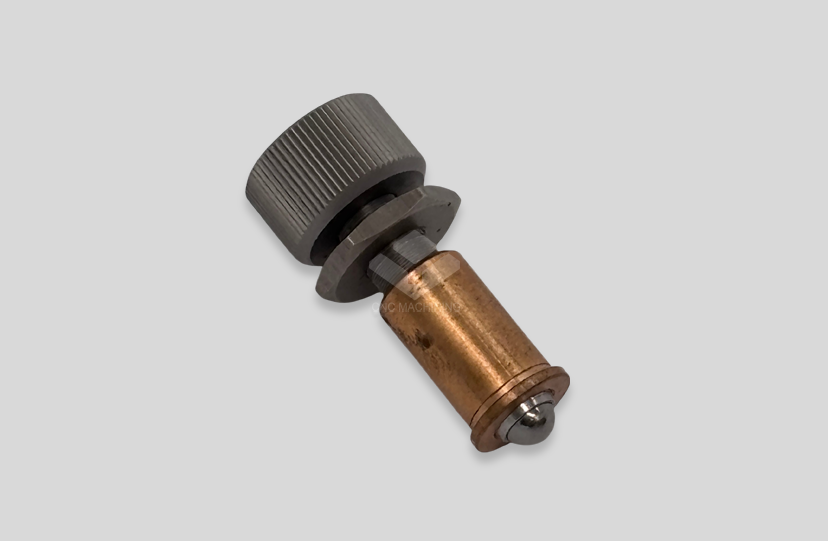
A Deep Dive into Precision Machined Components and Their Industrial Benefits
Precision Machined Components are the foundation of modern manufacturing success. They provide the exact dimensions and surface integrity needed for important industrial uses. These carefully made parts make engineering plans a reliable, repeatable reality. They are used in everything from life-saving medical devices to high-performance flight systems. If you choose precision machining, the parts you buy will be made to standards as low as ±0.005mm, which means they will work the same way after thousands of production runs. Knowing how these parts work, where they do their best work, and where to get them can have a huge effect on the success, schedule, and bottom line of your project.
Introduction
In today's highly competitive business world, the quality of the parts that make up a product often makes the difference between its success and failure. Precision Machined Components provide the highest level of precision and dependability that modern production processes need. This book is written for B2B procurement managers, mechanical engineers, and OEM clients who want to learn about the basics of precision cutting, how it can be used in the real world, and smart ways to buy things.
We've seen how the right machine partner can change the results of a project over the years, working with companies that make industrial equipment, medical devices, cars, and spacecraft. By understanding what these parts can do and how they can help, decision-makers can improve product quality, make supply chains more efficient, and cut costs in a way that can be measured. If you know how precision cutting works, you can work with specialized suppliers who can make custom and standard parts that fit your exact industrial needs, whether you're making samples for a new medical device or increasing production for car parts.
Understanding Precision Machined Components
What Defines Precision Machining
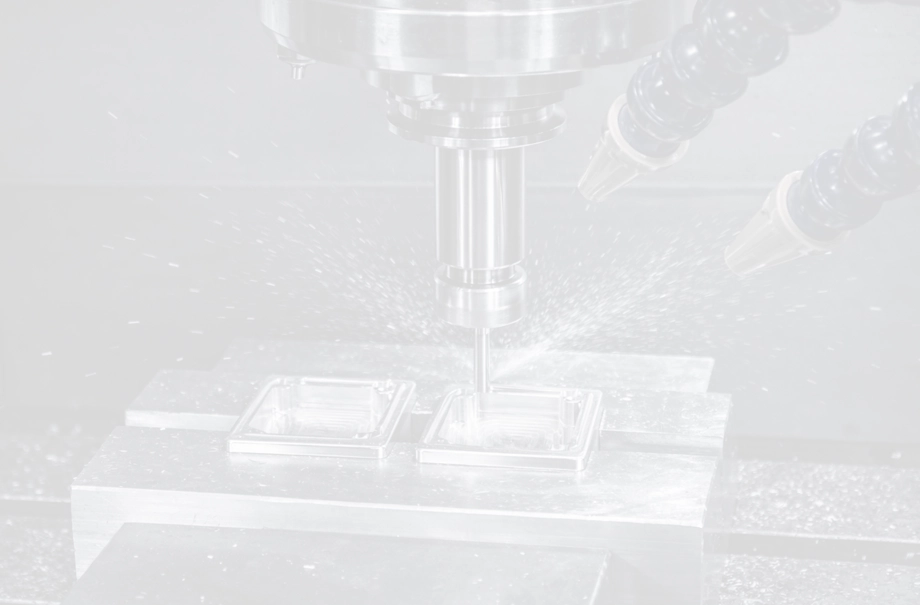
Precision Machined Components are designed parts that are made to very specific standards that can't be met by regular cutting. The difference is in the accuracy levels: regular parts may be able to hold ±0.1mm, but precision parts usually get to ±0.01mm or better. This level of accuracy is very important when parts need to fit properly into complicated assemblies or work well in tough circumstances. This accuracy comes from Computer Numerical Control technology, which uses coded software to tell multi-axis milling and turning centers how to remove material with microscopic accuracy. This way, human mistakes that could affect important measurements are not possible.
Material Selection and Performance Impact
The choice of material has a direct effect on both the performance of the parts and the cost of the job. Aerospace-grade aluminum alloys, such as 6061 and 7075, have very high rates of strength to weight, which makes them perfect for uses where reducing mass is important. Grades 304 and 316 stainless steel are better at keeping medical tools and food processing equipment from rusting. Titanium orthopedic devices are very strong and biocompatible, and high-performance plastics like PEEK can handle high temperatures and chemicals in the chip manufacturing process. To choose the best material, you have to balance its mechanical properties, environmental factors, legal requirements, and cost. This is a talk that would be much more productive if it were held directly between engineers.
CNC Machining Processes and Tolerance Control
Several main methods are used in modern precision manufacturing of Precision Machined Components. Each one is best for a certain shape or set of needs. CNC milling is great at using rotating cutting tools to make complicated shapes and pockets, while turning processes use rotating workpieces to make cylindrical features. Multi-axis capabilities, especially 5-axis machining, make it possible to produce complex angles and detailed internal features that would not be possible with standard 3-axis equipment. Depending on the application, the required surface finish typically ranges from Ra 0.8 to 3.2 microns. To consistently meet these requirements, Coordinate Measuring Machines are used for process verification, along with statistical process control to monitor capability indicators such as CPK values and ensure that dimensions remain stable over time.
Types and Applications of Precision Machined Components
Component Categories and Industry Examples
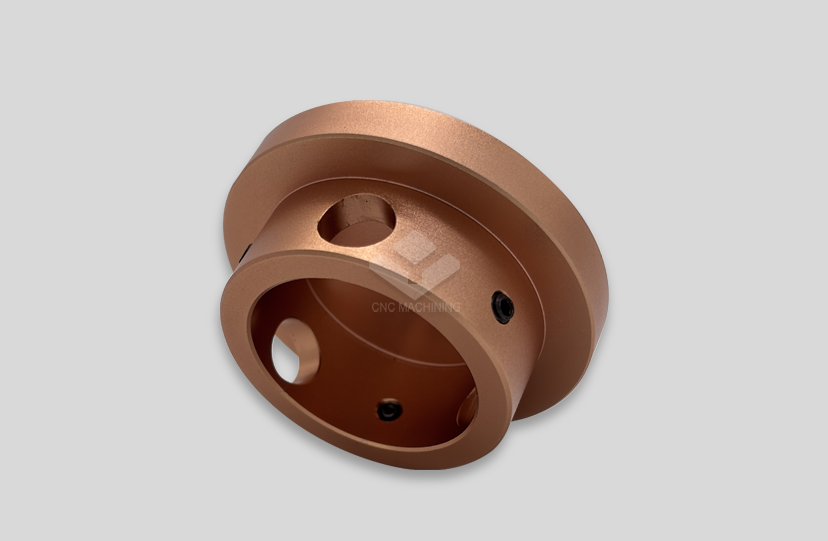
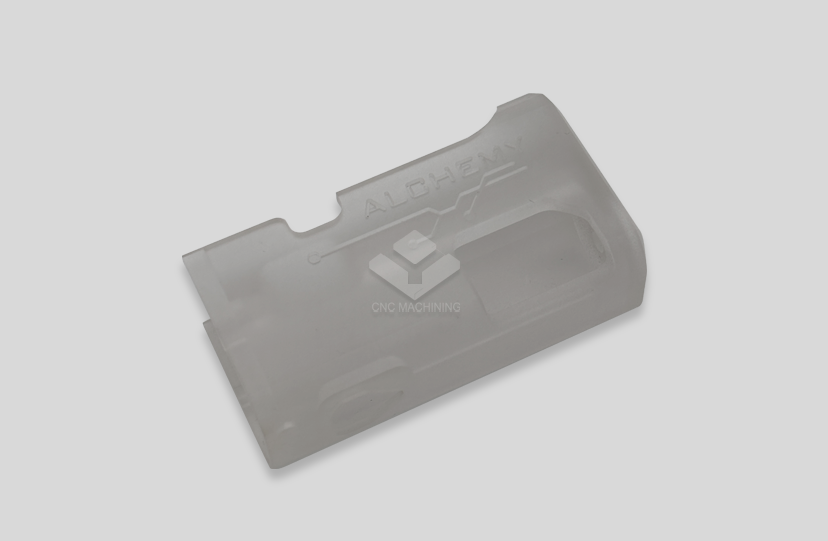
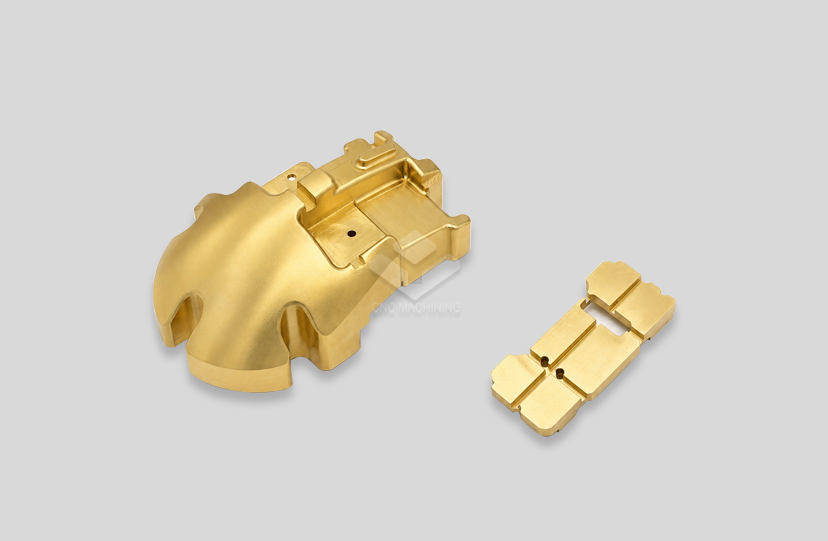
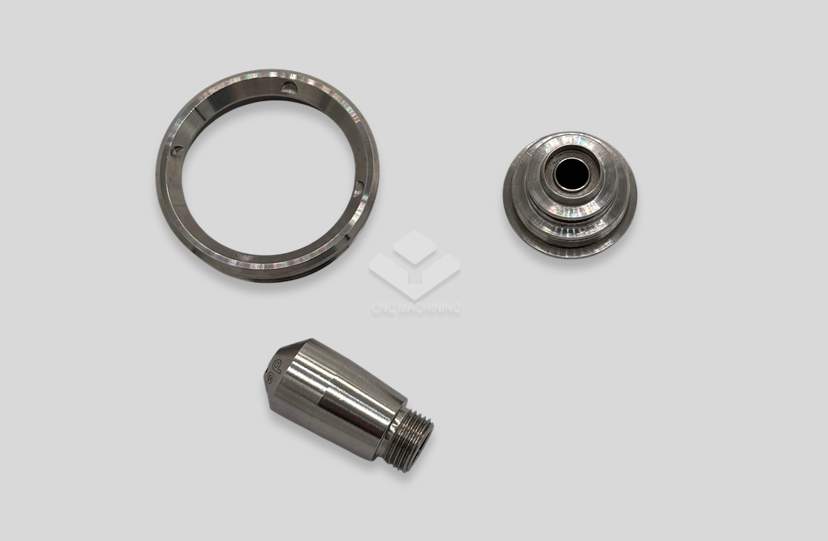
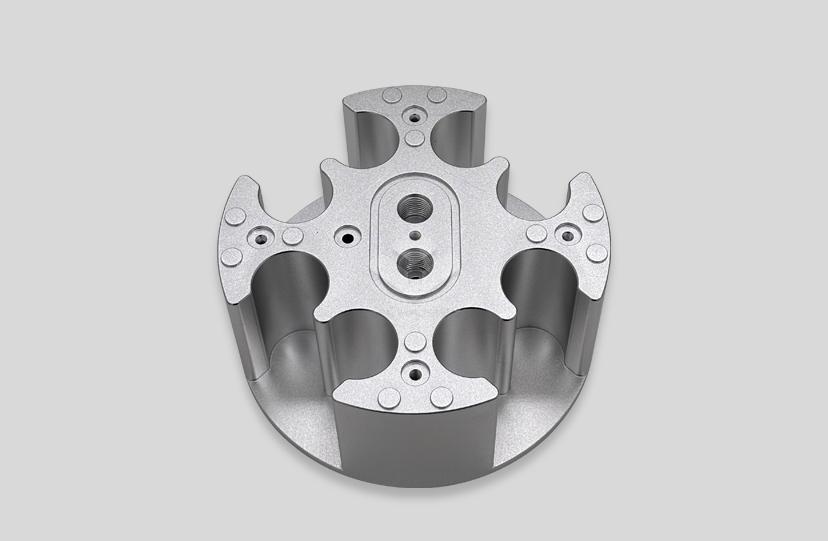
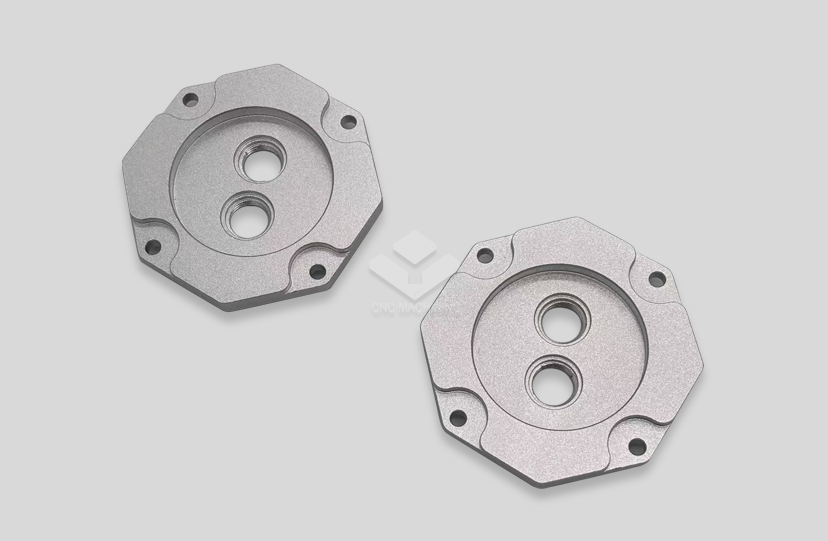
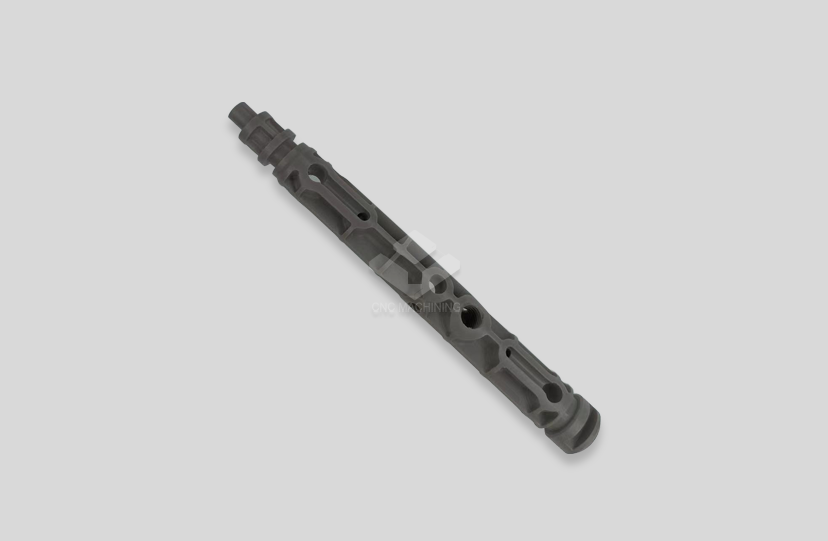
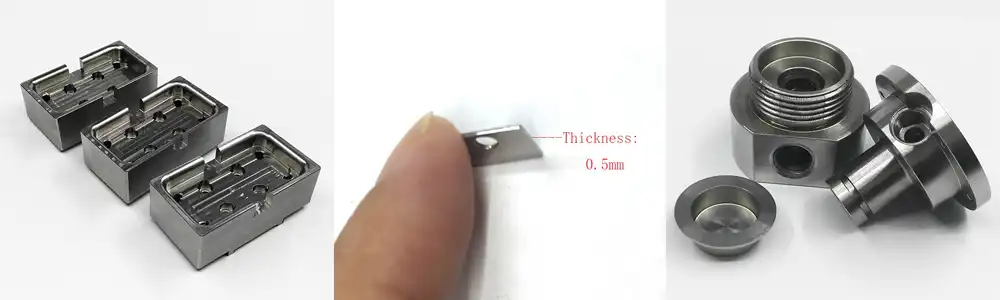
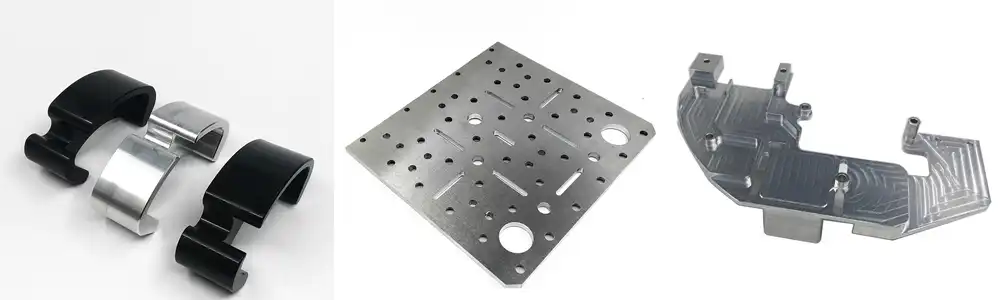
Precision Machined Components range from basic parts to designs that are made just for you. Shafts, bushings, spacers, and screws are all standard types. They are made to specific measurements and specs. Most high-value projects are custom components, like housings for medical instruments with complicated internal channels, aircraft manifolds with built-in cooling channels, or parts for semiconductor equipment that need vacuum-sealing surfaces. Different types of parts need different ways of being machined. For example, gears need to be honed or ground in a special way, and thin-walled medical housings need to be carefully fixed in place so they don't bend while they're being cut.
Cross-Industry Applications
Precision Machined Components are needed in the aircraft industry for things like engine sections, landing gear mechanisms, and fuel system parts. Failure is not an option, and design is based on minimizing weight. Implantable parts made from biocompatible titanium metals are needed by companies that make medical devices, as well as surgical tools with cutting edges that are kept very sharp to the micron level. More and more, making cars and electric cars requires precise battery case parts, motor shaft assemblies, and charging system contacts that make sure electricity flows smoothly, and heat is managed. In order to make electronics, you need heat sinks with perfectly machined fin arrays, vacuum chamber parts with sealing surfaces that don't let air in or out, and robotic assembly tools that can place parts with repeatability of less than one micron.
CNC Versus Manual Machining Trade-offs
While manual machining is still used in some situations, like for fixes or one-of-a-kind samples, CNC technology is clearly the leader in precision production. Computer control gets rid of human variation, so whether you're making ten or ten thousand, the parts will be the same. Once programs have been tested and proven, setup times drop by a huge amount, and lights-out manufacturing can be used for large-scale production. Modern CAM software improves tool paths to cut down on cycle times, and CNC machines can handle complicated geometries that would be hard for even the best machinists. Because of the way costs work, CNC is better for projects that need precise measurements, but handmade methods might be cheaper for making very simple prototypes that need to be made right away.
Benefits and Challenges of Precision Machining
Core Advantages for Industrial Buyers
Accurate measurements are the most clear benefit of precision cutting, but there are many more. Repeatability makes sure that every part meets the first article review. This is very important when there are a lot of parts that need to fit together or when Precision Machined Components need to fit in without any problems years after the original production. Because perfectly machined surfaces have less friction, less wear, and better load distribution than poorly finished ones, they make components last longer. It's more efficient to make things when parts fit together properly the first time. This cuts down on delays in the assembly line and the amount of waste.
Costs go down because Precision Machined Components reduces material waste (because CNC programming improves cutting lines to get the most value out of raw stock), and assembly processes are made easier when parts come ready to install without having to be fitted by hand. We've seen clients cut the time it takes to put together parts by forty percent just by making the tolerances tighter, which got rid of the need for shimming and adjusting. The quality of the surface finish affects more than just how it looks. Smoother surfaces are less likely to rust, work better with fluids in hydraulic parts, and last longer in situations where they are loaded and unloaded over and over again.
Navigating Common Obstacles
To keep tight tolerances across production runs, you need complex quality systems and weather controls. Changes in temperature can make both workpieces and machines lose their shape, so the best work needs to be done in climate-controlled rooms. Problems only happen with harder tool steels or alloys that are hard to machine, like Inconel, which makes tool wear faster and requires special cutting techniques. Concerns about supplier reliability plague procurement teams that have seen inconsistent quality or failed deliveries from vendors who lack the right skills or dedication.
To find the right manufacturing partner, you need to look at a number of important factors. ISO 9001 certification gives a basic guarantee of a quality system, AS9100 certification shows expertise in aircraft, and ISO 13485 certification shows expertise in medical devices. Manufacturing skills are important. Make sure that potential providers own and run the multi-axis tools your parts need instead of hiring unknown companies to do the work. True partners are different from simple job shops when it comes to how well they communicate. Having direct access to experienced engineers who review designs, make improvements, and give DFM feedback before production stops mistakes that cost a lot of money and speed up project timelines.
Comparing Precision Machined Components with Alternative Manufacturing Methods
Machining Versus Casting Economics
Casting makes near-net shapes cheaply when a lot of them are made, which makes it a good way to make a lot of simple forms. Precision Machined Components give you better control over dimensions, tighter tolerances, and better surface finishes without having to buy expensive tools. Machining is needed no matter how big the part is, when the specs need to be tighter than ±0.1mm, or the surface needs to be rougher than Ra 3.2. The consistency of the materials is also different. The grain structure of machined parts is the same all the way through, but casts may have holes or other imperfections that make them less strong in serious situations. For simple shapes, the crossover point usually happens around a few thousand pieces. However, even at higher numbers, complex parts with tight tolerances are better machined.
Additive Manufacturing Integration
For many uses, three-dimensional printing technology works well with precision cutting rather than taking its place. Traditional machining can't make complicated internal shapes like conformal cooling channels or topology-optimized structures, but additive methods can. At the moment, CNC machines aren't as good at accuracy and surface finish as 3D printers. This means that hybrid methods like printing near-net forms and then finishing-machining important areas to final tolerance are becoming more popular. This mix cuts down on waste for expensive metals while still getting the accuracy needed where it means the most. When accuracy in measurements, surface integrity, or mechanical qualities are more important than physical complexity, pure machining is still the best method.
Material Performance Comparison
Parts made of stainless steel are very strong and don't rust, so they are perfect for medical devices, food processing equipment, and naval uses. With the right tools and water, the material can be machined well, but work hardening needs to be watched closely during operations. Aluminum alloys have great strength-to-weight ratios and are easy to machine, which is why they are so popular in aerospace and automotive uses, where reducing mass directly improves speed and economy. Aluminum heat sinks work very well because they conduct heat well, and the natural oxide layers protect them from rusting in many settings. Aluminum usually costs less than stainless steel by weight, and faster cutting speeds lower the amount of work that needs to be done. However, prices depend a lot on the metal grade and the market conditions.
Procurement and Ordering Guide for Precision Machined Components
Navigating the Procurement Journey
When engineering finalizes part designs and makes detailed manufacturing plans, the purchase process can begin. To successfully source Precision Machined Components, you need to make sure that your requirements go beyond just the dimensions. For example, you should use GD&T callouts to define accuracy grades, list important features that need extra care, and write down any material certifications or surface treatments that are needed. Different suppliers have different minimum order quantities based on the difficulty of the part. For example, many precise machine shops will accept prototype quantities as low as one piece, even though unit costs go down a lot as volume goes up.
Lead times depend on how complicated the job is, how readily available materials are, and how much work the provider can do. Simple turned parts could be sent out in three days, but complicated multi-operation systems that need to be set up more than once, have special tools made, and go through a lot of inspections could take several weeks. To make reasonable plans, suppliers need to be honest about how much work they have and where possible bottlenecks might happen. Flexible batch sizing works for a range of project sizes and lets you test prototypes with small amounts before committing to bigger production runs once the designs are approved.
Pricing Dynamics and Cost Optimization
Through setup time, cycle time, and tooling needs, the complexity of a component has a huge effect on its price. Parts that need to be made in more than one step, with special tools, or to very exact standards, cost more than parts with simple shapes. The choice of material affects both the cost of raw materials and the speed of machining. For example, free-machining metals can be worked with more quickly than tough steel grades, which means less work needs to be done. Fixed costs like code and setup are spread out over a large number of units, so volume has a big effect on unit prices. However, as numbers rise, the benefits of volume become less significant.
Design for Manufacturing research finds ways to cut costs without affecting how well something works. Standardizing hole sizes to common drill diameters, opening tolerances on non-critical features, and creating parts to require as few setups as possible are all ways to lower the cost of production. Material improvement could lead to the discovery of other metals that perform similarly but are cheaper or easier to work with. Before quoting, we regularly do DFM studies with clients to find problems that could raise costs or cause delivery to be late. This is one of the services that sets engineering-focused makers apart from simple production facilities.
Bulk Versus Low-Volume Strategies
When you order in bulk, you can take advantage of volume prices while still paying the costs of keeping inventory on hand. This works best for stable, mature items with predictable demand. Low-volume methods keep stocking costs low and allow for engineering changes that happen a lot during the product development process. A lot of industrial buyers use a mix of tactics, such as making blanket orders for yearly needs and asking for scheduled releases in smaller batches that match production needs. This method guarantees low prices for large orders while keeping the supply chain flexible and lowering the amount of working capital that is locked up in inventory. As supply lines spread across countries, global logistics skills become more important. Door-to-door delivery services make international shopping easier and make handling freight forwarders and customs brokers easier.
Conclusion
Precision Machined Components make modern industry innovation possible in many fields that need accuracy and dependability, such as aircraft, medicine, cars, electronics, and many more. When engineers and procurement teams know about material choices, manufacturing methods, tolerance limits, and buying strategies, they can make decisions that improve product performance and project costs. The right manufacturing partner brings more than just the ability to machine parts. They also bring technical knowledge, quality systems, quick communication, and flexible execution, all of which turn buying parts from a job to be done into a strategic benefit.
FAQ
What tolerance levels can precision machining achieve?
Most features in standard Precision Machined Components are held to within ±0.01mm to ±0.025mm. Facilities with state-of-the-art machine tools, environmental controls, and full quality systems can get to ±0.005mm on key measurements. Sometimes, very precise methods like cylinder grinding or wire EDM are needed to get even closer to the limits, but they are very expensive when used at these levels.
How do you verify material authenticity?
Every batch of material should come with a Material Test Report that lists the chemical makeup and mechanical qualities of the stock and how they can be traced back to the mill that made it. Positive Material Identification testing with handheld XRF testers quickly confirms the makeup of the alloy, finding material replacement before it starts to be machined. This paperwork is very important for businesses like aerospace, medicine, and others that are controlled and need to be able to track materials.
What certifications should I look for in a supplier?
ISO 9001 approval shows that a quality management system works in a basic way that can be used in any industry. AS9100 certification means that the quality processes and supply chain controls are designed for aircraft. Getting ISO 13485 approval shows that you know how to make medical devices, including how to use a cleanroom and how to control the planning process. In addition to certificates, you should check the real production equipment, the ability to inspect, and the level of engineering by doing site visits or filling out thorough capability surveys.
Partner with RYH for Your Precision Machined Components Needs
RYH adds engineering-driven precision machining expertise directly to your projects, so you don't have to deal with the communication problems and quality worries that come with getting complicated parts from other places. Our engineers, who each have an average of fifteen years of technical experience, work directly with your design teams to look over sketches, make sure they can be made, and come up with ideas that are useful and practical. As a company that only makes Precision Machined Components, we can make any part, from a sample to a large production run, to your exact specifications, always meeting strict quality standards and tight tolerances. Our service is characterized by quick responses—quotes usually come within hours, and model production is done within a week, and often in just three days for simple designs. We have full material certifications, processing skills that are FDA-compliant, and strict checking processes that include CMM verification and thorough dimensional reports. If you need a production partner who can help with technical problems and provide reliable solutions, email bill@bldmachining.com to talk about your project needs and see the RYH difference.
References
1. American Society of Mechanical Engineers. "Dimensioning and Tolerancing: Engineering Drawing and Related Documentation Practices." ASME Y14.5-2018 Standard.
2. Society of Manufacturing Engineers. "Fundamentals of Tool Design: CNC Machining and Precision Manufacturing." SME Technical Publication, 2020.
3. ASM International. "Machining: ASM Handbook Volume 16." Materials Park: ASM International, 2019.
4. International Organization for Standardization. "Quality Management Systems: Requirements for Aviation, Space, and Defense Organizations." ISO 9001 and AS9100 Standards.
5. Medical Device Coordination Group. "Guidance on Classification of Medical Devices and Precision Manufacturing Requirements." European Commission Technical Document, 2021.
6. National Institute of Standards and Technology. "Dimensional Metrology and Precision Measurement Techniques for Advanced Manufacturing." NIST Special Publication 1500-201, 2022.