BLOG List
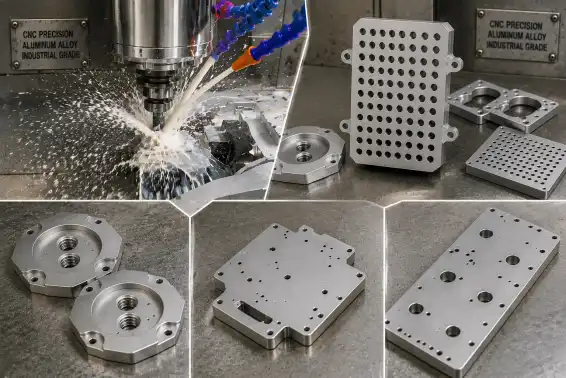
When looking for OEM metal parts, finding a global CNC Machining source with both technical know-how and solid execution can completely change how you make things. CNC Machining is still the most important way to make precise metal parts because it can handle tight tolerances, complicated geometries, and consistent quality in fields like aircraft, medical devices, automobiles, and industrial equipment. When you work with the right provider, you can use advanced multi-axis machining centers, talk to other engineers directly, and make production options that are flexible enough to support everything from quick testing to full-scale production. If you want to get cost-effective, high-quality results that meet international standards and speed up time-to-market for a new product or to improve a current supply chain, you need to know how to find and work with a skilled CNC Machining partner.
Understanding CNC Machining for OEM Metal Fabrication
Through computer-controlled cutting, drilling, and grinding processes, CNC Machining converts raw metal stock into finished components. CNC Machining automation, on the other hand, guarantees accuracy and repeatability, which makes it perfect for OEM applications that need precise measurements.
Core Workflows and Process Steps
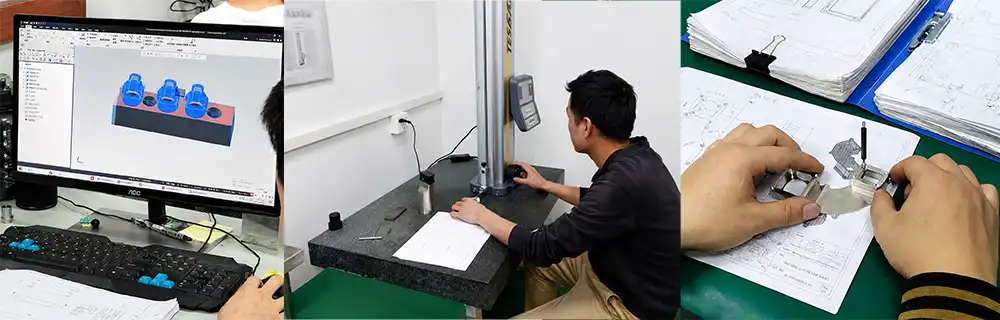
A normal CNC Machining process starts with sending in a CAD file and then moves on to Design for Manufacturability (DFM) analysis. Engineers look at models to find problems like thin walls, undercuts, or standards that can't be met. Once the project is approved, programmers use CAM software to create toolpaths that tell the machine how to cut. After that, the parts are cleaned, deburred, and given surface processes like grinding or anodizing. Coordinate measuring tools (CMM), calipers, and profile projectors are used in the final inspection to make sure that the measurements match the requirements.
CNC Machine Types and Their Applications
Multi-axis cutting centers are the most important part of current CNC Machining shops. Three-axis mills are good for simple rectangular parts, while four- and five-axis machines can handle complicated shapes and angles all at once. CNC Machining turning centers make cylinder-shaped parts like threaded screws, shafts, and bushings. Swiss-type lathes are great for making precise parts with a small diameter (less than 25 mm), which are often used in electronics and medicine. Based on the shape of the part and the amount of output, each type of machine meets different OEM needs.
Material Selection for Metal Fabrication
Aluminum 6061 is the most common metal for testing and moderate-strength uses because it is easy to machine, doesn't rust, and can be anodized. 304 and 316 stainless steel are good for medical and food-grade equipment that needs to be biocompatible and resistant to chemicals. For electrical connections, brass is a great thermal conductor, and titanium is used for aircraft parts that need to be strong and light. The choice of material affects the machining factors, the choice of tools, and the end cost. For best results, it is important to get early technical advice.
Why Partner with a Global CNC Machining Supplier for OEM Fabrication?
Global suppliers give you access to tech talent and specific tools that might not be available in your own country. This gives you more ways to make things while keeping quality high by following foreign standards.
Advanced Manufacturing Technologies and Scalability
Leading suppliers buy multi-axis cutting centers that can keep standards as tight as ±0.01mm. They can do both fast prototyping (samples can be sent within 3–7 days) and large-scale production runs with uniform quality. When you have 15 or more CNC Machining machines, you can work on multiple projects at the same time, which cuts down on wait times and lets you meet tight schedules. This scalability is very important when a new product needs to be changed quickly or when the market needs production to be flexible.
International Standards and Compliance
Systematic quality management is shown by ISO 9001 certification, and legal compliance is ensured by industry-specific standards such as AS9100 for aircraft or ISO 13485 for medical products. Global CNC Machining providers who know about materials that are FDA-compliant, RoHS guidelines, and REACH rules can help you navigate the complicated world markets. Shipments come with full traceability paperwork, inspection reports, and material certifications. This meets audit standards and lowers the risk of noncompliance for buyers.
Real-World Performance and Risk Mitigation
A reliable global partner works with your tech team like an extra set of hands. When design problems come up, talking to skilled machinists directly leads to useful ideas based on what can be done on the shop floor. Suppliers who give free remanufacturing within one week for broken parts show that they care about quality and customer happiness. Giving pictures and videos of the machining process during visual production openness builds trust and lets problems be found early. By using these methods, transactional relationships are turned into strategic partnerships that lead to better products and a more stable supply chain.
Comparing CNC Machining with Alternative Manufacturing Methods
To choose the right process, you need to know how CNC Machining compares to other technologies. Depending on the needs of the job, each way has its own benefits.
CNC Machining versus 3D Printing
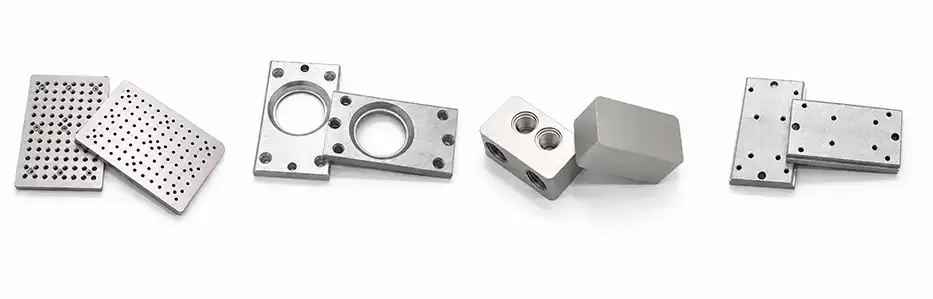
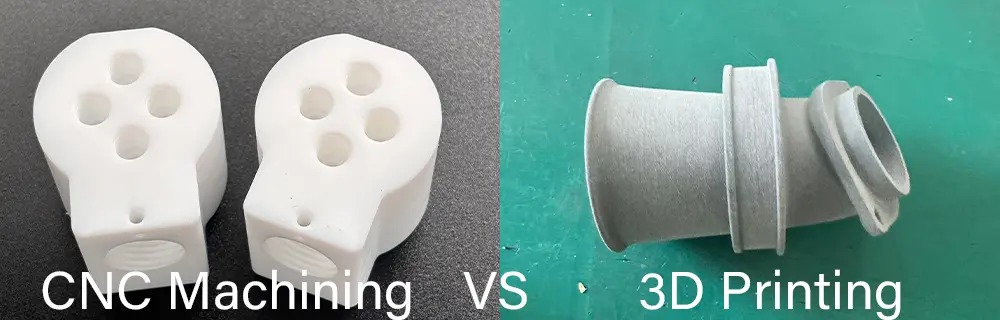
CNC Machining is great at making metal parts that work and have great mechanical qualities and surface finish. Rapid development of complex internal structures is possible with 3D printing. However, printed metal parts usually need to be heated and machined again to get the same level of strength and accuracy. CNC Machining has better surface roughness (Ra 1.6 vs. Ra 6–10) and tighter limits (±0.02mm vs. ±0.1mm for metal stamping). When making more than 50 to 100 units, CNC Machining becomes more cost-effective, even though it costs more to set up.
CNC Machining versus Injection Molding
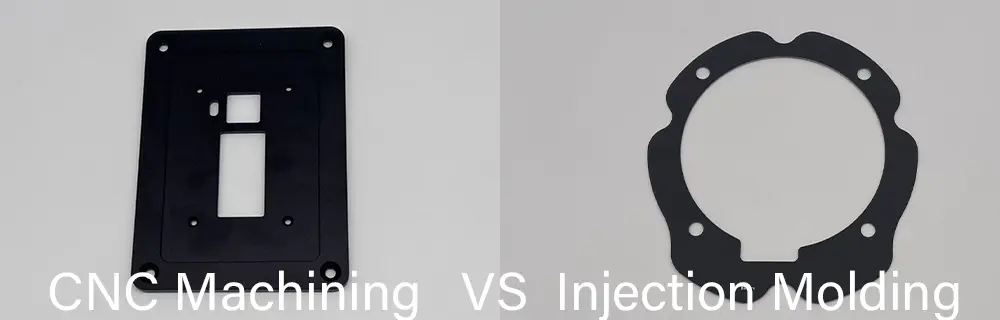
Injection molding is good for making a lot of plastic parts, and after the expensive mold material is paid for, the cost per unit drops by a huge amount. CNC Machining is the most flexible way to make small metal parts, change designs, and quickly switch materials without having to wait for tools to be made. Molding is best for projects that need more than 5,000 identical plastic parts. CNC Machining is better for metal samples, special fixtures, and production runs of less than 1,000 units. A lot of great goods start out as prototypes made with CNC Machining and then move on to molding once the designs are stable.
Decision Framework for Process Selection
Process selection is based on volume, complexity, material needs, and precision standards. CNC Machining machines are great for making parts with tight tolerances, made of metal, and made in modest amounts (10 to 5,000 units). Cost and effectiveness are best when used together, like when CNC Machining is used to make important interfaces on molded parts. Early involvement of experienced production engineers in the planning process helps avoid costly rework and ensures that the process matches the needs of the product.
How to Choose the Right CNC Machining Service Provider Globally
When looking at possible partners, you need to look at their professional skills, how they communicate, and their quality processes. Quick judgments based only on price often cause problems with quality and cause projects to be delayed.
Essential Technical Capabilities
Check the collection of machines and how the axes are set up. Different shapes can be handled by suppliers with three-, four-, and five-axis centers instead of outsourcing. The skill to do Swiss CNC Machining shows that you are good at making small, precise parts. Make sure that the highest part size, spindle speed, and tooling choices are all in line with your needs. Precision production is shown by facilities that have spectrometers for material testing, CMM inspection, and climate-controlled quality rooms.
Engineering Support and Communication
Having direct access to factory experts is what sets great suppliers apart from those who just take orders. When engineers look over sketches before giving quotes, they find problems with how the product can be made quickly, suggest changes that will save money, and give accurate lead times. Responding quickly to technical questions (within hours instead of days) speeds up project timelines. When suppliers offer DFM input, tolerance analysis, and material suggestions, they are not just passive sellers; they are also working partners.
Pricing Transparency and Value Assessment
Ask for thorough prices that break down the costs of materials, the time it takes to machine them, the steps needed for finishing, and the inspection process. Be wary of prices that seem too good to be true; they usually mean that quality control has been sped up or materials have been substituted. Don't just look at unit prices; compare the total landing costs that include shipping, taxes, and any possible rework. Volume savings should be based on the real economies of scale that happen when buying materials and paying for setup. When you combine competitive price with quality promises and free defect remanufacturing, you get real value compared to the cheapest initial quotes.
Industry Experience and Specialization
Optimizing Your OEM Metal Fabrication Process with CNC Machining
During the creation and production of a product, strategic design choices and working together with suppliers save a lot of time and money.
Design for Manufacturability Principles
Set the right tolerances. Cutting down on cutting time and cost can be done by tightening important measurements and loosening up non-functional features. Standard tool sizes keep the cost of making unique tools to a minimum. Large corner angles fit standard end mill sizes and keep tools from wearing out. Having the right draft angles and staying away from deep, narrow areas helps chips move out, and tools get to them more easily. Talking to machinists about the design purpose before finishing CAD models keeps redesigns from being too expensive and makes manufacturing more efficient.
Rapid Prototyping and Iterative Development
Samples are supplied in 3–7 days, and CNC Machining allows quick-turn prototyping. This lets you quickly confirm the idea, test its functionality, and get feedback from stakeholders before committing to making the tools for production. 5 to 25-piece small batch runs let you do trial production, check the assembly, and get early feedback from customers. Iterative revision using real parts instead of theoretical models lowers the risk of development and speeds up the launch of new products. Suppliers that let you change the amount you order without having a high minimum order size make growth more flexible.
Managing Production Scaling and Contract Manufacturing
When orders go from concept to production, it's easier to scale up when ties with suppliers are already in place. Suppliers who know your parts well can keep the quality uniform with process paperwork and special tools. Long-term relationships allow for ongoing improvement through value engineering and cost-cutting projects that are carried out together. Contract manufacturing agreements make it easier to plan your finances because they provide regular capacity, priority scheduling, and volume pricing. Even for small sales, international supply lines run smoothly thanks to reliable global logistics support that includes shipping from door to door and customs paperwork.
Conclusion
Finding the right global CNC Machining provider can turn OEM metal fabrication from a problem to a competitive benefit. You can find partners who can regularly give precision parts by looking at their technical skills, engineering help, quality systems, and experience in the field. Understanding CNC Machining methods, choosing the right materials, and the principles of design optimization make it easier for people to work together in a way that cuts costs and speeds up development. The right provider will work with you like an extension of your engineering team to solve problems and give results that go above and beyond what was asked for, whether you need quick prototypes, low-volume production, or scalable manufacturing capacity. Strategic relationships based on openness, timeliness, and a shared dedication to quality strengthen the supply chain and help businesses grow over the long run.
FAQ
What lead time should I expect for CNC machined prototypes?
Depending on how complicated the part is and how much space is available in the shop at the moment, CNC Machining sample lead times are usually between 3 and 7 days. It is possible to send simple turned parts or simple cut parts in three days. Complex multi-axis parts that need a lot of scripting and setting up more than once could take a whole week. If you tell providers how urgent your project is during the quotation process, they can put it at the top of their list of priorities and give you accurate delivery dates based on their current tasks.
How do I verify material quality from international suppliers?
Suppliers you can trust will give you material certifications and test records that show what the chemicals are and how they work. Before cutting starts, spectrometer tests are done to check the grade of the material. Ask for certificates of approval that list particular standards, such as ASTM, DIN, or JIS. If extra security is needed for important tasks, third-party inspection services can check out sites and make sure that quality systems are working.
Can CNC machining achieve the tolerances my automotive application requires?
Tolerances of 0.02mm are common in modern CNC Machining, and 0.01mm is possible for some specific tasks. For automotive parts, ISO 2768 middle or fine tolerance classes are common, which are well within the powers of CNC Machining machines. Critical measurements are checked 100% of the time with CMM tools. During the design review, talk about specific tolerance requirements to make sure that manufacturing processes match the requirements and that testing methods check that they are met.
What surface finishes are available for machined metal parts?
As-machined finishes usually have a surface roughness of Ra 1.6 to 3.2. Anodizing metal parts makes them resistant to rust and gives you color choices for decoration. Sandblasting makes smooth surfaces that are all the same. Polishing makes surfaces look like mirrors, which can be used for artistic purposes. Passivation keeps polished steel from rusting. Adding wear protection and electrical contact is what electroplating does. Talking about what you want the finish to do and how you want it to look can help you choose the right finishing methods that balance performance and cost.
Partner with RYH for Your CNC Machining Requirements
Precision CNC Machining is what RYH does best for OEM customers who need it for medical devices, aircraft parts, industrial equipment, and electronics. Our engineers, who have an average of 15 years of experience in manufacturing, work directly with your design team to make sure that parts are optimized for production, suggest materials, and find solutions to difficult cutting problems. We use high-tech multi-axis machining centers, Swiss-type lathes, and a wide range of checking tools to make sure that the parts we send you meet tolerances of ±0.01mm. Rapid development services can make models in as little as one week, and our production capacity is flexible enough to handle batches of anywhere from five to ten thousand items. Your projects will be successful thanks to ISO 9001 quality systems, full material tracking, and our promise to remanufacture any faulty parts within one week. Whether you're a well-known maker or a new business, we can help you with CNC Machining because we communicate well and know a lot about technology. Get in touch with bill@bldmachining.com right away to talk about your project needs and get a full quote that fits your needs.
References
1. Kalpakjian, S. and Schmid, S. R., Manufacturing Engineering and Technology in SI Units, Pearson Education Limited, 2016.
2. Boothroyd, G., Dewhurst, P., and Knight, W. A., Product Design for Manufacture and Assembly, CRC Press, 2010.
3. Machinery's Handbook Editorial Staff, Machinery's Handbook 31st Edition: A Reference Book for the Mechanical Engineer, Industrial Press, 2020.
4. Groover, M. P., Fundamentals of Modern Manufacturing: Materials, Processes, and Systems, John Wiley & Sons, 2020.
5. Curtis, M. A., Process Planning: The Design/Manufacturing Interface, Society of Manufacturing Engineers, 2008.
6. Ostwald, P. F. and Munoz, J., Manufacturing Processes and Systems, John Wiley & Sons, 1997.
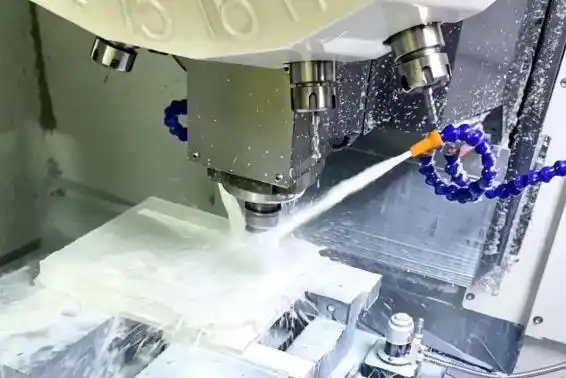
As we get closer to 2026, the world of precise production is changing quickly. New CNC Machining technologies are changing how parts are developed, made, and sent to different businesses. More and more customers want makers of everything from aircraft to medical devices to use tighter tolerances, faster response times, and more environmentally friendly ways to make their products. There are five major trends that are changing the limits of what can be done in subtractive production. These changes, which are caused by advances in artificial intelligence, material science, mixed production models, digital platforms, and concern for the environment, solve problems that buying teams and R&D engineers face every day. Figuring out these trends helps people make choices about which manufacturers can handle both present and future output issues.
Integration of AI and Machine Learning in CNC Machining
In precision production, artificial intelligence is no longer an idea for the future; it's already changing the way things are made. Machine learning systems look at tens of thousands of rounds of CNC Machining to find the best cutting parameters, tool paths, and spindle speeds right now. This feature solves a major problem: unpredictable tool wear and process variations cause parts to be thrown away and output to be held up.
Predictive Maintenance Reduces Downtime
Fixed times in traditional maintenance plans often cause parts to break down or need to be replaced before they should. Systems with AI look at patterns of shaking, changes in temperature, and sounds to figure out when a tool will break. Our engineering team has seen that clients who use predictive maintenance cut down on unexpected downtime by 30 to 40 percent. This has a direct effect on when prototypes and production runs are delivered. When a company that makes medical devices needed SS316 Swiss-machined parts with a surface finish of Ra ≤ 0.8 μm, predictive algorithms made sure that the business could keep running by planning tool changes for planned breaks instead of in the middle of production.
Adaptive Control Enhances Precision
Adaptive control systems change the cutting depth and feed rate based on data from sensors that are being read in real time. This technology is very useful when working with aluminum 6061 or other materials that expand when heated. Adaptive systems keep limits of ±0.02 mm throughout batch manufacturing by adjusting for changes in dimensions caused by temperature over long production runs. Aerospace companies that use this technology say that their first-pass yield and rework rates have gone down, which are important factors when making parts for UAV assemblies or satellite instruments.
When AI is added to machine processes, it changes how engineers do Design for Manufacturability (DFM). Instead of depending only on experience, machine learning models suggest changes to the design that make it easier to machine while still meeting the functional requirements. When our engineers work with companies that make automation equipment, they use AI-assisted DFM analysis during the quote phase to find problems with undercuts, thin walls, or hard-to-reach parts before production starts.
Advanced Materials and Machining Capabilities
Precision makers face both possibilities and obstacles as the number of engineering materials they can use grows. Many standard shops don't have the advanced tooling techniques and process knowledge needed to work with high-temperature alloys, composite structures, and specialized biomaterials. Multi-axis machining centers, especially those with 5 axes, can handle the complicated tool positions needed for these materials while keeping the surface's integrity.
Handling Difficult Materials Effectively
Titanium metals, Inconel, and hardened steels need to be cut under certain conditions so that the work doesn't get too hard and the tool doesn't break too soon. Our building has CNC Machining centers with high-pressure water systems and carbide tools that are made to work with these tough materials. When a company that makes car parts needed high-strength aluminum battery housing parts, our engineers adjusted the toolpaths to make the parts as cool as possible while still getting a Ra 1.6 surface roughness and keeping the dimensions stable over 500-unit production runs.
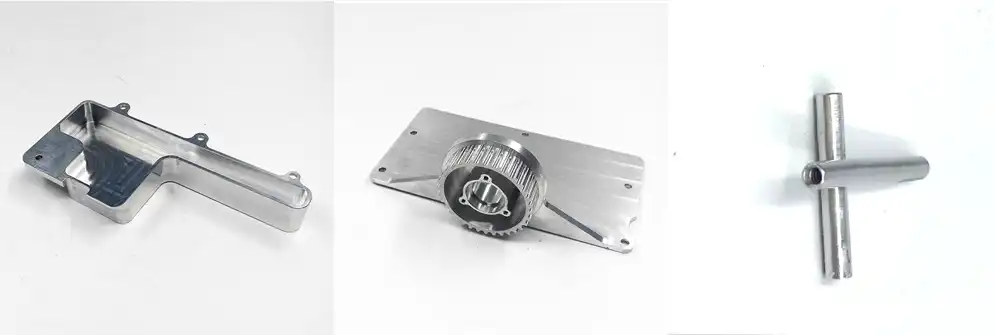
When it comes to delamination, fiber pullout, and matrix damage, composite materials are different from other materials. With precise feed rate control and specialized cutting tools with optimized shapes, damage to the base that could weaken the structure is stopped. Electronics companies that need to buy heat sinks or RF shielding parts benefit from cutting experts who know how the qualities of the material affect both the manufacturing process and the performance of the finished part.
Material Selection and Procurement Collaboration
When choosing the right material, you have to think about its cost, its practical qualities, and how well it will hold up in different environments. When choosing materials for new products, procurement managers often don't know what to ask for. This doubt can be solved by machining providers and design teams working together closely. We give you material certificates, choices that are FDA-approved for medical uses, and advice on cheaper alternatives that work just as well. When a business that makes lab instruments needed parts that met both mechanical strength and biocompatibility standards, our engineers suggested SS316 with an electroplated surface treatment. This gave them the corrosion protection they needed while also making the regulatory approval process easier.
Hybrid Manufacturing: CNC Machining Meets Additive and Laser Technologies
Hybrid production systems use both subtractive and additive methods on the same platform. This lets you make designs that aren't possible with either method alone. This convergence solves the usual dilemma between geometric complexity (which favors additive methods) and surface finish quality (which favors subtractive methods).
Optimizing Production Economics
Additive manufacturing is very good at making internal shapes, lattice structures, and conformal cooling channels that are too complicated to make in the usual way. To get the tight tolerances and smooth surfaces needed for fitting interfaces, sealing surfaces, and precision bearing fits, subtractive processes are used. By using both methods together, makers can make things that work better while using less material and taking less time to make.
This benefit is clearly demonstrated in CNC Machining applications for industrial tools such as hydraulic valves. Additive manufacturing is used to create the mounting holes and internal flow channels, while critical surfaces are subsequently finished through CNC milling to achieve tolerances of ±0.01 mm and specified surface roughness requirements. Compared with traditional multi-operation manufacturing methods, this hybrid approach reduces lead time from 6 weeks to just 10 days.
Evaluating Supplier Capabilities
When looking for mixed manufacturing partners, procurement teams should look at more than just who owns the tools. It is necessary for operators to have technical knowledge in both the additive and subtractive fields. They need to know how the orientation of the build affects subsequent machining processes and how to create fixtures that can hold near-net-shape additive parts. During the quote process, our engineers look at CAD models to figure out which parts would be best made with straight machining versus additive creation. This helps them set up hybrid methods. This analysis helps with planning production and gives accurate lead times that take into account things like heat treatment, stress release, and surface finishes that need to be done after the product is made.
In mixed settings, quality assurance becomes more challenging. Inspection methods must verify both the integrity of the additive build and the accuracy of the features produced through CNC Machining. During the production process, we use CMM inspection, profile projectors, and surface roughness testers to ensure dimensional accuracy. This approach helps guarantee that parts manufactured through CNC Machining meet ISO 2768 standards or the specific drawing requirements provided by the customer.
Digitalization and Cloud-Enabled CNC Machining Services
Digital change includes more than just automating the shop floor. It also includes the whole process of buying things and making things. Cloud-enabled platforms let you see the progress of a project in real time, from the initial quote to the final shipment. This eliminates the communication problems that often happen in custom manufacturing relationships.
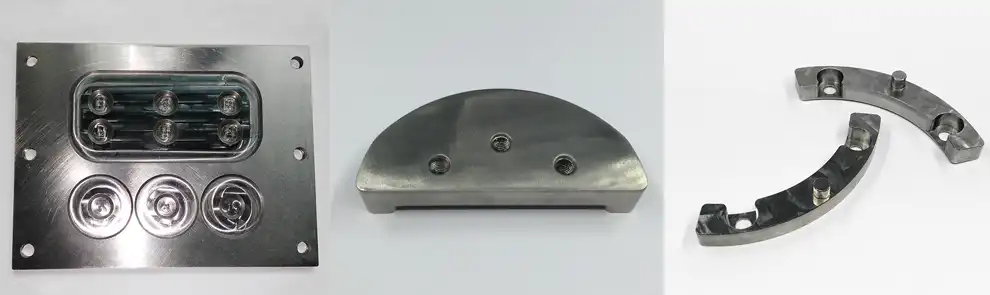
Enhancing Procurement Efficiency
The buying process goes a lot faster with online quoting tools that give quick DFM feedback. Instead of having to wait days for quotes to be reviewed by hand, procurement managers get rough price and lead time figures within hours. Our platform can read both 2D models (in PDF or DWG format) and 3D CAD files (STEP or IGS format). It instantly looks at things like hole depths, wall widths, and undercut shapes to find problems that might arise during manufacturing. Because of this quick feedback, design changes can be made before an official quote is approved, which shortens the overall project timeline.
Cloud-based project management tools keep track of everything, from the approval of raw materials to the final review. Industries that care about quality, like making medical devices and aircraft parts, need proof of process control and material history. Digital systems store certificates for materials, inspection reports, and process parameters. This makes compliance paperwork easy to find for customer reviews or regulatory checks. When a defense contractor needed to be able to fully track CNC-turned stainless steel 304 parts, our digital documentation system gave them approved material test results, data on dimensional inspections, and pictures showing the quality of the surface finish.
Remote Monitoring and Transparency
Production openness solves a common problem in procurement: not knowing how things are going with production. Our customers get pictures and videos of important production steps like the first item review, dimensional checks while the product is being made, and the final quality check before shipping. This level of visibility is especially helpful for foreign procurement teams that are in charge of handling global supply lines that span many time zones. Instead of depending on progress emails, project managers can get real-time reports through secure portals. This lets them plan ahead for things like customer deliveries or assembly operations that happen later.
Cloud-based CAM software supports collaborative design processes that make it easier for engineering teams and factory partners to talk to each other. Design changes are automatically shared, so people working on the shop floor can always look at the most recent version. Version control gets rid of the mistakes that cost a lot of money that happen when old plans are used in production, which happens a lot in settings where products are being developed quickly.
Sustainability and Energy Efficiency in CNC Machining
As companies try to meet their green goals and comply with regulations, environmental factors are becoming more and more important in their supplier selection choices. Machine tools that use less energy, strategies for reducing trash, and the use of recyclable materials are all signs that a maker is committed to using responsible production methods.
Implementing Sustainable Manufacturing Practices
Variable-speed drives, effective coolant systems, and rest mode automation all contribute to energy savings in modern CNC Machining machines. These changes lower running costs and lower the company's carbon footprint. Procurement teams that are thinking ahead know that these benefits are in line with long-term strategy goals. Our facility has improved toolpath techniques that cut down on the time needed for air-cutting and cycle times. This lowers the amount of energy used per component while increasing production capacity.
Cutting down on material waste is another area of focus for sustainability. Nesting algorithms make the best use of raw materials, which is especially important when working with expensive metals or special plastics. Coolant recycling systems, chip collection and recycling programs, and proper removal of cutting fluids are all examples of good environmental behavior that B2B clients who are under pressure from stakeholders to make their supply chains more sustainable will appreciate.
Meeting Compliance and Market Expectations
Environmental statements and sustainable buying methods are becoming more and more required by regulations. RoHS and REACH compliance rules are very strict in Europe. In North America, car providers must meet IATF 16949 environmental standards. Partnering with machining providers that have ISO 9001 certification and show they are committed to ongoing environmental improvement lowers the risk of not meeting regulations and improves the image of the brand.
In addition to meeting legal standards, environmental qualities are becoming more and more important for market differentiation. Electronics companies that sell goods with environmental claims need providers that can show that their entire supply chain uses sustainable production methods. When we anodize and sandblast aluminum 6061 parts, we use chemicals that are safe for the environment and create as little toxic waste as possible while still giving the parts a great finish and protecting them from rust. Companies that want to sell their goods to people who care about the environment can benefit from working with suppliers that can back up their claims of sustainability with proven manufacturing practices.
Why These Trends Matter for Your Production Strategy
When choosing factory partners, buying professionals, R&D engineers, and operations managers can make better choices if they know about these five trends. What competitive precision manufacturing looks like today is a mix of AI-driven optimization, improved material properties, hybrid production methods, digital communication tools, and environmentally friendly practices.
Companies that make industrial automation equipment, medical instruments, aerospace parts, or electronic assemblies all have to deal with the same problems: short development cycles, strict quality standards, complicated geometries, and different production volumes that can range from small prototypes to large batches. The best machining partners have professional know-how, good communication, flexible output capacity, and a dedication to always getting better.
Our team knows that tools alone aren't enough to make long-term relationships work. When technical standards are translated by salespeople, information is lost. Direct contact between engineers keeps that information from being lost. When an automotive supplier needed precision battery equipment parts, our engineers took part in design reviews, suggested cheaper materials that wouldn't hurt performance, and changed tolerances when manufacturing issues allowed. In the end, they delivered parts that worked as needed at 15% less cost than was estimated at first.
Conclusion
As technologies get better and market needs grow, the precision production industry continues to change quickly. CNC Machining is evolving alongside these changes, with the integration of AI, advanced material expertise, hybrid manufacturing methods, digital platforms, and sustainability initiatives becoming essential rather than optional. These trends directly address the challenges procurement teams frequently face, including communication barriers, quality uncertainty, unpredictable lead times, and difficulties scaling from prototypes to full production. By demonstrating expertise in these areas, manufacturers position themselves as true engineering partners capable of supporting product development from the initial concept stage through mass production.
FAQ
What tolerance levels can modern CNC machining achieve reliably?
For metal and steel parts, modern CNC Machining centers regularly keep tolerances of 0.02 mm, and for small-diameter precision parts, Swiss-type turning can reach 0.01 mm. Tolerance varies depending on the qualities of the material, the shape of the feature, and how stable the temperature is during cutting. Our inspection procedures, which use CMM equipment, make sure that the dimensions are correct before the goods are sent out. Inspection reports compare the real measurements to the drawing specs.
How quickly can prototypes be produced using current CNC technology?
It depends on how complicated the part is and how readily available the material is, but easy aluminum 6061 samples are usually done three to five days after the order is confirmed. It could take 7–10 days for more complicated shapes that need 5-axis cutting or for difficult materials like titanium. During the quote process, digital CNC technology systems give project managers accurate lead time estimates that help them make good plans for development schedules.
What surface finish options are available for machined components?
Depending on the tooling and settings used, CNC Machining can make as-machined finishes from Ra 1.6 to Ra 3.2. Secondary processes like anodizing, sanding, polishing, and electroplating improve the look, resistance to rust, or functionality of the product. Type II and Type III anodizing for aluminum, passivation for stainless steel, and different finishing choices for specific uses that need electrical conductivity or wear resistance are some of the surface treatments we can do.
Partner with RYH for Advanced CNC Machining Solutions
At RYH, we offer precise manufacturing services that help companies that make industrial equipment, medical devices, parts for cars, and electronics deal with the new problems they face. We have 3-axis, 4-axis, and 5-axis machining centers that can work with aluminum 6061 to stainless steel 316. They can keep tolerances of ±0.02 mm and finish surfaces as fine as Ra 0.8 μm. Every job is backed by over 15 years of engineering experience, and our team uses direct technical communication to avoid costly mistakes. We are great at working with complicated shapes, difficult materials, and a range of production numbers, from small samples to large batches. Our digital CNC Machining process gives you real-time updates on the project, records of inspections, and clear production information that boosts trust across your supply chain. Quality systems that are ISO 9001-certified, quick quotes, and samples that are ready in one week all help to meet tight development plans. If you need a reliable provider for ongoing production or a manufacturing partner for difficult prototype development, please contact our engineering team directly at bill@bldmachining.com to discuss your next project.
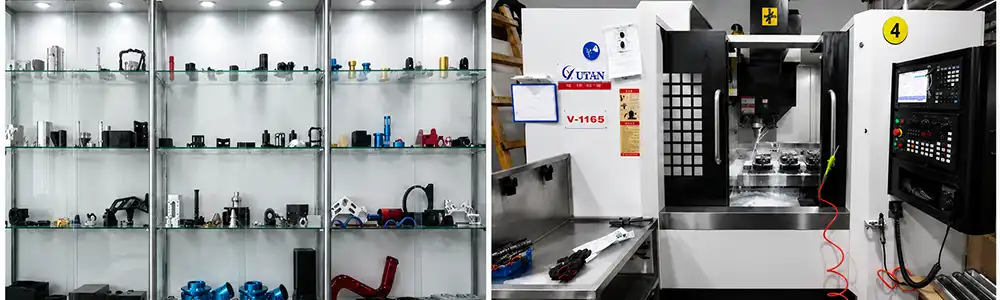
References
1. Anderson, T. (2025). Artificial Intelligence Applications in Precision Manufacturing: Predictive Maintenance and Adaptive Control Systems. Journal of Manufacturing Technology Research, 41(3), 127-145.
2. Chen, L., & Martinez, R. (2025). Advanced Materials Processing in Multi-Axis CNC Machining: Techniques for Composites and High-Temperature Alloys. International Journal of Production Engineering, 58(2), 89-104.
3. European Manufacturing Association. (2025). Hybrid Manufacturing Systems: Integrating Additive and Subtractive Technologies for Industrial Applications. Brussels: EMA Technical Publications.
4. Hoffman, K. (2026). Digital Transformation in Contract Manufacturing: Cloud Platforms and Supply Chain Visibility. Manufacturing Operations Quarterly, 19(1), 34-52.
5. National Institute of Standards and Technology. (2025). Sustainability Standards for Precision Machining Operations: Energy Efficiency and Waste Reduction Guidelines. NIST Special Publication 1500-12.
6. Williams, J., & Nakamura, H. (2025). CNC Machining Technology Roadmap 2025-2030: Emerging Trends in Precision Manufacturing. Tokyo: Asia-Pacific Manufacturing Research Institute.
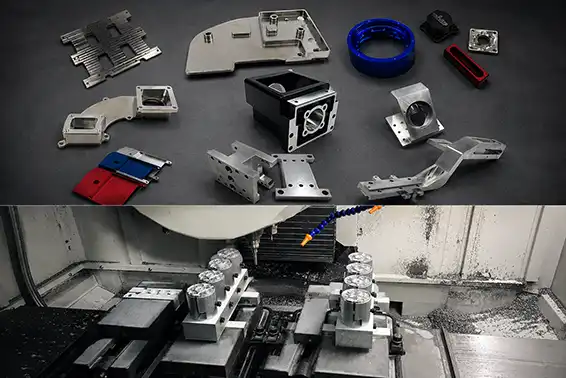
CNC Milling is a term that keeps coming up in different fields when people talk about modern precision manufacturing. Using spinning cutting tools that are led by computer programs, this method turns plain blocks of metal or plastic into complex parts. Because it doesn't depend on human error, makers can make parts with tolerances as low as ±0.02 mm and surface finishes as smooth as Ra 0.8–1.6 μm. This technology gives you the stability and accuracy you need for your projects, whether you're looking for parts for battery housings for electric vehicles, robotic joints, or medical device casings.
Understanding CNC Milling: Definition and Basics
Computerized milling uses high-speed spinning cutters that are managed by computer directions to remove material from a workpiece. These systems follow pre-programmed toolpaths with micrometer-level accuracy, unlike hand tools that depend on the skill of the operator. When we work at RYH, we use machine centers from well-known brands that can do simple 3-axis tasks as well as complicated 5-axis cutting at the same time.
How Multi-Axis Systems Work
Different gear designs are used for different types of manufacturing. A 3-axis mill is great for making flat surfaces, holes, and simple pockets because it can move tools along the X, Y, and Z planes. Four-axis setups let you rotate around one horizontal axis, which is useful if your design has angled parts or curved surfaces. The most flexible 5-axis machines can spin workpieces in two more directions, which lets complicated geometries be machined at the same time without having to move the workpieces. This skill is very important when making frames for spacecraft, parts for medical implants, or transmission housings for cars.
Material Compatibility and Machine Selection
A huge variety of products can be used in this process. Aluminum metals like 6061 and 7075 are easy to make and have smooth surfaces. Grades of stainless steel, like 304 and 316, don't rust and can be used in naval and food processing equipment. Brass and copper are used to manage electricity and heat. Engineering plastics like PEEK, POM, and PTFE offer options that are light and don't react with chemicals. The hardness of the material, the complexity of the part, and the amount of output are some of the things that our engineering team looks at every time they meet with a client to discuss a project.
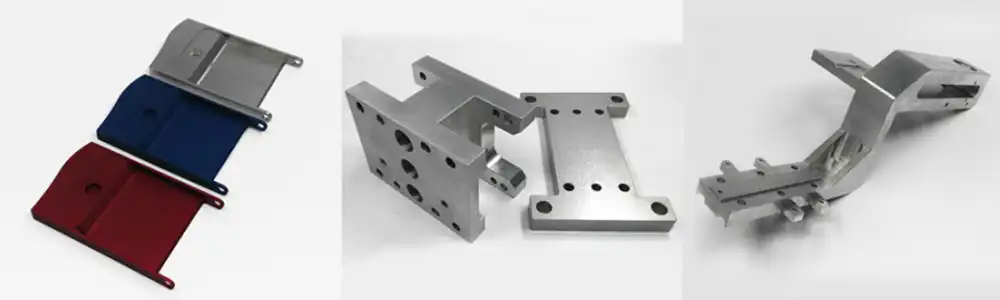
The CNC Milling Process Explained: Step-by-Step
A structured process turns digital plans into real parts for machining projects that go well. Procurement managers can find sellers with strong technical skills and quality systems by understanding each step.
Design Translation and Programming
CNC Milling begins as soon as our engineers receive your CAD files in STEP or IGES format. We look over plans to make sure that the material specs, tolerance zones, and dimensional callouts are correct. The toolpaths that our CAM software makes show how the cuts how they should move through the object. The computer language for the machine is called G-code, and it sets the spindle speeds, feed rates, and cutting depths. This planning phase finds problems before they become big problems, which saves money and time by avoiding needless rework and project delays.
Setup and Machining Execution
Fixturing the workpieces correctly keeps them still while high-force cutting is done. Based on the shape of the part, we choose the right vises, clamps, or special fittings. Choosing the right end mills, face mills, and drill bits is just as important as choosing the right material. Coolant fills the cutting area during grinding to keep the heat down and flush out chips. With real-time tracking, workers can change settings if they notice vibrations or tool wear.
Quality Assurance and Finishing
Once basic shapes are set by rough cutting, final measurements and surface quality are reached by finishing passes. Deburring gets rid of rough edges. Sandblasting for matte finishing, anodizing metal parts to protect them from corrosion, or passivating stainless steel to make it less likely to rust are all examples of secondary processes. For complicated profiles, our checking processes use both optical comparators and micrometers and calipers for human measurements. Important medical and aircraft parts get full dimension records that show they meet print tolerances.
Advantages of CNC Milling for B2B Manufacturing
Picking the best cutting method can change project times, costs, and how well the finished product works. CNC Milling has benefits that can't be matched by human work. This is especially true for businesses that have to meet tight deadlines for growth or high-quality standards.
Before going into specific benefits, it's important to note how this technology solves common problems in buying, such as inconsistent part quality, long wait times, and suppliers who aren't very flexible. The following features show why engineering teams in the medical device, industrial equipment, and auto industries depend on this process.
- Dimensional Consistency Across Production Runs: Machines can copy moves with sub-millimeter accuracy once toolpaths have been proven. A group of 500 artificial gripper parts will all have the same hole locations, pocket sizes, and flat surfaces. Because it can be done again and again, this removes the variation that comes with hand machining, where differences in skill or tiredness can affect the results. This uniformity is important to procurement managers because it makes inspections easier and prevents problems with assembly later on.
- Complex Geometry Capability: Multi-axis tools can reach areas from different directions without having to be moved by hand. It's easy to make undercuts, curved bores, and organic shapes that are hard to do with traditional tools. Common projects include medical device housings with built-in fixing bosses and ventilation holes, or automobile manifolds with flow channels inside them. It cuts down on handling time and total tolerance stack-up when parts can be finished in a single setting.
- Material Versatility and Rapid Prototyping: To switch between aluminum, stainless steel, and industrial plastics, all that needs to be done is make changes to the program and the tools. There is no need to rearrange any major pieces of equipment. This gives prototype development a lot of freedom when design changes need quick responses. Within three to seven days, our team makes model parts that R&D engineers can test to make sure they work, fit, and look right before committing to making the production tools. This edge in speed-to-market helps both new and established OEMs meet customer needs more quickly.
These benefits have clear practical advantages, including lower costs per part through automation, shorter project timelines, and fewer quality issues. By leveraging CNC Milling, companies gain access to manufacturing partners that can support projects from initial prototyping and sample development all the way to high-volume production while maintaining consistent quality and efficiency.
Applications of CNC Milling in Global B2B Procurement
Precision cutting is needed to meet performance and safety standards in industries that use tight-tolerance parts. Because the technology is so flexible, it is needed in all fields where accurate measurements directly affect how a product works.
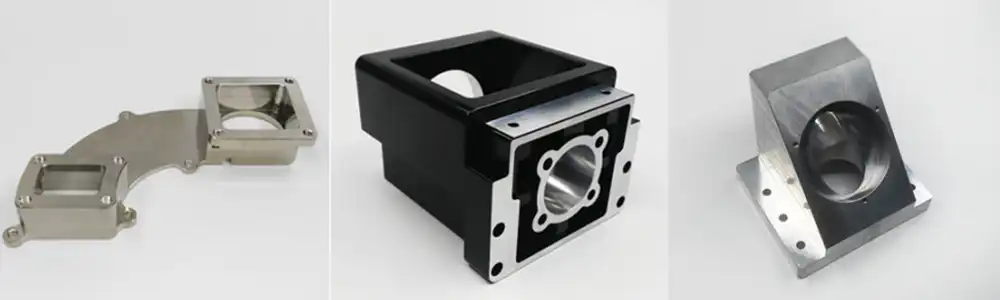
Aerospace and Defense Components
Structures for airplanes need parts that are both light and strong, and the materials must be certified. Tough checking procedures are used on aluminum bulkheads, titanium clamps, and stainless steel fittings. With five-axis capability, complexly curved turbine blade shapes and structural sections can be machined. For defense uses, suppliers must keep process paperwork and traceability standards, which we've kept on projects involving UAV parts and housings for guidance systems.
Medical Device Manufacturing
Medical cutting uses materials that are approved by the FDA and methods that can be used in a laboratory. Biocompatible materials, such as 316L stainless steel or medical-grade PEEK, are needed for the handles of surgical instruments, the cases of testing equipment, and parts of lab machinery. To keep surfaces from getting dirty, they must meet strict cleaning standards. As part of our quality system, we provide material certificates, dimensional inspection records, and lot tracking to help with regulatory files and audit needs.
Automotive and New Energy Systems
The use of electric vehicles increases the need for precisely made battery housings, motor mounts, and charge system parts. Aluminum parts are lighter, which is important for a vehicle's range. Tight precision makes sure that the bolt patterns and seal surfaces are lined up correctly. Automotive tier providers, so that we can build prototypes during the design validation stages and then increase production numbers when new vehicle projects start. The iterative nature of current car engineering is reflected in this prototype-to-production model.
Industrial Equipment and Robotics
Motion-critical parts in automation equipment rely on CNC Milling to achieve the precise dimensions required for optimal kinematic performance. Components such as robot joint housings, linear actuator bodies, and pneumatic manifolds demand exceptional alignment and flatness to ensure reliable operation. Industrial customers value suppliers with strong mechanical expertise who can recommend design improvements that enhance manufacturability without compromising functionality. Through continuous DFM reviews, our engineering team optimizes CNC Milling processes, reducing cycle times, minimizing material waste, and improving overall production efficiency.
How to Choose the Right CNC Milling Solution for Your Business
When choosing a factory partner, you need to look at their technical skills, how quickly they respond to messages, and how reliable their supply chain is. The choice affects the quality of the result, the time it takes to create, and the total cost of the program.
Assessing Technical Capabilities
First, look at the equipment's ability. Does the seller have up-to-date machining centers with the right axis settings for the shape of your part? Ask about experience with the material. Being good at working with metal doesn't mean you'll be good at working with hardened stainless steel or rare plastics. Ask for examples of parts or case studies that show complexity that matches your needs. It's also important to have the right inspection tools. For example, coordinate measure machines and optical comparators can check complex features in a way that mobile tools can't.
Evaluating Communication and Engineering Support
Manufacturing partners are different from common machine shops when it comes to working together on technology. Before giving you a quote, our experts look over your plans to see if there are any tolerance issues, sharp internal corners that need special tools, or surface finish callouts that need more information. By talking things out right away, we avoid misunderstandings that lead to delays and extra work. Procurement managers should get clear answers about whether the material can be machined, how long the wait time will actually be, and what other materials can be used if the types they want aren't available. Problems can be solved faster when engineers can talk directly to each other, without going through salespeople.
Understanding Pricing and Lead Time Structures
Trust grows when quotes are clear. We give you detailed figures that include the costs of materials, time spent on machining, charges for extra processes, and inspection fees. For prototypes that need to be made quickly, there are "rush" options, and parts can arrive within three days for easy shapes. One week is enough time to finish standard sample production. Optimized sets and batch processes help with large amounts of production. Learning about a supplier's limited ability helps you place orders that meet both delivery and cost standards. Ask for examples from customers who have placed similar orders. Buyers who are interested in prototypes have different needs than buyers who are interested in high-volume production.
Conclusion
FAQ
What materials can be machined using this process?
The system can work with both metals and non-metals. Aluminum alloys (6061 and 7075), stainless steel grades (304 and 316), brass, copper, and carbon steel are all common metals. Engineering plastics like PEEK, POM, PTFE, and Nylon can be machined smoothly for uses that need chemical-resistant parts that are lightweight. The choice of material is based on its mechanical qualities, how it will be used, and any regulations that are specific to your business.
How does this method compare to turning or laser cutting?
Turning is great for making cylinders and parts with circular symmetry, but it's not so good at making pockets or flat surfaces. Laser cutting is fast for cutting sheet metal shapes, but it can't cut deeply and leaves heat-affected areas. Milling can handle complicated 3D shapes with controlled layers, internal features, and high-quality surface finishing. Many parts need more than one step to be made. For example, milled flats may need to be added to turned shafts, and mounting holes may need to be machined into laser-cut mounts.
What maintenance ensures consistent machine performance?
Costly failures can be avoided by inspecting spindle bearings on a regular basis. The coolant filter gets rid of chips that build up and wear down tools too quickly. Ball screw oil keeps the accuracy of placement. Axis alignment checks are done every day to catch movement before parts get too far out of range. Schedules for preventative repair, which happen about once a month for output tools, increase uptime and part consistency. Suppliers who have written maintenance plans show that they care about the quality and dependability of delivery.
Partner with RYH for Expert CNC Milling Solutions
Our engineering team at RYH has been grinding things by hand for more than 15 years and brings that experience to every job. We use high-tech, multi-axis machines that can work with industrial plastics, aluminum, stainless steel, brass, and copper, and can hold tolerances of up to ±0.02 mm. Our one-on-one expert contact cuts out the hassle of working through salespeople, whether you need rapid prototype samples sent to you in three days or scalable production runs with full inspection documentation. As a reliable CNC Milling maker, we offer DFM analysis during the quote process to make sure that your plans are the best they can be for production. Concerns about quality are dealt with right away—any problems reported within a month are remade within a week at our cost. Get in touch with bill@bldmachining.com to talk about your needs for precision parts and get a full quote backed by engineering advice.
References
1. Kalpakjian, S., & Schmid, S. R. (2014). Manufacturing Engineering and Technology (7th ed.). Pearson Education.
2. Stephenson, D. A., & Agapiou, J. S. (2016). Metal Cutting Theory and Practice (3rd ed.). CRC Press.
3. Boothroyd, G., & Knight, W. A. (2011). Fundamentals of Machining and Machine Tools (3rd ed.). CRC Press.
4. Tlusty, J. (2000). Manufacturing Processes and Equipment. Prentice Hall.
5. Altintas, Y. (2012). Manufacturing Automation: Metal Cutting Mechanics, Machine Tool Vibrations, and CNC Design (2nd ed.). Cambridge University Press.
6. Groover, M. P. (2020). Fundamentals of Modern Manufacturing: Materials, Processes, and Systems (7th ed.). Wiley.
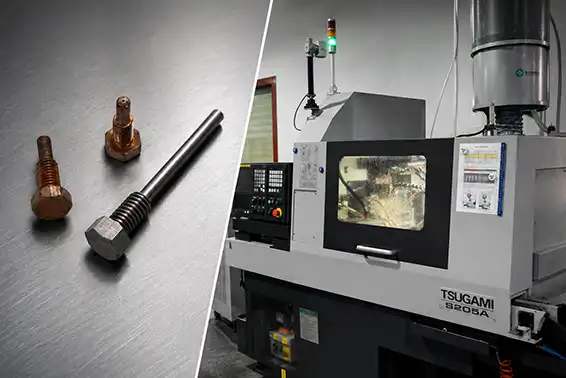
The term "Swiss Machining" refers to a specific method of turning things very precisely that comes from Switzerland's famous watchmaking industry. This method uses Swiss Machining with a moving headstock and a guide screw to hold the material in place while it is being cut. This lets makers make small parts with very accurate measurements and a smooth surface. This technology is very good at keeping tolerances as tight as ±0.01 mm while turning, cutting, and grinding parts that are usually up to 25 mm in diameter all at the same time. This method is used a lot to keep quality high in both prototype and high-volume production settings in industries that need micro-precision parts, like aircraft, electronics, medical devices, and instruments.
Understanding Swiss Machining: Definition and Core Process
Origins and Evolution
Swiss Machining has its roots in the Swiss watch industry of the 1800s, when skilled craftsmen had to make small, complicated parts with repeated accuracy. With older lathes, it was hard to make thin parts because material that wasn't supported would bend when cut, which made the accuracy worse. This problem was solved by Swiss engineers who made machines with guide bushings close to the cutting zone. These bushings kept the part stable during the process. Over many years, these machines have changed from simple machines that were built by hand to complicated CNC-controlled machines that can work with a wide range of materials and complex shapes.
Core Components and Mechanisms
Several important technical traits set Swiss Machining apart from other types. The moving headstock sends bar stock through a fixed guide bushing. This holds the material tightly near the cutting area so that it doesn't move or bend too much. Cutting tools can contact the workpiece just millimeters from the support point in this design, which makes it much more rigid. Several tool holders placed around the bushing allow multiple operations to be done at the same time. For example, one spindle can turn an outer circle while secondary tools drill cross holes or mill flats. This ability to do more than one thing at once cuts down on cycle time and gets rid of the need to move parts between machines, which keeps the dimensions the same.
Materials and Applications
Swiss Machining can be used with a huge variety of materials that are important for modern production. Because they are biocompatible and don't rust, stainless steel types like SS316 are used most often to make medical devices. Aluminum alloys like 6061 are used in electronics and aircraft, where strength at a low weight is important. Brass is great for making a lot of connector pins and valve parts because it cuts easily and doesn't wear down tools very quickly. Aside from metals, industrial plastics like PEEK and Delrin are also used to make chemical-resistant and insulating parts. Our building has six Swiss Machining CNC lathes that are specifically designed to work with SS316 parts up to 25 mm in diameter. The surface roughness is kept at or below 0.8 μm by carefully controlling the cutting settings and choosing the right tools.
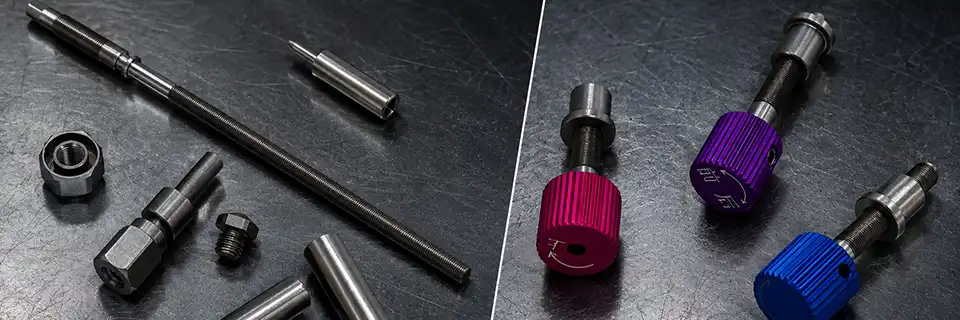
Swiss Machining vs Traditional and CNC Machining: Key Comparisons
Precision and Support Mechanics
In traditional turning centers, workpieces are held in a fixed chuck, and cutting forces are resisted by the stiffness of the material. This method works well for short, thick parts, but not when the length-to-diameter ratio is more than 3:1. The unsupported section bends, which leads to taper and measurement mistakes. Swiss Machining gets around this problem with constant guide bushing support, which keeps the dimensions accurate even on thin pins 50 mm long and 2 mm wide. Independent tests show that Swiss technology keeps tolerances within ±0.01 mm even when making more than 10,000 pieces, while older methods have trouble keeping tolerances within ±0.05 mm in the same situations.
Operational Efficiency
Usually, traditional cutting needs more than one setup. For example, a part might be turned, then moved to a milling machine for flats, and finally to a third machine for drills. Each handling causes mistakes in placement and adds time to the lead time. These tasks can be done by Swiss Machining in a single setup, thanks to synced tool movements set up in the CNC processor. Our engineering team has found that this method cuts cycle times by 40–60% compared to traditional multi-operation ways. This means that prototypes are delivered faster, and the cost per unit is lower for mass production. This speed helps procurement managers a lot, especially when they have to stick to tight project plans and budgets.
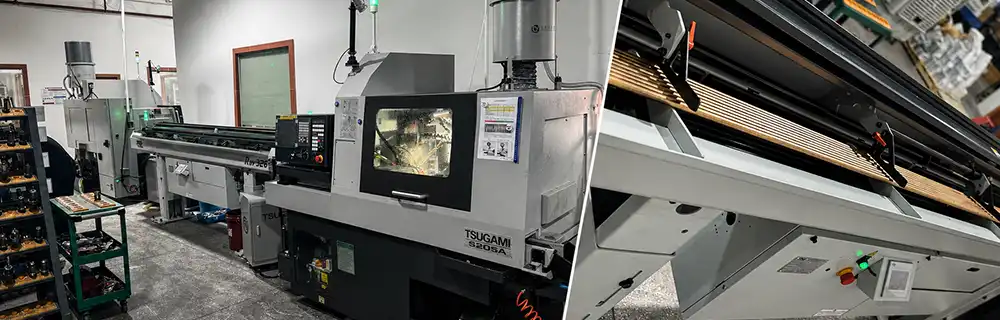
Material Waste and Economics
Swiss Machining has bar stock filling methods that make the best use of the material they use. Parts are made one after the other from a continuous bar stock. Parting tools remove finished parts so that the next piece can be processed. This method doesn't make much waste besides short-end scraps. Individual pieces have to be cut to length before they can be machined on traditional turning lathes. This process often wastes 15 to 20 percent of the material. This difference in trash has a big effect on the project's costs when it comes to expensive metals like titanium or medical-grade stainless steel. Also, because Swiss Machining can finish parts without doing any extra work, the staff costs that come with handling parts and making setting changes are eliminated.
Advantages and Capabilities of Swiss Machining for B2B Procurement
Repeatability is needed for precision production, and Swiss Machining always delivers. During production runs, our quality control methods check the accuracy of the dimensions. Micrometers and optical comparators are used for in-process readings to make sure that every part meets the requirements. We keep tolerances of ±0.01 mm when working with SS316 medical device parts across runs of 5,000 units. This is proven by the coordinate measuring machine (CMM) inspection results we give to customers. This regularity gets rid of the need for expensive rework and lowers the number of assembly failures that happen later on in projects that use less strict machining methods.
Because Swiss Machining can work with a wide range of materials, it can be used in many different industries. Automobile companies buy precise fuel injector parts that need to be resistant to rust and keep their shape even when the temperature changes. Aerospace suppliers need hydraulic systems to have light metal parts with a lot of complicated internal pathways. Electronics makers need metal connecting pins that meet strict requirements for electrical conductivity and positional accuracy. Our six Swiss Machining CNC lathes can handle all of these different needs thanks to the twelve years of experience we have gained in optimizing tools and controlling process parameters. During design review, engineers talk to customers directly and suggest changes to the geometry or materials that make the design easier to make without affecting its function.
Scalability from concept to production is one of the most important benefits of buying something. Usually, development projects start with 10 to 50 sample parts that are tested to make sure they work. After that, they move on to pilot runs of 500 to 1,000 units, and finally, they hit steady production levels of 10,000 or more pieces per month. This whole range can be handled by Swiss Machining without having to change any tools or pay a lot of money for retooling. Our team gives quotes within 24 hours and usually sends prototype models within three to seven days, which shortens the time it takes to build a product. If there are problems with the quality, we promise to remanufacture new parts within one week and pay for the shipping. This is a promise that is backed by ISO 9001 certification and shown in customer service records from hundreds of projects.
Swiss Machining technology makes it easy to work with complicated shapes that are hard to do with other methods. In a single setup, cross-drilled holes that cross over turned diameters, off-axis milling features, and threaded sections can all be made. Companies that make medical instruments get surgical tool parts that have coolant openings inside and sides that are precisely ground. Robotics engineers choose actuator shafts that have metric holes, keyways, and eccentric journals altogether. On regular machines, these parts would need four or five processes, which would add up to placement mistakes. Because the part never leaves the spindle until it's finished, Swiss Machining can keep geometric connections within microns while they work.
How to Choose the Right Swiss Machining Supplier: A Procurement Guide
Certifications and Quality Systems
If a seller has ISO 9001 certification, it means they have written quality management methods in place that cover everything from tracking materials to final inspection procedures. Manufacturers of medical devices should check that their sources have the right licenses to work with FDA-compliant materials that have the right certifications. Aerospace and defense companies often need AS9100 certification to show that they follow quality standards specific to their business. Get copies of the most recent certificates and audit reports, and then use the records of the certifying body to check the state of your registration. Third-party audits of our plant once a year make sure it meets ISO 9001 standards, and we send material certifications that can be tracked back to mill test results with every shipment of stainless steel.
Technical Communication Capabilities
Engineering help is what sets strategic manufacturing partners apart from skilled machine shops. During the quotation step, procurement pros should look at how sellers answer technical questions. Can you talk to machinists and engineers directly, or do you have to go through sales reps who don't know much about manufacturing? Our Swiss Machining method gives buyers direct access to experts who have, on average, more than fifteen years of experience with precision machining. During the design review, we find tolerance callouts that go beyond what is needed to meet functional standards. This lets us cut costs without sacrificing performance, and we offer geometric changes that make it easier to access tools or shorten cycle times. This joint method has solved hundreds of problems with making the product before it goes into production, which has kept costly delays from happening.
Process Transparency and Verification
Being able to see how the production is going builds trust in the supplier's ability and commitment to quality. Ask for views of the facility, either in person or through videoconferencing, to see how the equipment is maintained, how well the building is kept, and how inspections are done. Ask to see the written steps for inspecting the first item, measuring often while the product is being made, and doing the final quality checks. Customers can see pictures and movies of their exact parts being machined, which shows that the setup is accurate and that the process is being controlled. This openness also includes inspection data; every package comes with dimensional reports that show how the real measures match up with the drawing specifications. This makes it possible to track the goods and meet audit requirements.
Volume Flexibility and Lead Time
When the needs of a project change, providers must be able to adapt without stopping work. Check to see how possible partners handle changes in volume—can they go from 100 pieces to 5,000 pieces without adding extra time to the wait time or raising the price? Our Swiss Machining capacity can handle both low-volume custom runs and steady high-volume production. We can also accommodate rush orders when project deadlines are tight by being flexible with our schedule. Depending on how complicated the order is, prototype samples usually ship within a week. Lead times for orders of 1,000 to 10,000 pieces are two to three weeks. This responsiveness is especially helpful for companies and R&D teams that have to meet tight deadlines for development.
Future Trends and Innovations in Swiss Machining
Integration of automation keeps changing the settings of precision production. More and more modern Swiss Machining has robotic part handling systems that unload produced parts and add bar stock without any help from a human. This lets production run without interruptions during the second and third shifts. Industry 4.0 communication lets you see spindle loads, tool wear, and measurement trends in real time. Data analytics can also tell you when maintenance is needed before they happen. These features lower the cost per unit while increasing quality consistency. This makes Swiss Machining economically possible for even bigger part diameters that were traditionally the domain of traditional turning centers.
As the need for miniaturization grows, technology keeps getting better. Electronics companies need connector pins with a width of less than 1 mm and tolerances of less than 1 micron. Medical device companies, on the other hand, are making barely invasive tools that need unprecedented accuracy. As a response, Swiss Machining makers have improved the accuracy of the spindle, made it more stable at high temperatures, and made micro-machining tool holders that can place cutters with nanometer precision. These improvements in mechanics are backed up by advances in material science. For example, new coatings on cutting tools make them last longer when working with tough metals, and process tracking systems find tiny changes in dimensions before they become nonconforming parts.
Concerns about sustainability affect how many things are made in all kinds of businesses. Because Swiss Machining processes bar stock efficiently and finishes parts in a single setting, there is little waste. This fits with the company's efforts to reduce its environmental impact. Near-net-shape production gets rid of secondary tasks that use extra energy, and predictive maintenance that extends the life of equipment cuts down on the resources needed to replace machines. When buying teams try to balance performance needs with environmental responsibility standards, they give more weight to suppliers who use sustainable practices like properly getting rid of coolants and running their facilities in a way that uses less energy.
Conclusion
In conclusion, Swiss Machining is the most accurate and efficient way to make small parts for the medical, aircraft, automobile, and electronics industries. Knowing what this technology can do, like how it supports guide bushings and how it can do multiple operations at once, helps buyers match manufacturing methods with project needs. The process is great at keeping tight standards, working with a wide range of materials, and going from a pilot to mass production without lowering the quality. In a production environment that is becoming more competitive, choosing providers with the right certifications, direct technical contact, and clear process openness is key to project success and long-term relationship value.
FAQ
What size range is suitable for Swiss turning?
Swiss Machining works best with parts that are up to about 25 mm in diameter, but some more modern machines can handle bar stock up to 32 mm or 38 mm in diameter. The technology works especially well when the length-to-diameter ratio is greater than 3:1. This is when normal spinning fails because of displacement and inconsistent dimensions.
What advantages does Swiss turning offer over conventional methods?
Guide bushing support stops the item from bending while it's being cut, which lets you get better surface finishes and tighter measurements. With multi-operation capability, parts can be finished in a single setup, which cuts down on cycle time and gets rid of the need to move parts between machines and make mistakes with their placement. When bar stock is processed efficiently, less material is wasted.
How do you achieve high precision in Swiss turning?
Precision comes from a number of factors working together: guide bushing support keeps the material stable near the cutting zone; rigid machine construction reduces vibrations; CNC programming controls tool paths to within microns; and in-process measurement checks dimensions as the machine is being made. Long-term uniformity is kept up by facilities that control temperature and regular machine testing.
Why use aluminum for Swiss turning projects?
Aluminum is great for fast development and large production runs that need to be finished quickly because it can be cut at high speeds and has great surface finish properties. The material is lightweight, which makes it useful for electronics and aircraft. Anodizing gives it corrosion protection and a different look. The cost of materials is still low compared to stainless steel and other rare metals.
Why is brass suitable for Swiss turning operations?
Brass is easy to machine and doesn't wear down tools quickly, so it can be used for longer periods of time before it needs to be changed. The material naturally has smooth surfaces and stays stable in its dimensions. Brass is great for electrical components and connector pins because it conducts electricity well. It is also good for water tools and medical uses because it kills germs.
Partner with RYH for Expert Swiss Machining Solutions
Precision Swiss Machining is what RYH does best for parts made of stainless steel, aluminum, and brass that are used in medical devices, aircraft, cars, and electronics. Our six Swiss Machining CNC lathes can make parts up to 25 mm in diameter, with surface finishes that are Ra ≤ 0.8 μm and limits of ±0.01 mm. As an experienced Swiss Machining manufacturer that has been around since 2008, we offer direct engineer-to-engineer contact for design optimization, DFM analysis, and process planning. This cuts out the problems that come up when projects go through sales middlemen. Three to seven days are needed to deliver test models, and our team responds quickly to quotes, usually within 24 hours. Photos and movies of your parts being machined are part of production openness. This helps you trust our quality systems and process control. Our dedication to accurate measurements and material tracking is backed up by our ISO 9001 certification. Get in touch with bill@bldmachining.com to talk about your Swiss Machining needs and find out how our technical know-how and flexible capacity can help with projects from the first prototype to ongoing volume production.
References
1. Boothroyd, G., & Knight, W. A. (2006). Fundamentals of Machining and Machine Tools. CRC Press.
2. Stephenson, D. A., & Agapiou, J. S. (2016). Metal Cutting Theory and Practice. CRC Press.
3. Society of Manufacturing Engineers. (2015). Precision Machining Technology. Cengage Learning.
4. Astakhov, V. P. (2010). Geometry of Single-Point Turning Tools and Drills: Fundamentals and Practical Applications. Springer.
5. Krar, S. F., Gill, A. R., & Smid, P. (2019). Technology of Machine Tools. McGraw-Hill Education.
6. Groover, M. P. (2020). Fundamentals of Modern Manufacturing: Materials, Processes, and Systems. Wiley.
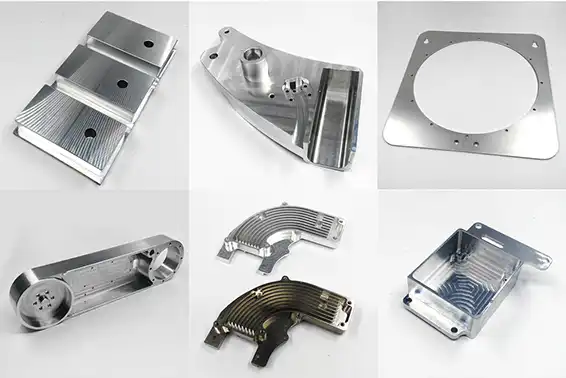
Precision Machined Components are the foundation of modern manufacturing success. They provide the exact dimensions and surface integrity needed for important industrial uses. These carefully made parts make engineering plans a reliable, repeatable reality. They are used in everything from life-saving medical devices to high-performance flight systems. If you choose precision machining, the parts you buy will be made to standards as low as ±0.005mm, which means they will work the same way after thousands of production runs. Knowing how these parts work, where they do their best work, and where to get them can have a huge effect on the success, schedule, and bottom line of your project.
Introduction
In today's highly competitive business world, the quality of the parts that make up a product often makes the difference between its success and failure. Precision Machined Components provide the highest level of precision and dependability that modern production processes need. This book is written for B2B procurement managers, mechanical engineers, and OEM clients who want to learn about the basics of precision cutting, how it can be used in the real world, and smart ways to buy things.
We've seen how the right machine partner can change the results of a project over the years, working with companies that make industrial equipment, medical devices, cars, and spacecraft. By understanding what these parts can do and how they can help, decision-makers can improve product quality, make supply chains more efficient, and cut costs in a way that can be measured. If you know how precision cutting works, you can work with specialized suppliers who can make custom and standard parts that fit your exact industrial needs, whether you're making samples for a new medical device or increasing production for car parts.
Understanding Precision Machined Components
What Defines Precision Machining
Precision Machined Components are designed parts that are made to very specific standards that can't be met by regular cutting. The difference is in the accuracy levels: regular parts may be able to hold ±0.1mm, but precision parts usually get to ±0.01mm or better. This level of accuracy is very important when parts need to fit properly into complicated assemblies or work well in tough circumstances. This accuracy comes from Computer Numerical Control technology, which uses coded software to tell multi-axis milling and turning centers how to remove material with microscopic accuracy. This way, human mistakes that could affect important measurements are not possible.
Material Selection and Performance Impact
The choice of material has a direct effect on both the performance of the parts and the cost of the job. Aerospace-grade aluminum alloys, such as 6061 and 7075, have very high rates of strength to weight, which makes them perfect for uses where reducing mass is important. Grades 304 and 316 stainless steel are better at keeping medical tools and food processing equipment from rusting. Titanium orthopedic devices are very strong and biocompatible, and high-performance plastics like PEEK can handle high temperatures and chemicals in the chip manufacturing process. To choose the best material, you have to balance its mechanical properties, environmental factors, legal requirements, and cost. This is a talk that would be much more productive if it were held directly between engineers.
CNC Machining Processes and Tolerance Control
Several main methods are used in modern precision manufacturing of Precision Machined Components. Each one is best for a certain shape or set of needs. CNC milling is great at using rotating cutting tools to make complicated shapes and pockets, while turning processes use rotating workpieces to make cylindrical features. Multi-axis capabilities, especially 5-axis machining, make it possible to produce complex angles and detailed internal features that would not be possible with standard 3-axis equipment. Depending on the application, the required surface finish typically ranges from Ra 0.8 to 3.2 microns. To consistently meet these requirements, Coordinate Measuring Machines are used for process verification, along with statistical process control to monitor capability indicators such as CPK values and ensure that dimensions remain stable over time.
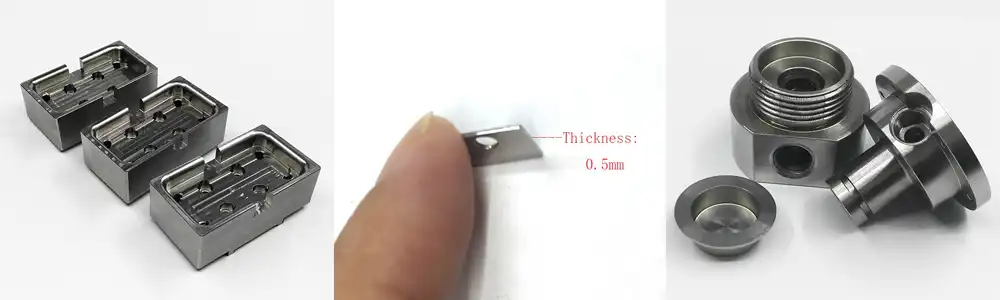
Types and Applications of Precision Machined Components
Component Categories and Industry Examples
Precision Machined Components range from basic parts to designs that are made just for you. Shafts, bushings, spacers, and screws are all standard types. They are made to specific measurements and specs. Most high-value projects are custom components, like housings for medical instruments with complicated internal channels, aircraft manifolds with built-in cooling channels, or parts for semiconductor equipment that need vacuum-sealing surfaces. Different types of parts need different ways of being machined. For example, gears need to be honed or ground in a special way, and thin-walled medical housings need to be carefully fixed in place so they don't bend while they're being cut.
Cross-Industry Applications
Precision Machined Components are needed in the aircraft industry for things like engine sections, landing gear mechanisms, and fuel system parts. Failure is not an option, and design is based on minimizing weight. Implantable parts made from biocompatible titanium metals are needed by companies that make medical devices, as well as surgical tools with cutting edges that are kept very sharp to the micron level. More and more, making cars and electric cars requires precise battery case parts, motor shaft assemblies, and charging system contacts that make sure electricity flows smoothly, and heat is managed. In order to make electronics, you need heat sinks with perfectly machined fin arrays, vacuum chamber parts with sealing surfaces that don't let air in or out, and robotic assembly tools that can place parts with repeatability of less than one micron.
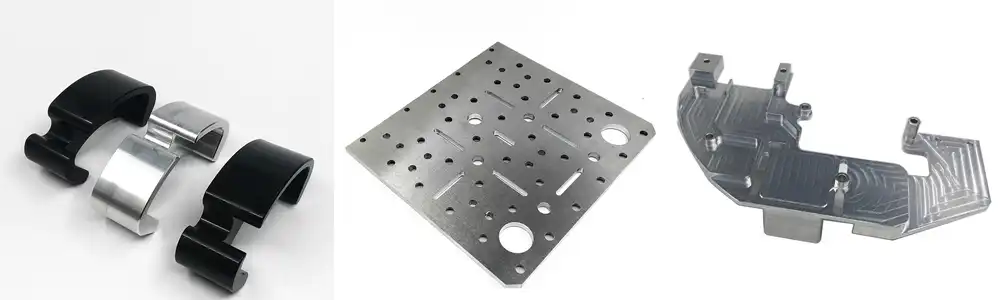
CNC Versus Manual Machining Trade-offs
While manual machining is still used in some situations, like for fixes or one-of-a-kind samples, CNC technology is clearly the leader in precision production. Computer control gets rid of human variation, so whether you're making ten or ten thousand, the parts will be the same. Once programs have been tested and proven, setup times drop by a huge amount, and lights-out manufacturing can be used for large-scale production. Modern CAM software improves tool paths to cut down on cycle times, and CNC machines can handle complicated geometries that would be hard for even the best machinists. Because of the way costs work, CNC is better for projects that need precise measurements, but handmade methods might be cheaper for making very simple prototypes that need to be made right away.
Benefits and Challenges of Precision Machining
Core Advantages for Industrial Buyers
Accurate measurements are the most clear benefit of precision cutting, but there are many more. Repeatability makes sure that every part meets the first article review. This is very important when there are a lot of parts that need to fit together or when Precision Machined Components need to fit in without any problems years after the original production. Because perfectly machined surfaces have less friction, less wear, and better load distribution than poorly finished ones, they make components last longer. It's more efficient to make things when parts fit together properly the first time. This cuts down on delays in the assembly line and the amount of waste.
Costs go down because Precision Machined Components reduces material waste (because CNC programming improves cutting lines to get the most value out of raw stock), and assembly processes are made easier when parts come ready to install without having to be fitted by hand. We've seen clients cut the time it takes to put together parts by forty percent just by making the tolerances tighter, which got rid of the need for shimming and adjusting. The quality of the surface finish affects more than just how it looks. Smoother surfaces are less likely to rust, work better with fluids in hydraulic parts, and last longer in situations where they are loaded and unloaded over and over again.
Navigating Common Obstacles
To keep tight tolerances across production runs, you need complex quality systems and weather controls. Changes in temperature can make both workpieces and machines lose their shape, so the best work needs to be done in climate-controlled rooms. Problems only happen with harder tool steels or alloys that are hard to machine, like Inconel, which makes tool wear faster and requires special cutting techniques. Concerns about supplier reliability plague procurement teams that have seen inconsistent quality or failed deliveries from vendors who lack the right skills or dedication.
To find the right manufacturing partner, you need to look at a number of important factors. ISO 9001 certification gives a basic guarantee of a quality system, AS9100 certification shows expertise in aircraft, and ISO 13485 certification shows expertise in medical devices. Manufacturing skills are important. Make sure that potential providers own and run the multi-axis tools your parts need instead of hiring unknown companies to do the work. True partners are different from simple job shops when it comes to how well they communicate. Having direct access to experienced engineers who review designs, make improvements, and give DFM feedback before production stops mistakes that cost a lot of money and speed up project timelines.
Comparing Precision Machined Components with Alternative Manufacturing Methods
Machining Versus Casting Economics
Casting makes near-net shapes cheaply when a lot of them are made, which makes it a good way to make a lot of simple forms. Precision Machined Components give you better control over dimensions, tighter tolerances, and better surface finishes without having to buy expensive tools. Machining is needed no matter how big the part is, when the specs need to be tighter than ±0.1mm, or the surface needs to be rougher than Ra 3.2. The consistency of the materials is also different. The grain structure of machined parts is the same all the way through, but casts may have holes or other imperfections that make them less strong in serious situations. For simple shapes, the crossover point usually happens around a few thousand pieces. However, even at higher numbers, complex parts with tight tolerances are better machined.
Additive Manufacturing Integration
For many uses, three-dimensional printing technology works well with precision cutting rather than taking its place. Traditional machining can't make complicated internal shapes like conformal cooling channels or topology-optimized structures, but additive methods can. At the moment, CNC machines aren't as good at accuracy and surface finish as 3D printers. This means that hybrid methods like printing near-net forms and then finishing-machining important areas to final tolerance are becoming more popular. This mix cuts down on waste for expensive metals while still getting the accuracy needed where it means the most. When accuracy in measurements, surface integrity, or mechanical qualities are more important than physical complexity, pure machining is still the best method.
Material Performance Comparison
Parts made of stainless steel are very strong and don't rust, so they are perfect for medical devices, food processing equipment, and naval uses. With the right tools and water, the material can be machined well, but work hardening needs to be watched closely during operations. Aluminum alloys have great strength-to-weight ratios and are easy to machine, which is why they are so popular in aerospace and automotive uses, where reducing mass directly improves speed and economy. Aluminum heat sinks work very well because they conduct heat well, and the natural oxide layers protect them from rusting in many settings. Aluminum usually costs less than stainless steel by weight, and faster cutting speeds lower the amount of work that needs to be done. However, prices depend a lot on the metal grade and the market conditions.
Procurement and Ordering Guide for Precision Machined Components
Navigating the Procurement Journey
When engineering finalizes part designs and makes detailed manufacturing plans, the purchase process can begin. To successfully source Precision Machined Components, you need to make sure that your requirements go beyond just the dimensions. For example, you should use GD&T callouts to define accuracy grades, list important features that need extra care, and write down any material certifications or surface treatments that are needed. Different suppliers have different minimum order quantities based on the difficulty of the part. For example, many precise machine shops will accept prototype quantities as low as one piece, even though unit costs go down a lot as volume goes up.
Lead times depend on how complicated the job is, how readily available materials are, and how much work the provider can do. Simple turned parts could be sent out in three days, but complicated multi-operation systems that need to be set up more than once, have special tools made, and go through a lot of inspections could take several weeks. To make reasonable plans, suppliers need to be honest about how much work they have and where possible bottlenecks might happen. Flexible batch sizing works for a range of project sizes and lets you test prototypes with small amounts before committing to bigger production runs once the designs are approved.
Pricing Dynamics and Cost Optimization
Through setup time, cycle time, and tooling needs, the complexity of a component has a huge effect on its price. Parts that need to be made in more than one step, with special tools, or to very exact standards, cost more than parts with simple shapes. The choice of material affects both the cost of raw materials and the speed of machining. For example, free-machining metals can be worked with more quickly than tough steel grades, which means less work needs to be done. Fixed costs like code and setup are spread out over a large number of units, so volume has a big effect on unit prices. However, as numbers rise, the benefits of volume become less significant.
Design for Manufacturing research finds ways to cut costs without affecting how well something works. Standardizing hole sizes to common drill diameters, opening tolerances on non-critical features, and creating parts to require as few setups as possible are all ways to lower the cost of production. Material improvement could lead to the discovery of other metals that perform similarly but are cheaper or easier to work with. Before quoting, we regularly do DFM studies with clients to find problems that could raise costs or cause delivery to be late. This is one of the services that sets engineering-focused makers apart from simple production facilities.
Bulk Versus Low-Volume Strategies
When you order in bulk, you can take advantage of volume prices while still paying the costs of keeping inventory on hand. This works best for stable, mature items with predictable demand. Low-volume methods keep stocking costs low and allow for engineering changes that happen a lot during the product development process. A lot of industrial buyers use a mix of tactics, such as making blanket orders for yearly needs and asking for scheduled releases in smaller batches that match production needs. This method guarantees low prices for large orders while keeping the supply chain flexible and lowering the amount of working capital that is locked up in inventory. As supply lines spread across countries, global logistics skills become more important. Door-to-door delivery services make international shopping easier and make handling freight forwarders and customs brokers easier.
Conclusion
Precision Machined Components make modern industry innovation possible in many fields that need accuracy and dependability, such as aircraft, medicine, cars, electronics, and many more. When engineers and procurement teams know about material choices, manufacturing methods, tolerance limits, and buying strategies, they can make decisions that improve product performance and project costs. The right manufacturing partner brings more than just the ability to machine parts. They also bring technical knowledge, quality systems, quick communication, and flexible execution, all of which turn buying parts from a job to be done into a strategic benefit.
FAQ
What tolerance levels can precision machining achieve?
Most features in standard Precision Machined Components are held to within ±0.01mm to ±0.025mm. Facilities with state-of-the-art machine tools, environmental controls, and full quality systems can get to ±0.005mm on key measurements. Sometimes, very precise methods like cylinder grinding or wire EDM are needed to get even closer to the limits, but they are very expensive when used at these levels.
How do you verify material authenticity?
Every batch of material should come with a Material Test Report that lists the chemical makeup and mechanical qualities of the stock and how they can be traced back to the mill that made it. Positive Material Identification testing with handheld XRF testers quickly confirms the makeup of the alloy, finding material replacement before it starts to be machined. This paperwork is very important for businesses like aerospace, medicine, and others that are controlled and need to be able to track materials.
What certifications should I look for in a supplier?
ISO 9001 approval shows that a quality management system works in a basic way that can be used in any industry. AS9100 certification means that the quality processes and supply chain controls are designed for aircraft. Getting ISO 13485 approval shows that you know how to make medical devices, including how to use a cleanroom and how to control the planning process. In addition to certificates, you should check the real production equipment, the ability to inspect, and the level of engineering by doing site visits or filling out thorough capability surveys.
Partner with RYH for Your Precision Machined Components Needs
RYH adds engineering-driven precision machining expertise directly to your projects, so you don't have to deal with the communication problems and quality worries that come with getting complicated parts from other places. Our engineers, who each have an average of fifteen years of technical experience, work directly with your design teams to look over sketches, make sure they can be made, and come up with ideas that are useful and practical. As a company that only makes Precision Machined Components, we can make any part, from a sample to a large production run, to your exact specifications, always meeting strict quality standards and tight tolerances. Our service is characterized by quick responses—quotes usually come within hours, and model production is done within a week, and often in just three days for simple designs. We have full material certifications, processing skills that are FDA-compliant, and strict checking processes that include CMM verification and thorough dimensional reports. If you need a production partner who can help with technical problems and provide reliable solutions, email bill@bldmachining.com to talk about your project needs and see the RYH difference.
References
1. American Society of Mechanical Engineers. "Dimensioning and Tolerancing: Engineering Drawing and Related Documentation Practices." ASME Y14.5-2018 Standard.
2. Society of Manufacturing Engineers. "Fundamentals of Tool Design: CNC Machining and Precision Manufacturing." SME Technical Publication, 2020.
3. ASM International. "Machining: ASM Handbook Volume 16." Materials Park: ASM International, 2019.
4. International Organization for Standardization. "Quality Management Systems: Requirements for Aviation, Space, and Defense Organizations." ISO 9001 and AS9100 Standards.
5. Medical Device Coordination Group. "Guidance on Classification of Medical Devices and Precision Manufacturing Requirements." European Commission Technical Document, 2021.
6. National Institute of Standards and Technology. "Dimensional Metrology and Precision Measurement Techniques for Advanced Manufacturing." NIST Special Publication 1500-201, 2022.
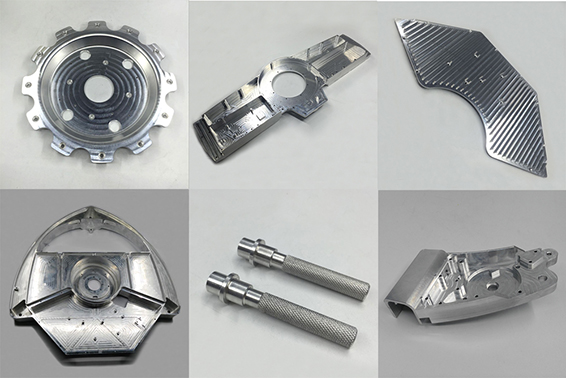
Precision cutting is an important part of modern industry, and learning how advanced subtractive processes work can change how much you can make. CNC Milling is a computer-controlled production technique in which rotating cutting tools are used to take material from a workpiece in an orderly manner, producing complicated shapes, flat surfaces, slots, and curves with a high degree of precision. Unlike human work, this automatic method can achieve tolerances of up to ±0.02 mm and surface finishes of Ra 0.8–1.6 μm. This makes it essential for businesses that need consistent, reliable results with aluminum, stainless steel, brass, copper, and engineering plastics like PEEK and PTFE.
Understanding CNC Milling: Fundamentals and Process
At its core, CNC Milling is a type of subtractive manufacturing. To make finished parts from raw materials, controlled machines make precise toolpath movements. Engineers start the process by turning CAD models into G-code instructions. These tell the machine's spindle and table how to move along multiple directions. End mills, face mills, or ball-nose cutters that rotate around the object at set speeds and feed rates remove material bit by bit until the desired shape is achieved.
How CNC Milling Differs from Related Manufacturing Methods
For cylinder-shaped parts, CNC turning turns the workpiece around a stable cutting tool. Milling, on the other hand, turns the tool around while the object stays on the table. When milling by hand, the depth, speed, and placement have to be changed all the time by an operator. This introduces human error and limits the level of complexity. These flaws are gone with automated milling, which can make thousands of coordinated moves with a level of accuracy that human work cannot match. Laser cutting is great for cutting thin sheets of material, but it cannot make three-dimensional shapes or parts that are structurally sound like machined parts can.
Operational Workflow: From Programming to Finished Part
Before production can start, full engineering plans must be sent in PDF, DWG, STEP, or IGS formats. Machinists look at these specifications to figure out the best ways to machine things, which includes choosing the right tools, figuring out spindle speeds, and planning the order of processes. Once set up, the machine will automatically perform:
• Face milling to create reference surfaces,
• Contour milling to define outer shapes,
• Pocket milling to make features that are sunken,
• Drilling for holes.
Often, it will do more than one operation at the same time. Compared to older methods that needed multiple tools and manual moves, this integrated approach cuts down on repositioning mistakes and speeds up cycle times.
Machine Configurations and Their Industrial Applications
The spindle of a vertical machining center is elevated above the workpiece. This makes them perfect for flat parts and shallow features that are common in electronics cases and car brackets. In horizontal setups, the spindle is aligned to the floor, which makes it easier for chips to fall out during deep-pocket machining on heavy machinery. Three-axis machines can move tools along X, Y, and Z axes, which works well for simple shapes. Four-axis systems can rotate around one horizontal axis, which lets them machine circular features without having to move the machine. Five-axis equipment turns the workpiece along two more axes at the same time. This makes it possible to make complicated medical implants and aircraft parts with undercuts and compound angles that would be impossible to make with other equipment or would need multiple setups.
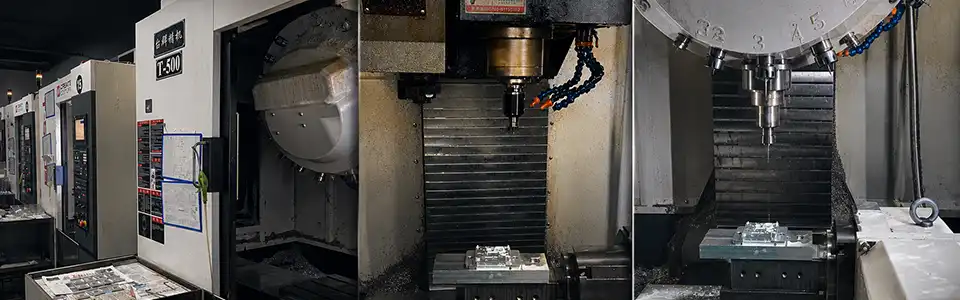
Material Compatibility Across Industries
Due to their good machinability and thermal qualities, aluminum alloys like 6061 and 7075 are used in a wide range of applications that need lightweight strength. These include robot arms and EV battery housings. The grades 303, 304, and 316 of stainless steel are used in medical gadgets and food processing equipment that cannot have their corrosion protection lowered. Brass and copper are good for electrical parts that need to carry electricity well, while engineering plastics like POM, PTFE, and PEEK are good for lab tools and pharmaceutical production because they do not react chemically and keep their shape. Different types of materials need different cutting settings. For example, strong feeds can be used on softer metals, but abrasive plastics need sharp tools and careful speed control to keep them from melting.
Key Principles and Benefits of CNC Milling
CNC Milling is different from older ways of making things in three main ways. Automation gets rid of worker tiredness and mistakes in judgment, making sure that the thousandth part is the same size as the first. Closed-loop feedback systems have encoders that constantly check the positions of the axes and fix any errors that happen before they affect the quality of the part. Digital programming saves tried-and-true toolpaths, which lets makers do the same good work months or years later without having to redo any of the work.
How Programming Ensures Consistent Quality
Not only do G-code directions tell you how to move the tools, but they also tell you how to cut, feed, spindle speed, and turn on the coolant. When a software says that the pocket depth should be 5.00 mm ±0.02 mm, the machine checks the Z-axis position in real time and stops every cycle exactly in that range. Tool adjustment methods take into account how much the cutters have worn down, so the dimensions stay accurate even over long production runs. Inspection data from after machining is fed back into programs, which allows for ongoing improvement that makes tolerances tighter between runs.
Comparative Advantages Over Alternative Manufacturing Methods
For traditional milling to work, the user must be able to read dials, change handwheels, and stay focused for hours at a time. Even skilled machinists make mistakes when they are tired or when they are trying to figure out the dimensions of a plan. Automated systems do the same things over and over again, finishing overnight production runs without being watched. Laser cutting cannot make walls that go up and down or threads that go inside. Turning is great for making cylinders, but it is not so good for making rectangles or holes that are not in the middle. With multi-axis milling, you can make pockets, drill holes at an angle, and cut complex shapes, all with just one workholding setup. This cuts down on lead times and placement mistakes by a huge amount.
Safety Considerations in Modern Machining Environments
Enclosed work areas keep chip release from putting workers in danger, and when doors are opened, interlocking doors stop the spindle from turning. Coolant systems keep particles from flying through the air and keep heat from building up, which protects the health of machinists and keeps the dimensions stable. There are emergency stop buttons all over the area that can be used right away if a tool breaks or a piece of work moves. Proper training stresses lockout methods before maintenance, the right way to hold a part so it does not fly off, and PPE standards like safety glasses and hearing protection in places where several machines are running at the same time.
CNC Milling Machine Selection Guide for B2B Procurement
To choose the right equipment, you have to weigh the technical skills against the available funds and the expected output levels. Managers of procurement have to look at how the machine specifications match up with the complexity of the parts, the production rate, and the quality standards that their buyers want. CNC Milling equipment selection requires balancing performance with cost.
Critical Evaluation Factors for Equipment Procurement
• Precision requirements determine how stiff the structure is and how complex the control system is, requiring thermally stable castings and vibration-damping supports for tolerances of ±0.01 mm.
• Machine envelope limits the maximum part dimensions, while tool investments are affected by spindle taper compatibility, such as CAT40, BT40, or HSK.
• Axis configuration directly affects geometric powers, where simple brackets need three-axis machines while turbine blades need five-axis simultaneous contouring.
• Software compatibility ensures CAM programs and machine controls work together smoothly, avoiding translation mistakes that compromise accuracy.
Leading CNC Machine Manufacturers in 2024
North American job shops still like Haas Automation because of their low prices and large partner network, offering both vertical and horizontal formats. Mazak machines are popular with high-volume car suppliers because they are reliable and have fast speeds that cut down on run times. DMG Mori equipment is aimed at aircraft companies that need five-axis complexity and strict quality paperwork, though it costs a lot. Hurco controls make it easier to program for small-batch custom work, which is why medical device makers change part designs often. Okuma's thermal adjustment technology works well in high-precision electronics where changes in surrounding temperature could lead to dimensional shift.
Investment Analysis and Return Calculations
The price of a basic three-axis mill starts at $80,000 and goes up to $600,000 for more powerful five-axis units. Buyers need to think about the costs of tooling libraries ($15,000 to $50,000), CAM software licenses ($5,000 to $20,000 a year), and training. ROI estimates compare the hourly cost of cutting to the cost of outsourcing, taking into account shorter setup times, lower scrap rates, and the ability to handle rush orders that cost more. Many makers find that moving production in-house cuts lead times from weeks to days, paying for the equipment within 18 to 24 months.
Procuring CNC Milling Services: What B2B Buyers Should Know
By outsourcing machining, businesses can get access to new skills without having to spend a lot of money on equipment. To be great at procurement, you need to know how service providers set prices, keep quality high, and keep track of plans. Successful CNC Milling partnerships depend on clear technical requirements.
Sourcing Approaches for Different Production Needs
Suppliers that offer quick quotes and short lead times are good for prototyping because samples can usually be delivered within three to seven days for design validation. Custom manufacturing is best for making small amounts of specialized parts because the setup costs are spread out over a smaller number of items. For bulk production, suppliers need to have a lot of tools and be able to work shifts so they can handle extra orders without delaying other responsibilities. Detailed drawing packages with GD&T callouts, material specs, and surface finish standards make it possible to get accurate quotes and cut down on clarifications.
Understanding Pricing Structures and Quote Components
Job shops usually charge $75 to $200 an hour for machines multiplied by estimated run times, plus setup fees and material markups. Costs go up when shapes are complicated and need special tools or more time to program. Online platforms might let you get quick quotes automatically based on CAD uploads, but the accuracy depends on the algorithms. When you buy more than 100 pieces, volume discounts become significant because setup costs are spread out over a bigger order. Asking for detailed quotes shows where costs are concentrated, pointing out chances to lower costs by making designs simpler or adjusting tolerances in non-critical areas.
Quality Assurance and Delivery Management
Material approvals from reputable sources show alloy composition and performance in mill tests, which is very important for FDA-regulated medical devices and AS9100 aerospace uses. First-article inspection records show that accurate CMMs and micrometers were used to check dimensions, setting a baseline before production starts. In-process checks find problems early on, so whole batches do not go beyond what is acceptable. Lead time promises should take into account getting materials, machine availability, and finishing steps like passivation or anodizing. Setting up clear lines of communication helps answer technical questions quickly and avoids costly misunderstandings.
CNC Milling Training and Support Essentials
Skilled operators and preventative repair plans are needed to get the most out of your machine investments. Companies that do not train their workers end up with more scrap, broken tools, and machines that are not being used to their full potential. An effective CNC Milling operation requires both digital and mechanical skills.
Programming Languages and Software Platforms
G-code is still the most common machine language, but conversational computer tools make simple tasks easier for users who do not know a lot about coding. CAM software, such as Mastercam, Fusion 360, and Solidworks CAM, takes 3D models and turns them into toolpaths. Based on material databases, the software instantly figures out feeds, speeds, and tool contact angles. Simulation lets you virtually watch machine processes and find crashes or inefficient tool movements before the cutting starts. Post-processors turn generic toolpaths into code that works with a particular machine controller.
Maintenance Protocols and Troubleshooting
Coolant levels, chip evacuation systems, and lubrication tanks are checked every day to stop pollution that speeds up wear. Spindle taper cleaning, way wiper replacement, and ball screw greasing are all jobs that need to be done once a week. Laser interferometers or ball bars are used for monthly calibration to check axis alignment and mechanical wear before it affects quality. Chatter marks are a sign of bad feeds or worn-out tools, while dimensional drift suggests heat expansion or loose workholding. Preventive maintenance contracts with OEM techs provide diagnostic help and real replacement parts, cutting down on unplanned downtime.
Continuous Learning Resources
Community schools offer machining certificates that teach the basics of reading blueprints, choosing the right tools, and setting up CNC machines. Webinars on new tools and best practices are offered by industry groups like SME and NTMA. Tool makers with good reputations have YouTube feeds showing how to set up and fix problems. Apprenticeships put new operators with experienced machinists to learn about machine quirks and process optimizations. Putting money into developing employees lowers turnover, raises first-pass return, and makes employees better equipped to handle bigger and more difficult tasks.
Conclusion
CNC Milling technology has completely changed precision production by mixing computer control with the ability to work on multiple axes. This makes it possible to make parts that meet tight tolerances for a wide range of materials. Engineers and buyers can make choices that are best for both cost and performance when they understand the operating principles, machine configurations, and buying factors. Success depends on clear communication, reasonable requirements, and partnerships with knowledgeable makers who see projects as joint engineering challenges rather than transactional quotes. Modern milling keeps getting better thanks to new tools, better software, and combined quality systems that make it possible to achieve higher levels of accuracy while keeping production costs low.
FAQ
What materials work best with CNC milling processes?
For most uses, aluminum alloys are the best choice because they are easy to work with, strong for their weight, and inexpensive. Stainless steel types do not rust, which is important for medical and food-grade parts. Brass and copper are good for electrical uses that need to carry electricity well. Engineering plastics, such as POM, PTFE, and PEEK, can fight chemicals and keep heat in. CNC Milling material selection depends on function: weight-bearing parts need metals, while insulators use plastics.
How do 3-axis and 5-axis machines differ in capability?
Three-axis machines move tools along X, Y, and Z coordinates that are not parallel to each other. This is good for parts that only have traits that can be seen from one way. With five-axis equipment, two rotatable axes are added, so tools can approach workpieces from any point without having to move. This makes it possible to make undercuts, compound angles, and sculptured surfaces that are hard to make with three-axis setups. The extra complexity makes programming take longer and costs more, but it gets rid of the need for multiple setups.
What certifications verify a supplier's quality standards?
ISO 9001 approval shows you have well-thought-out quality management systems covering buying, checking designs, and process validation. AS9100 adds standards for aerospace-specific configuration management and verification. ISO 13485 sets tighter rules for handling materials and cleaning when making medical devices. Medical component sellers that sell to the U.S. market must be registered with the FDA. To prove compliance, ask for examples of inspection records that include dimensional proof and material certifications beyond paper certificates.
Partner with RYH for Expert CNC Milling Solutions
We know how hard it is for buying managers and design engineers to meet strict standards while still finishing projects on time. Our engineering-driven method puts your team in direct contact with experienced machinists who have an average of 15 years of technical knowledge. This gets rid of the communication problems that lead to mistakes that cost a lot of money. We can handle aluminum, stainless steel, brass, copper, and industrial plastics with constant quality on all three and five axes. This includes fast prototyping that is given in three days and high-volume production that keeps ±0.02 mm tolerances across thousands of parts. If you email bill@bldmachining.com directly, your questions will go straight to the people who make decisions. We have been a CNC Milling maker since 2008, and we offer material certifications, thorough inspection reports, and one-week remanufacturing guarantees to keep your project on track. Contact RYH today to discuss how our custom cutting services can help you build your products faster.
References
1. Kalpakjian, S. and Schmid, S. R. (2014). Manufacturing Engineering and Technology, 7th Edition. Pearson Education.
2. Machinery's Handbook, 31st Edition (2020). Industrial Press Inc.
3. Groover, M. P. (2020). Fundamentals of Modern Manufacturing: Materials, Processes, and Systems, 7th Edition. John Wiley & Sons.
4. Society of Manufacturing Engineers (2023). CNC Machining Handbook: Building, Programming, and Implementation.
5. Modern Machine Shop (2024). CNC Technology Advances and Best Practices Report.
6. American Society of Mechanical Engineers (2022). ASME B5.54 - Methods for Performance Evaluation of Computer Numerically Controlled Machining Centers.
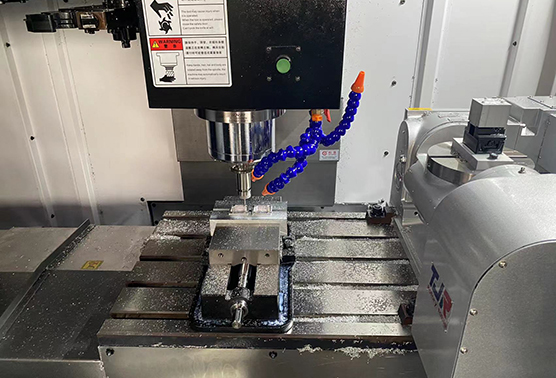
When precision, reliability, and performance define success, CNC machined parts become the backbone of engineering innovation. These high-accuracy components are manufactured through computer-controlled subtractive processes—milling, turning, and drilling—transforming raw materials into functional parts with micron-level tolerances. Industries like aerospace, medical devices, automotive, and robotics depend on these precision components to meet exacting specifications where failure isn't an option. Unlike injection molding or 3D printing, computer numerical control machining delivers dimensional stability, superior surface finishes, and the mechanical properties required for mission-critical assemblies that operate under extreme stress, temperature, or regulatory scrutiny.
Understanding Precision Component Manufacturing and Its Process
Through a number of carefully planned steps, computer-controlled machining turns engineering drawings into real parts. The first step is to understand the CAD model. Then, toolpaths are set up to precisely cut away material from solid stock. Multi-axis mills can work with complicated shapes, and turning processes make cylinder-shaped parts that are tightly centered.
Core Manufacturing Steps in Precision Machining
Choosing the right materials is the first step in any good job. Aluminum alloys are great for aircraft frames and robotic links because they are easy to machine and have a high strength-to-weight ratio. Stainless steel types don't rust, which is important for medical tools and food processing equipment. Titanium is the strongest material available for aircraft uses that need to be lightweight. On the other hand, engineering plastics like PEEK and nylon are used in places where metal would rust or conduct electricity that isn't needed.

Material Properties That Drive Application Success
Tolerance Requirements and Quality Standards
Knowing these basics helps buying teams rate the skills of suppliers in an unbiased way. When looking at possible partners, find out how accurate their machine tools are, what kind of testing equipment they have, and how they control the process. If a company says they have tight limits, they need to show proof of that by showing accurate measuring systems and statistical process control paperwork.
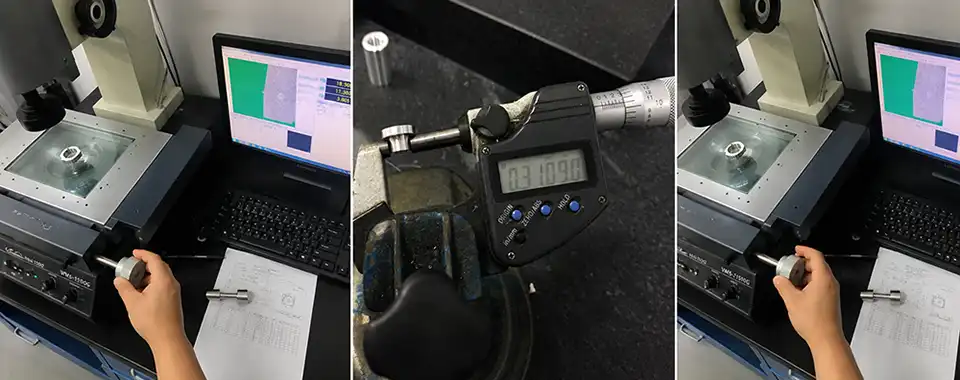
Key Benefits of Precision-Machined Components for Mission-Critical Systems
Computer-controlled manufacturing for CNC Machined Parts has many benefits beyond just making sure that the dimensions are correct. Repeatability is one of the best things about it; once a program is proven to work, the same parts can be made in different production runs that happen months or years apart. This stability gets rid of the changes in size that happen when things are done by hand or when plastic tools get worn out.
Multi-axis machining makes it possible to make shapes that are too complicated for other ways of making. Undercuts, internal channels, holes that cross each other, and compound angles are all coded once and then done perfectly. Engineers who make parts for robots, medical devices, or spacecraft systems have more freedom in their designs, which directly leads to better product performance.
When you compare production methods, you can see where they are most useful. Additive manufacturing is great at making organic shapes and quickly testing ideas, but it's not so good at making things that are strong and smooth. Injection molding is the most common way to make a lot of things, but it needs expensive tools and long wait times. Computer-controlled machining is the middle ground between these two extremes. It can produce materials and finishes that are good enough for production without having very high setup costs. This makes it perfect for prototypes, trial runs, and customized production batches that are common in modern product development processes.
Selecting the Right Precision Components for Your Application
For component buying to work, the needs must be made clear from the start. The functional performance requirements should include information about the loads, temperatures, chemicals that may be exposed to, and the expected service life. A motor housing for industrial robots needs a different kind of material than a handle for a surgical tool, even though both need to be accurate in terms of size.
Evaluating Material Properties Against Application Demands
Material approvals for CNC Machined Parts make it possible to track and guarantee performance. Medical gadget makers need materials that are FDA-approved and come with full test results. For aerospace jobs, you need certified alloys whose chemical and mechanical qualities have been recorded. We work with certified suppliers of materials and include full paperwork for all shipments, so you don't have to guess when it comes to quality and security.
Supplier Certification and Quality System Assessment
When evaluating a supplier, you should do more than just compare prices. Systematic quality management is shown by ISO approval, but problem-solving skills are shown by direct contact between engineers. We give each project an expert contact, who helps with design reviews, figuring out if the product can be made, and quickly fixing problems that come up during production. Working together cuts down on expensive redesigns and speeds up the time it takes to get a product to market.
Custom Versus Standard Components: Balancing Performance and Economics
Geographic factors affect wait times and how well people can communicate in the sourcing of CNC Machined Parts. Some buyers are hesitant to purchase from other countries, but our experience shows that good communication and effective service can overcome distance barriers. We can usually produce samples within one week, or within three days for simpler designs. Our prices are competitive and can match or even beat domestic options. Small orders of CNC Machined Parts can be shipped directly to the customer’s door, simplifying logistics and making international cooperation feasible, even for small quantities such as prototypes.
Design Optimization Strategies for Cost-Effective Precision Manufacturing
Thoughtful design has a huge effect on the cost and time of production. Small-diameter tools are needed for sharp internal corners, which take longer to machine and wear out the tools faster. Radiused corners that match normal end mill sizes make the machine go faster and last longer because they spread out the stress. Deep pockets with small holes make it hard for chips to escape and for the tool to stay rigid. When you can, make the pockets bigger than they are deep. This makes them easier to machine and lowers the cost.
Material-Specific Design Guidelines
Standard hole sizes that match up with existing tools get rid of the need to buy special tools. Blind holes need to be controlled in depth and chipped away, but through-holes are cheaper. Standard thread forms should be used for tapped holes instead of unusual pitches that need special taps. These things may not seem important on their own, but when added up across many complicated parts, they have a big impact on quotes and delivery times.
Large radii and middling wall thicknesses are good for aluminum shapes. The material is very easy to machine, which lets you make complex shapes, but thin walls can bend when they're being cut, which can affect how accurately the dimensions are held. The way stainless steel hardens after being worked with makes it good for making broken cuts and sharp tools. Titanium needs slow speeds, rigid setups, and a lot of tool changes. Making the design as simple as possible directly saves money.
Leveraging Advanced Machining Capabilities
With multi-axis power, you can make CNC Machined Parts for more complex designs and set them up more quickly. Five-axis machining can reach complex angles in a single process, which keeps tolerances tighter than moving parts around several times. We use this technology to make robotic joints, medical device parts, and aircraft brackets where setup mistakes can't affect the precision or finish of the surface.
Surface treatments improve efficiency beyond the qualities of the main material. Anodizing metal makes it less likely to rust and protects against corrosion. Testing with salt spray proves that coatings are durable enough to be used in sea or outdoor settings. Through our network of partners, we organize these secondary tasks, keeping track of the project while sending finished parts that are ready to be put together.
Strategic Procurement Approaches for Precision Component Sourcing
Request for Quotation papers that work well speed up the process of getting exact prices and schedules. Complete 3D models show what the designer was trying to do better than just 2D drawings. Instead of vague statements, material specs should be based on industry standards. Suppliers can make reasonable proposals without having to go through multiple rounds of clarification if you are clear about the amount you need, when you need it, and what kind of quality paperwork you need.
Crafting Comprehensive RFQ Documentation
Modern methods for making CNC Machined Parts are supported by small-batch freedom. We can handle test orders of just one piece all the way up to production runs of thousands. We do this by adapting our resources to the stage of the project. This gets rid of the need to build ties with multiple suppliers as goods go from an idea to a finished product. This keeps consistency and institutional knowledge up to date throughout the development cycle.
Volume Considerations and Production Scaling
There are both chances and problems in global supply networks for CNC Machined Parts. When providers put contact first, things like language barriers and different time zones don't matter. Our engineering team keeps work hours that are the same as those of our North American users, so they can answer technical questions within hours instead of days. When you mix this responsiveness with technical depth, foreign relationships go from being risks to being competitive benefits.
Our remanufacturing promise makes sure that any quality problems are fixed right away. If you report a problem within thirty days, we'll fix it quickly (usually within a week) and pay for the return shipping. This promise shows that we trust our processes and lowers the risk that procurement managers need to take when adding new suppliers to lists of qualified vendors.
Conclusion
Computer-controlled methods used to make precision parts, including CNC Machined Parts, give them the accuracy, repeatability, and material qualities that are needed for important uses. To do good buying, you need to know the basics of manufacturing, be clear about what you need, and work with providers who can provide both technical expertise and quick communication. By making designs easier to make, writing detailed specs, and choosing partners who care about quality and working together, engineering teams can shorten development times while still meeting the high standards needed for mission-critical systems. It's not about getting the lowest price; it's about building partnerships with manufacturing partners who can work with your engineering team as an extension of it.
FAQ
What factors most significantly impact component pricing?
Base prices are determined by the material used. For example, titanium or PEEK metals cost more than aluminum or regular plastics. Complexity affects cutting time; complicated shapes, close tolerances, and long setup times all add to the cost of labor and tools. Setting up depreciation changes the price per part based on the quantity. Because of code and fixturing, a prototype could cost hundreds of dollars. Production runs, on the other hand, split these costs among many pieces, which greatly lowers unit prices.
How can I verify supplier quality before committing to production orders?
Ask for model parts that show off features that are useful for your application. Look over the material certifications and inspection records to make sure that the way the paperwork is done is correct. Find out about the measuring tools and when they need to be calibrated. While ISO approval is a good way to make sure of quality, talking to engineers directly during sample production shows more about how they solve problems and their technical knowledge than any license.
What lead times should I expect for custom precision machining projects?
From the time an order is placed until it is shipped, simple parts made from stock materials usually take one week. Two to three weeks may be needed for parts that are very complicated and need special materials, multiple setups, or a thorough review. When time is of the essence, rush services can shorten plans, but careful planning is still the best option. Clear communication during the quote process sets reasonable goals and avoids schedule problems later on.
Partner with RYH for Precision CNC Machined Parts Manufacturing Excellence
Every part that RYH makes is made with engineering-driven accuracy. We've been making totally customized metal and plastic parts for businesses that can't skimp on quality since 2008. Our engineers talk to your team directly—no middlemen, no misunderstandings—and offer Design for Manufacturability analysis, material suggestions, and tolerance optimization that cut costs while raising performance. Our team has an average of over 15 years of experience in machining, so they are ready to take on your hardest problems. Whether you need a sample to be approved within three days or production numbers that meet FDA standards, they can do it. You can talk to our technical experts about your project by emailing bill@bldmachining.com. As a trusted CNC Machined Parts supplier, we deliver the precision, speed, and technical partnership that transforms component sourcing from a procurement task into a competitive advantage.
References
1. Kalpakjian, S., & Schmid, S. R. (2019). Manufacturing Engineering and Technology (8th ed.). Pearson Education.
2. Groover, M. P. (2020). Fundamentals of Modern Manufacturing: Materials, Processes, and Systems (7th ed.). Wiley.
3. Society of Manufacturing Engineers. (2018). CNC Machining Handbook: Building, Programming, and Implementation. SME Publications.
4. American Society of Mechanical Engineers. (2021). ASME Y14.5-2018: Dimensioning and Tolerancing Standard. ASME Press.
5. Boyer, R., & Briggs, R. D. (2022). Materials Properties Handbook: Titanium Alloys for Aerospace Applications. ASM International.
6. FDA Center for Devices and Radiological Health. (2020). Technical Considerations for Additive Manufactured Medical Devices: Guidance for Industry and Food and Drug Administration Staff. U.S. Department of Health and Human Services.
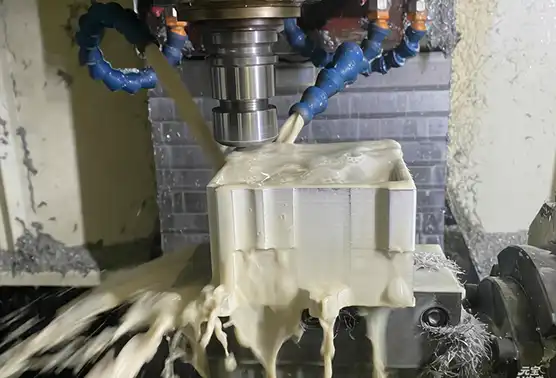
Precision machining is the key to solving difficult engineering problems and the difference between great functionality and expensive failures. For businesses requiring precise tolerances, intricate geometries, and reliable quality throughout production runs, CNC Machined Parts are the go-to option. Learning the ins and outs of machining complicated parts is important for keeping projects on schedule and within budget, whether you're looking for parts for medical devices, aerospace pieces, or automobile systems. These five expert tips will help procurement managers, design engineers, and production planners make important decisions at key points, such as the initial design analysis and the supplier partnership. They will help you make sure that your parts meet exact standards while still being easy to make and cost-effective.
Tip 1: Thoroughly Analyze Part Design and Complexity
Start with Comprehensive Design Review
A lot of work goes into good cutting before the first chip flies. There are often secret problems in complex parts, like undercuts, internal spaces, or wall thicknesses that make it hard for tools to reach and stay rigid. We've seen that procurement teams that start early on with design analysis have 40% fewer fix rounds than teams that rush to production. Advanced CAD/CAM software lets you do virtual machine models that show you possible collisions, tool access issues, and tolerance stack-up problems before you spend money on materials. With this proactive method, rough sketches are turned into detailed industrial plans that can be used.
Leverage Design-for-Manufacturability Collaboration
Direct contact between engineers working on CNC Machined Parts gets rid of the language mistakes that happen a lot in sourcing projects. Our technical team often finds ways to change fillet angles, move holes so they are easier to access with tools, or change tolerance zones without affecting function when they look over client plans. These DFM findings can cut the time it takes to machine by 25–35% while making the parts more stable in their dimensions. The collaboration works best when design engineers share functional needs instead of just geometries. This lets machinists offer different features that do the same job but cost less and are made faster.
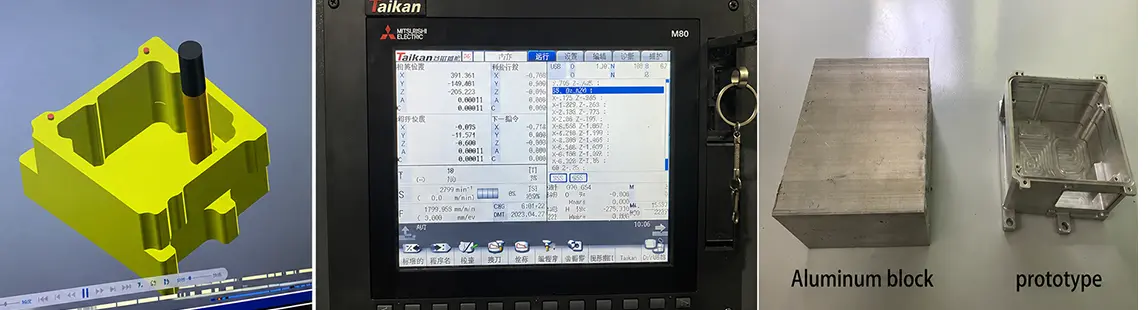
Visualize Toolpath Feasibility Early
Knowing how the cutting tools will move through the shape of your part will keep things from going wrong during production. When looking at features at complex angles or deep pockets that need long tool extensions, it's clear that you need more than one line. CAM simulation shows if normal tools are enough or if special cuts are needed. This level of visibility is very important for planning, since specialty tools can add days to wait times and hundreds to unit prices. Finding out about these needs during the quote process instead of in the middle of production helps keep projects on schedule and within price.
Tip 2: Select the Right CNC Machining Process Type
Match Process Capabilities to Part Complexity
For CNC Machined Parts, different machining methods have their own benefits when dealing with complicated shapes. Most prismatic parts can be machined easily with three-axis milling. However, five-axis machining is needed when features appear at multiple compound angles or when tool access needs to be constantly reoriented. We were able to make robot parts with built-in mounting bosses at 15-degree intervals around cylinder-shaped bodies, which is something that cannot be achieved with regular tools. Swiss-type turning is great for small shafts with complicated longitudinal features, and EDM is ideal for situations where hard materials or complex internal geometries make it impossible for normal cutting tools to work.
Consider Production Volume in Process Selection
The size of your batch has a big effect on the best process choice. Multi-axis milling is flexible, so you don't have to buy expensive fixtures for prototypes and small runs. For mid-volume output, it might be worth it to use specialized workholding and three-axis programs that are designed to cut down on cycle time. The changeover point usually happens between 500 and 1,000 pieces per year, but these levels can change depending on the complexity and value of the parts. Knowing how your volume will change over time helps providers suggest process methods that will stay cost-effective as volumes rise, so you don't have to do any re-engineering in the future.
Evaluate Material Interaction with Machining Methods
The qualities of the material have a big impact on the process choice. Titanium and Inconel metals are hard to work with normally, but they work well with high-pressure coolant systems and special ways of making tools. To keep them from melting and delaminating, glass-filled nylon and PEEK industrial plastics need to be cut at slower speeds and with a sharp edge. Aluminum CNC Machined Parts can have harsh conditions that remove material quickly, which makes them perfect for complicated aircraft brackets. From what we've seen, matching the properties of the material to the powers of the process cuts tool wear costs by 30% while also improving the quality of the surface finish.
Tip 3: Choose Optimal Materials for CNC Machining Complex Parts
Balance Performance Requirements with Machinability
There are trade-offs between technical qualities and how quickly the product can be made when choosing a material. Aluminum metals like 6061-T6 and 7075-T6 are popular for making industrial equipment housings and UAV structural parts because they are strong for their weight and easy to machine. Stainless steel types are needed for medical tools and food processing equipment because they don't rust, but they are 40–50% slower to machine than aluminum. Titanium is very strong at high temperatures, which makes it ideal for use in aircraft applications. However, it needs special cutting techniques and longer cycle times.
Engineering plastics step in and do the job when metals fail to solve a problem. PEEK CNC Machined Parts can handle being exposed to 480°F for a long time and are resistant to chemicals and electricity, which is very important for tools used in semiconductor processing. ABS CNC Machined Parts are a cheap way to make prototypes that can withstand pressure during functional testing. When used in food-contact situations, nylon CNC Machined Parts don't need to be greased because they are self-lubricating. Not only does the choice of material affect how well a part works, but it also affects wait time, tooling costs, and unit price.
Verify Material Certifications and Traceability
Regulated businesses need proof of a material's history. Parts for medical devices need materials that are FDA-approved and can be fully tracked back to heat lots and mill certificates. Materials for aerospace parts must meet AMS standards and have their full chemical makeup confirmed. We keep working with certified sources who give us material approvals, paperwork for dimensional tolerances, and records of compliance for tests against anodizing and salt spray. Our careful attention to material validation has kept our medical device clients from having to pay a lot of money for qualification fails caused by undocumented materials that would render whole production runs useless.
Consider Supply Chain Stability
The supply of materials has a big impact on project plans for CNC Machined Parts. Common metals, like 6061 aluminum and 304 stainless steel, are always available. But exotic types have longer wait times, and prices change all the time. When choosing materials for complicated parts, knowing how the market is doing right now can help you plan for delays. During times of lack, we've helped clients find other alloys with similar qualities, which kept production going even when chosen materials had six-month backlogs.
Tip 4: Optimize CNC Machining Parameters and Setup
Fine-Tune Cutting Parameters for Quality
To get tight specs on complicated parts, you have to carefully optimize the parameters. Spindle speeds, feed rates, depth of cut, and tool contact angles must be set in a way that balances the amount of material removed with the quality of the finish and the accuracy of the measurements. Aggressive parameters increase output, but they also increase the chance of tool movement, which lowers standards. Setting things to be conservative guarantees accuracy but raises costs. Our engineers come up with parameters by making test cuts and small changes over time, writing down the best numbers for each mix of material and shape. Because of this focus, we can regularly hold ±0.005mm tolerances on complex features.
Implement Strategic Tooling Selection
Choosing the right tools has a huge effect on both quality and cost when producing CNC Machined Parts. Carbide endmills last longer and cut faster than high-speed steel in most materials. This makes the higher original cost worth it because they don't need to be replaced as often and give better results. When working with rough materials, coated tools last longer. The shape of the tool is also important. For example, changeable helix forms stop chatter on thin walls, and chip breaker geometries stop stringy chips that damage surfaces. We keep a large inventory of tools for a wide range of specific uses. This way, we can avoid delays when standard cuts don't work on difficult features.
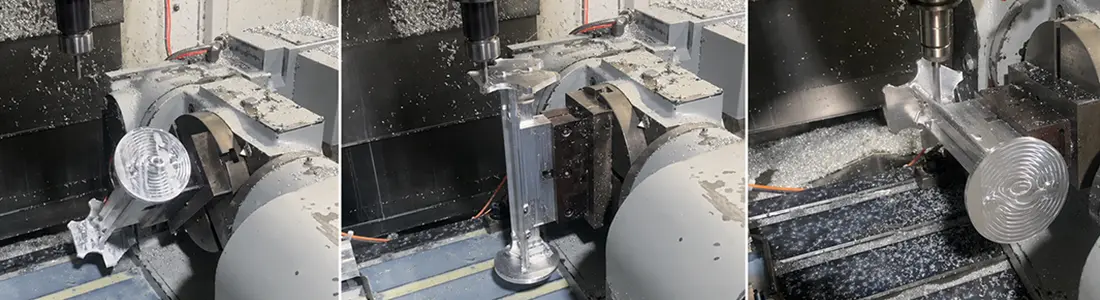
Establish Rigorous Quality Control Protocols
For complex parts, proof is needed after the final check. In-process measurement finds changes in dimensions before expensive features are finished, which prevents scrap from happening. We use first-article inspection to make sure the setup is correct, and then statistical process control to keep an eye on important measurements during production runs. A CMM measurement checks all of the physical standards, and a surface finish test makes sure that the machining parameters meet the required roughness levels. When quality problems happen, our ability to quickly remanufacture—usually in one week with shipping costs covered—shows that we care about our customers' success.
Tip 5: Partner with Trusted Custom CNC Machining Suppliers
Evaluate Supplier Technical Capabilities
The success of a CNC Machined Parts project depends on the choice of supplier more than anything else. When judging technical depth and industrial experience, don't just look at lists of equipment. Can the experts at the supplier talk about the pros and cons of the tolerance standards and the manufacturing costs? Do they actively suggest ways to improve the design? Our team has an average of more than 15 years of experience with machining, which lets us have deep technical conversations about choosing the right materials, improving structures, and making things that are possible. This knowledge directly leads to fewer problems with output and better problem-solving when problems do happen.
Assess Communication and Responsiveness
How quickly a project moves relies on how responsive the provider is. We've built our name on quickly sending quotes—usually within 24 hours—and making samples in three to seven days for most parts. Because internal processes have been simplified and contact between customers and engineers has been made direct, there are no middlemen. When procurement managers call us, they talk to the engineers who are looking over the plans and planning how to make the products. This gets rid of the jumbled phone calls that lead to mistakes about specifications and project delays.
Verify Flexibility and Scalability
A lot of the time, samples of complicated parts, such as CNC Machined Parts, are made before they are put into mass production. Your seller should be able to handle this change without any problems. We are experts at small-batch production and customization. We can handle orders for as few as one sample or as many as a few thousand pieces without needing to see a promise to volume. This flexibility is very important during the growth stages of a product, when designs change, and numbers are unknown. Our ability to integrate resources helps projects grow, and the quality stays the same whether we're making five review samples or 500 production units.
Conclusion
To successfully machine complicated CNC Machined Parts, you need to pay close attention to design analysis, method selection, material selection, parameter optimization, and working with a supplier. At each choice point, there are effects on cost, product, and delivery time. Procurement teams can greatly enhance the results of projects by carefully studying part shape at the beginning, choosing the right machining methods, picking materials that balance performance with ease of production, improving cutting parameters, and working with skilled suppliers. These five tips are based on thousands of complicated machining projects completed in aircraft, medicine, cars, and industrial equipment. They are meant to help you lower your risk and get your product to market faster.
FAQ
What defines a "complex part" in CNC machining?
Tough to make parts often have tight tolerances (less than ±0.005mm), compound angles that need access from more than one axis, deep holes that are hard for tools to reach, thin walls that easily bend, or complex surface shapes. They usually mix several machining processes on different axes, and they might need special fixtures or tools that are made just for them. In addition to geometry, standards for material hardness and surface finish add more levels of complexity.
How long does complex part machining typically take?
Lead times depend on how complicated the part is, how much material is available, and how busy the shop is at the moment. It might take three days to finish simple complex parts, but one to two weeks to finish complex multi-operation parts. Because tool improvement and process validation take more time at the start, prototypes usually ship faster than production runs. Clear contact during the quotation process sets reasonable deadlines that are based on your individual needs.
What industries benefit most from precision CNC machining?
Precision-machined parts are used a lot in aerospace, medical devices, automobiles, industrial automation, robots, and the production of semiconductor equipment. These industries need precise measurements, the ability to track materials, and regular quality, all of which can be consistently provided by CNC processes. Any use where a broken part could have major safety or financial repercussions benefits from CNC machining's superior accuracy and reliability compared to other ways of making things.
Ready to Start Your Complex Machining Project with RYH?
With 16 years of experience in precise CNC cutting, RYH can help you with even the most difficult parts. As a specialist in CNC Machined Parts, we are very good at making exactly what you want from your plans. We can work with both metal and non-metal materials and keep tolerances to ±0.005mm. Our engineering team, which has an average of more than 15 years of technical knowledge, talks to you directly to improve designs, suggest materials, and solve problems with production. We offer quick quotes within 24 hours and full samples in three to seven days. Our fast global door-to-door shipping will help you meet your project deadlines. Our quality assurance includes material certifications, thorough inspection reports, and one-week remanufacturing promises when needed. This is true whether you need to test a sample or make a lot of them. Get in touch with our engineering team right away at bill@bldmachining.com today to discuss how our CNC Machined Parts supplier services can help you turn your difficult component problems into manufacturing wins.
References
1. Brown, M. & Chen, L. (2021). "Advanced CAD/CAM Strategies for Complex CNC Machining." Journal of Manufacturing Systems, Vol. 58, pp. 234-247.
2. Peterson, R. (2020). "Material Selection Guidelines for Precision Machining Applications." Society of Manufacturing Engineers Technical Papers, Series TP20-145.
3. Kumar, S. & Zhang, W. (2022). "Multi-Axis Machining: Process Selection and Economic Analysis." International Journal of Production Research, Vol. 60, No. 8, pp. 2567-2583.
4. Anderson, J. (2019). "Design for Manufacturability in CNC Machining: A Practical Guide." Manufacturing Engineering Press, 3rd Edition.
5. Williams, T. & Martinez, C. (2023). "Quality Control Methods for High-Precision Machined Components." Precision Engineering Journal, Vol. 79, pp. 112-126.
6. Thompson, D. (2021). "Supplier Selection Criteria in Complex Component Procurement." Supply Chain Management Review, Vol. 25, No. 3, pp. 45-59.
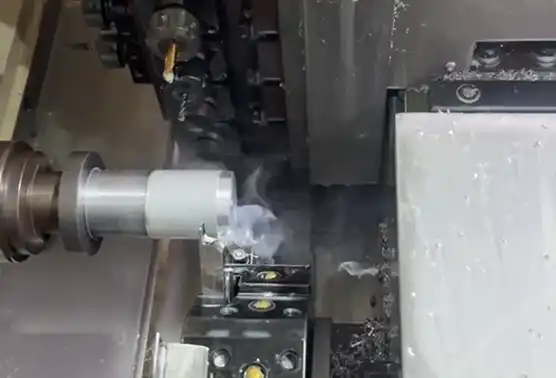
CNC turning is a precision machining process where computer-controlled lathes rotate cylindrical workpieces against cutting tools to create accurate parts with complex geometries. This automated subtractive manufacturing method excels at producing shafts, bushings, pins, and threaded components from metals and plastics, delivering consistent dimensional accuracy and excellent surface finishes. Unlike conventional manual lathes, CNC turning eliminates human variation through programmed instructions, achieving tolerances as tight as ±0.02 mm while maintaining repeatability across production batches. The process supports both rapid prototyping and mass production, making it essential for industries requiring precision cylindrical components.
What is CNC Turning? An In-Depth Definition
CNC Turning is a precise turning technique in which computer-controlled lathes turn cylinder-shaped workpieces against cutting tools to produce precise parts with intricate shapes. This automated subtractive production method is great at making threaded parts, shafts, bushings, and pins out of metals and plastics. It does a great job of maintaining uniform dimensions and surface finishes. CNC Turning is different from traditional manual lathes because it doesn't depend on human error. Instead, it uses coded directions to achieve tolerances as low as ±0.02 mm while keeping consistency across production runs. Rapid development and mass production can both be done with this method, which makes it important for businesses that need precise cylindrical parts.
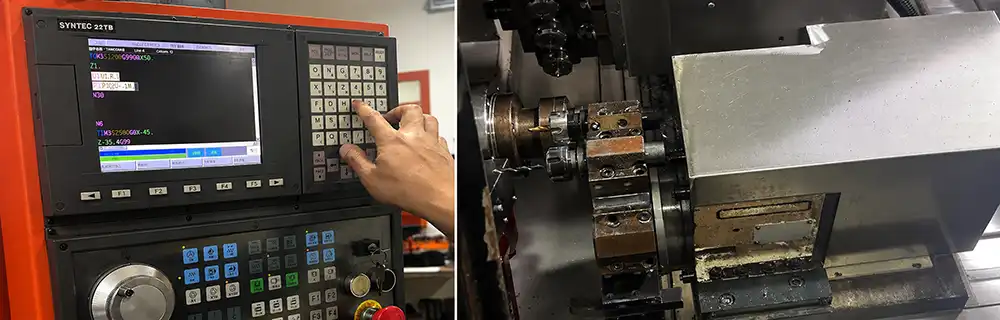
The Core Mechanism Behind CNC Turning
CNC Turning is based on computer numerical control systems that provide incredibly precise movement guidance for lathe wheels and tool movements. Carbide or high-speed steel cutting tools move along multiple directions, removing material to make the shapes that are needed while the workpiece spins at controlled speeds. Modern CNC lathes can be set up with two, three, or more axes, which lets makers make complex shapes like tapers, grooves, and internal bores without having to move parts around.
How CNC Turning Differs from Manual Machining
In traditional hand turning, trained workers have to keep changing where the tools are placed and checking the sizes of the parts as they are being made. This makes things less predictable and slows down production. By following pre-programmed toolpaths with micrometer-level accuracy, CNC Turning gets rid of these problems and enables long periods of uninterrupted operation. The automatic process cuts down on labor costs and greatly improves part consistency, which is especially important for medical device parts and aircraft uses where differences in size can put people's safety at risk.
Understanding the Operational Workflow
CAD/CAM programming, in which engineers translate technical drawings into G-code directions, is the first step in the normal CNC Turning process. The raw material, which is usually brass, aluminum alloys, or stainless steel 304, is locked into the chuck or collet during setup. The machine cuts at the best spinning speeds, which for finishing passes are often higher than 4,000 RPM. Secondary operations like polishing, threading, and knurling are done in later sets, but more modern turning centers do these steps all at once to reduce the amount of work that needs to be done by hand.
Advantages of CNC Turning for Modern Manufacturing
Because it solves important production issues that purchasing managers and quality engineers deal with every day, CNC Turning is becoming more and more popular among manufacturers. The benefits go far beyond just automating tasks; they affect every part of the quality and speed of the supply chain.
Unmatched Precision and Surface Quality
Tolerances of 0.02 mm are regularly achieved by CNC Turning, which meets the strict requirements of car sensors and electronic equipment. When carbide tools are used with high spinning speeds, the surface roughness can be as low as Ra 1.6. This means that expensive extra finishing is not needed. We use spectrometers to check the metal makeup of new materials before they are machined. This keeps material-related flaws from happening that could lead to dimensional drift during production. Coordinate measuring machines (CMM) and precision gauges check important measurements all along the way to make sure that every part fits the customer's drawings.
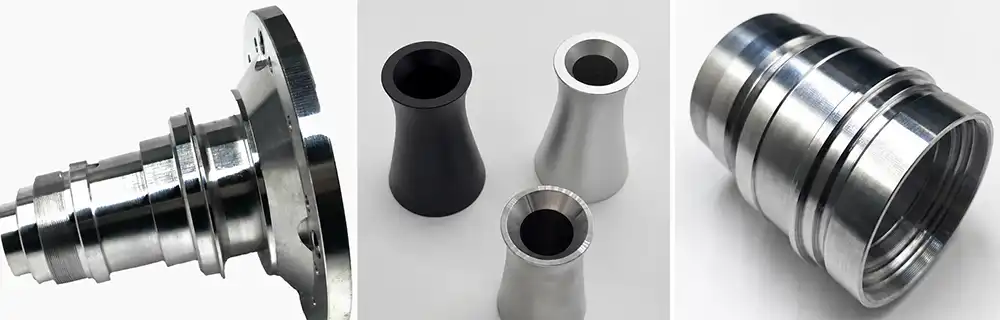
Cost Efficiency Through Automation
CNC Turning lowers per-part costs through short cycle times and low scrap rates, but the initial setting requires engineering knowledge. When compared to manual processes, a single person can watch over multiple machines at the same time, which greatly reduces the cost of labor. The process can easily go from making a few prototypes to making more than 10,000 of them without lowering the quality. This freedom is very helpful for research and development teams that are trying out new designs and for operations managers who are turning prototypes that work into full production runs.
Accelerated Lead Times and Project Responsiveness
When teams working on new products have to meet tight start dates, speed is important. Within three to seven days, CNC Turning usually sends prototype models, and simple parts can be made even faster. In order to support urgent projects and enable parallel production that shortens lead times, our building keeps 15 CNC Turning and turning-milling machines. Direct contact between engineers gets rid of the delays that come with having a sales team act as a middleman. This lets engineers talk about how to improve designs in real time, which avoids expensive rework rounds.
All of these benefits make the supply chain more stable by lowering reliance on sellers who can't change how they make things or keep the quality consistent. Procurement experts get a reliable partner that can help with both small-scale experiments and ongoing high-mix production needs.
Applications of CNC Turning in B2B Procurement and OEM Manufacturing
Precision shafts, bushings, and threaded fittings that can handle high temperatures and mechanical stress are needed in the car industry. To make sure the electrical connections work right, companies that make battery tools need special stainless steel terminals with very tight limits on size. These important parts are made by CNC Turning from metals like aluminum 6061 and stainless steel 316, which helps both conventional combustion systems and new electric vehicle technologies.
Automotive and Electric Vehicle Components
Precision shafts, bushings, and threaded fittings that can handle high temperatures and mechanical stress are needed in the car industry. To make sure the electrical connections work right, companies that make battery tools need special stainless steel terminals with very tight limits on size. These important parts are made by CNC Turning from metals like aluminum 6061 and stainless steel 316, which helps both conventional combustion systems and new electric vehicle technologies.
Medical Device Manufacturing Requirements
Medical equipment sellers have to follow strict rules, such as getting material certifications that are FDA-compliant and biocompatibility paperwork. CNC Turning is very good at making parts for medical instruments, lab tools, and diagnostic devices that meet ISO 13485 standards. The process can work with special materials like titanium metals and medical-grade plastics, and the surface finishes can still be used for cleanliness. Passivation treatments make internal parts less likely to rust, meeting the quality standards of the healthcare business.
Industrial Automation and Robotics
Companies that make robots need precise gears, couplings, and attaching parts that work well with automatic systems. Companies that make industrial equipment get special cylindrical parts for things like sensor housings, pneumatic motors, and hydraulic cylinders. CNC Turning is essential for automation applications where component misalignment leads to system malfunctions because it can machine complicated shapes with very tight concentricity requirements.
Electronics and Semiconductor Equipment
Equipment used to make semiconductors needs shielding housings and setting parts that are very accurate and are made from brass or metal. Custom links, RF insulation parts, and heat sink elements made with CNC Turning are required by electronic makers. The process takes care of the complicated internal threading and fine-pitch exterior features needed for electrical links while keeping the shielding qualities against electromagnetic interference (EMI).
To find good manufacturing partners, you have to look at more than just their basic machine skills. Look for providers that offer Design for Manufacturability (DFM) analysis, help with choosing materials, and thorough inspection reports. Lead times and transportation costs are affected by geography, but reliable door-to-door shipping options make it easier to buy things across long distances.
Expert Tips for Optimizing Your CNC Turning Projects
Cutting forces and temperatures have different effects on different metals. Stainless steel 304 is very resistant to rust, but it makes a lot of heat when it's machined, so the feed rate needs to be carefully managed. Lead in brass metals like C36000 works as a lubricant, which lets them cut faster and have better surface finishes. Aluminum 6061 can be machined quickly, but it needs sharp tools to keep edges from building up. Talking to manufacturing experts about the properties of the materials before finishing designs stops problems with machinability that slow down production.
Material Selection and Machinability Considerations
Cutting forces and temperatures have different effects on different metals. Stainless steel 304 is very resistant to rust, but it makes a lot of heat when it's machined, so the feed rate needs to be carefully managed. Lead in brass metals like C36000 works as a lubricant, which lets them cut faster and have better surface finishes. Aluminum 6061 can be machined quickly, but it needs sharp tools to keep edges from building up. Talking to manufacturing experts about the properties of the materials before finishing designs stops problems with machinability that slow down production.
Avoiding Common Manufacturing Pitfalls
In CNC Turning operations, when cutting forces cause resonant movements, they leave behind chatter marks, which are swirling patterns that lower the quality of the surface. This flaw can be fixed by cutting down on tool overlap and making spinning speeds more efficient. When the wrong cutting settings create too much heat, which leads to dimensional drift between production runs, tool wear speeds up. Dimensional uniformity is maintained by tracking tool life and replacing them on a regular basis. Most of the time, inaccurate measurements are caused by poor workholding or heat expansion during cutting. These mistakes can be avoided by using the right chuck pressure and giving the machine time to stabilize between roughing and finishing processes.
Tooling and Equipment Selection Guidance
For most turning jobs, carbide inserts work better than high-speed steel tools because they last longer and remove more metal. When cutting stainless steels and superalloys, coated carbide grades with titanium aluminum nitride (TiAlN) work even better. Machine choice is based on how complicated the part is and how much of it needs to be made. Swiss-type lathes are great at making high-precision parts with small diameters that are longer than their diameters by large amounts. When milling operations are combined with turning operations on horizontal machine centers with live tools, setup times are cut for parts that need both turning and milling features.
To do practical optimization, you have to find a balance between theory-cutting factors and how the material and machine work in the real world. Working with manufacturers who can offer technical help based on real-world production knowledge speeds up the success of a project. CNC Turning remains the focal point of these optimizations.
Future Trends and Innovations in CNC Turning
AI programs look at data on cutting forces, vibration patterns, and tool wear to make real-time changes to the machine settings. This adaptable control makes the surface finish more consistent and stretches the life of the tool. Machine learning models can tell when maintenance needs to be done before something breaks down. This cuts down on unexpected downtime that throws off production plans. These smart systems are especially helpful for complicated projects that use materials that are hard to machine, since standard computing methods need a lot of trial-and-error to get better.
AI-Driven Process Optimization
AI programs look at data on cutting forces, vibration patterns, and tool wear to make real-time changes to the machine settings. This adaptable control makes the surface finish more consistent and stretches the life of the tool. Machine learning models can tell when maintenance needs to be done before something breaks down. This cuts down on unexpected downtime that throws off production plans. These smart systems are especially helpful for complicated projects that use materials that are hard to machine, since standard computing methods need a lot of trial-and-error to get better.
IoT-Enabled Manufacturing Intelligence
Internet of Things sensors built into CNC Turning lathes send operating data to cloud platforms. This lets buying managers see how production is going in real time. Engineers can keep an eye on the progress of a project from anywhere in the world by using remote tracking to find problems before they cause delivery delays. Predictive analytics find quality trends across production batches, which lets you make changes ahead of time that stop defects from getting worse. CNC Turning becomes integrated nodes within smart workplace environments, as a result of this connection, moving from isolated production cells.
Evolving Supplier Landscape and Customization Demands
Product lifespans keep getting shorter, and across all businesses, the need for customization is growing. More and more, manufacturers are looking for flexible providers who can handle frequent design changes without long wait times. Flexible manufacturing that supports processes from pilot to production replaces the old model of making a lot of the same thing. Suppliers who offer direct engineering contact, quick quotes, and short lead times for sample delivery have an edge over their competitors. Quality assurance goes beyond just checking the sizes of things. It now includes full material approvals, proof of surface treatment, and remanufacturing promises that lower the risk of buying something.
Understanding these trends helps procurement workers protect supply chains for the future by working with makers who are investing in new technologies instead of just using old equipment.
Conclusion
With the measurement accuracy, surface quality, and production freedom that modern industries require, CNC Turning continues to be the cornerstone of precision manufacturing. Because it can make complicated cylindrical shapes from a variety of materials, the process is useful in many important areas, such as medicine, aircraft, electronics, and cars. To be successful, you need to choose manufacturing partners who have technical know-how, good communication, and quality processes that make sure results are always the same. The possibilities of CNC Turning are continually growing thanks to improvements in AI optimization, IoT connection, and adaptive machining, which allow for even tighter standards and quicker turn-around times. Professionals in procurement can make better choices when they understand both basic process principles and new technologies that affect source selection.
FAQ
What materials work best for CNC turning applications?
Most engineering materials, such as aluminum alloys, stainless steels, carbon steels, brass, bronze, titanium, and engineering plastics such as PEEK and Delrin, can be accommodated by CNC Turning. Choosing the right material depends on the job. For example, stainless steel 304 works well in acidic settings, aluminum 6061 is strong for its weight, and brass is easy to machine for mass production. Biocompatible titanium alloys are often needed in medical uses, while Inconel superalloys may be needed in aircraft parts.
How does CNC turning compare to milling operations?
By turning the workpiece against fixed tools, CNC Turning is excellent at making cylindrical parts like shafts and bushings. When milling, cutting tools are turned against workpieces that stay still. This method works best for polygonal parts with flat sides and complex pocket features. For many parts, both turning and milling are needed. Turning makes the basic cylinder shape, and milling adds keyways, flats, or cross-holes. Modern turning centers with live cutting can do both, so you don't have to move tools from one machine to another.
What criteria identify reliable CNC turning service providers?
When choosing a supplier, make sure they have direct access to engineers for design talks, full quality systems with material certifications and inspection reports, tools that can handle the level of complexity of the project, and a track record of success in your field. Ask for example parts to check the quality of the surface finish and the accuracy of the dimensions. Check that the company has ISO 9001 certification and ask about their practices on remanufacturing broken parts. Clear lead time predictions and quick responses to messages are signs of good project management.
Partner with RYH for Precision CNC Turning Solutions
RYH specializes in custom CNC Turning services that help businesses around the world with everything from pilot development to mass production. Complex shapes made of stainless steel, aluminum, brass, and engineering plastics are handled by our 15 CNC Turning and turning-milling tools with tolerances of 0.02 mm. Direct contact between engineers makes sure that your ideas get feedback on how well they can be made before production starts, which saves you the cost of making costly changes. We provide test samples within three to seven days, and our methods are ISO 9001-certified and include spectrometer material proof and CMM dimensional inspection. Our team has the technical know-how and production flexibility that procurement workers need, whether you need threaded fittings, precision shafts, or custom bushings. Get in touch with our engineering team at bill@bldmachining.com to talk about your next project with a reputable CNC Turning maker that cares about quality, speed, and on-time delivery.
References
1. Kalpakjian, S., & Schmid, S. R. (2014). Manufacturing Engineering and Technology (7th ed.). Pearson Education.
2. Groover, M. P. (2015). Fundamentals of Modern Manufacturing: Materials, Processes, and Systems (6th ed.). Wiley.
3. Stephenson, D. A., & Agapiou, J. S. (2016). Metal Cutting Theory and Practice (3rd ed.). CRC Press.
4. Society of Manufacturing Engineers. (2018). Tool and Manufacturing Engineers Handbook Volume 1: Machining (4th ed.). SME.
5. Todd, R. H., Allen, D. K., & Alting, L. (2012). Manufacturing Processes Reference Guide (2nd ed.). Industrial Press.
6. Boothroyd, G., & Knight, W. A. (2011). Fundamentals of Machining and Machine Tools (3rd ed.). CRC Press.
- 1
- 2
- 3
- 4