How Custom CNC Machining is Transforming Niche Markets
Custom CNC Machining has become an important part of many specialized industries because it allows for precise production that is tailored to each project's needs. Custom CNC processes use computer numerical control technology to make parts with precise tolerances, complicated shapes, and a range of materials. This is different from traditional machining methods that use mass-production templates. This change allows industries like airplanes, medical devices, and advanced electronics to come up with new ideas more quickly while still upholding high standards of quality. Custom CNC Machining solves important procurement problems and speeds up the time it takes for new goods to reach the market by connecting what the designer wants with what can be made.
Understanding Custom CNC Machining in Niche Markets
The Core Definition and Technology Behind Precision Manufacturing
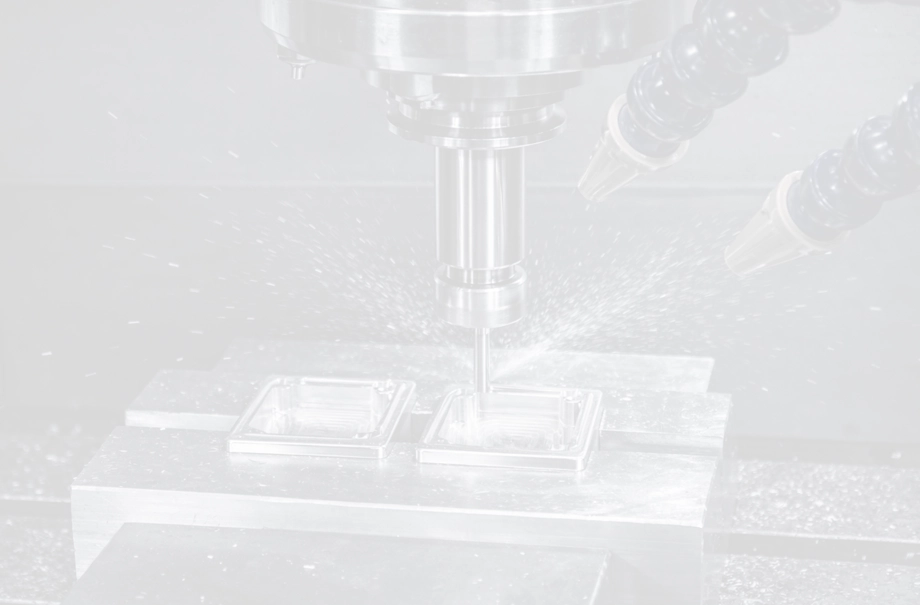
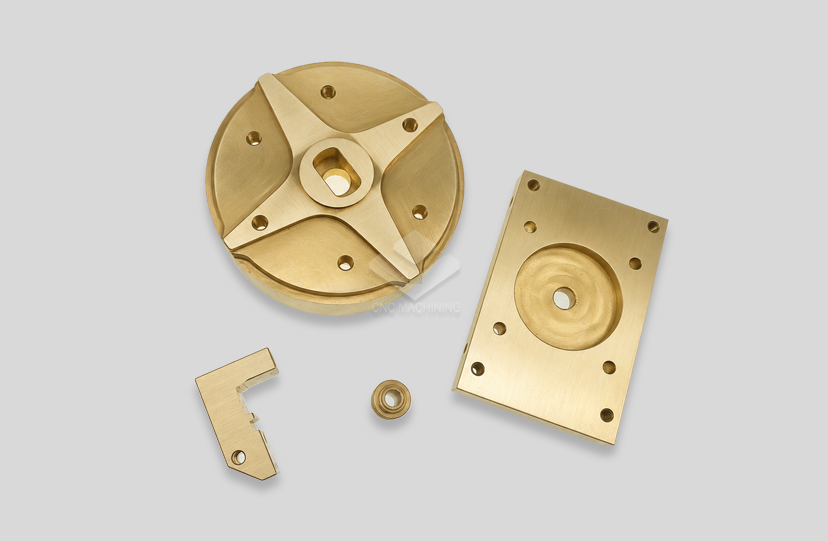
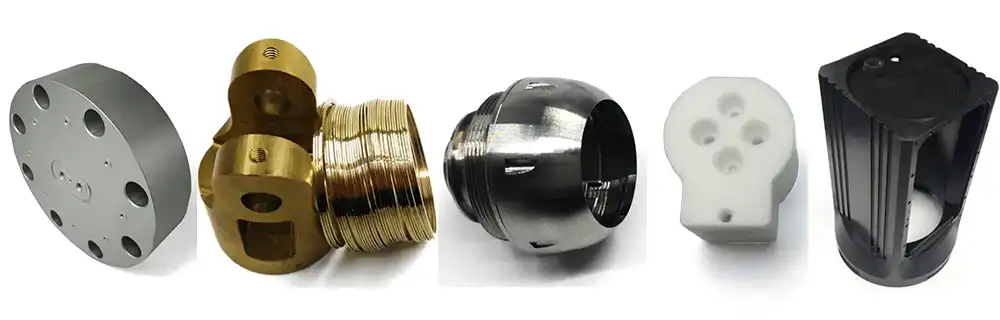
Using computer-controlled tools for precision cutting is different from doing things by hand. Machines read CAD models and turn them into exact toolpath movements. They then remove material layer by layer until the final part is made. Metals like 6082 aluminum alloy, brass, and stainless steel can be used with this process. High-performance plastics like PEEK and Delrin can also be used. To get the best results without damaging the structure, each material needs its own set of cutting factors, cooling strategies, and tool choices.
Modern CNC processes are built around tasks like milling, turning, grinding, and multi-axis work. Milling is great for making complex surface features and pockets, while turning makes cylinders that are very closely centered. Compound angles and undercuts can be done on multi-axis machines, but not on simpler machines. By knowing about these skills, procurement workers can match the needs of a project with the best way to make it, avoiding extra work or higher costs.
Step-by-Step Workflow from Design to Inspection
A digital model is the first step in making any exact part. Engineers send CAD files, and machinists do design-for-manufacturability reviews to find problems that might happen before production starts. After choosing a tool, you have to find a balance between cutting speed, material strength, and the surface finish you want. Real-time tracking systems keep an eye on spindle load, shaking, and dimensional drift while cutting. This lets changes be made right away, which cuts down on waste.
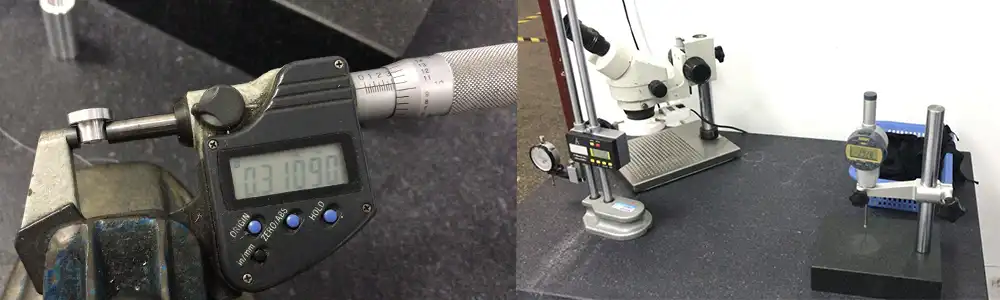
Coordinate measuring tools, optical comparators, and surface roughness testers are used in post-machining checking to make sure that standards are met. Each batch comes with a material document that confirms the alloy's composition and mechanical qualities. This strict process makes sure that parts meet the AS9100 standards for aircraft, the FDA's requirements for medical devices, or the IATF 16949 standards for the car industry. Documentation that is clear at all stages of the process helps build trust and makes it easier to find mistakes when legal checks happen.
CNC Machining Versus Emerging Manufacturing Technologies
Additive manufacturing and injection molding are useful in some situations, but they can't take the place of Custom CNC Machining for making samples with high strength and in small quantities. 3D printing has trouble with metal density and consistent surface finish, while injection casting needs pricey tools that only start to save money when a lot of them are made. Within days, Custom CNC Machining can turn real engineering materials into parts that are almost ready for production. This makes it essential for validation testing and trial runs.
It is very flexible to be able to change materials and shapes without having to pay for new tools. A new medical device company can make prototypes of surgical tools out of FDA-approved PEEK and then switch to titanium for clinical studies without having to switch suppliers or methods. This ability to shift lowers risk and speeds up growth, which gives new companies an edge in markets that change quickly.
Why Custom CNC Machining is the Go-To Solution for Niche Applications
Flexible Design Iteration and Rapid Prototyping
Iteration is a key part of product creation. Engineers improve designs based on feedback from tests, and specs often need to be changed more than once before they are finalized. Precision cutting can easily adapt to these changes and make new parts in three to seven days, whereas molding or casting requires longer wait times. This speed lets teams from the mechanical, electrical, and software engineering departments work together at the same time.
Automotive companies that make parts for battery housings can use fast cycles to test features for managing heat and being resistant to crashes. Electronics companies that are trying EMI shielding boxes can play around with wall thickness and air flow patterns until they find the best way to keep the signals safe. Each version brings projects closer to being ready for production while lowering the risk to the budget and schedule.
Achieving Micron-Level Tolerances Across Diverse Materials
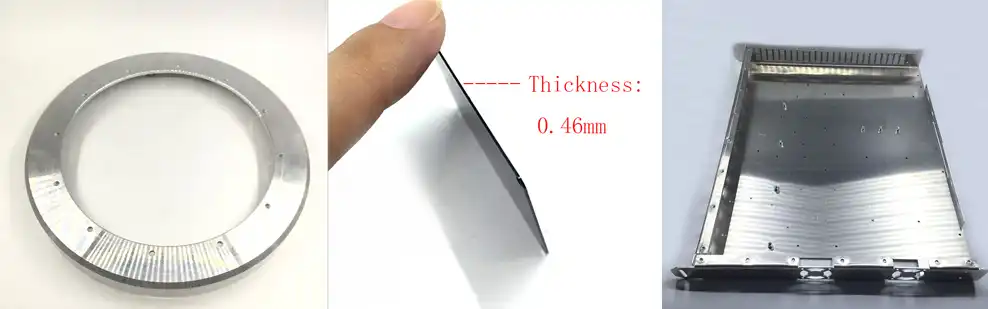
Tight standards differentiate between parts that work and systems that aren't reliable. Aerospace actuators need to be able to keep their positions accurate to within 0.005mm so that they work the same way even when they are vibrating very hard. To keep the vacuum seal intact, semiconductor equipment needs accuracy limits measured in micrometers. Custom plastic CNC-machined parts for medical monitoring tools must stay the same size even after being sterilized many times without bending.
Meeting these requirements takes more than just tools that can do the job. Machinists who are good at their job know how the qualities of a material affect cutting pressure and thermal expansion. They make up for changes in tool movement, work-holding stress, and temperature changes in the surroundings. This knowledge, along with statistical process control and regular testing methods, makes it possible to make parts that always meet the strictest requirements, even across multiple production runs.
Real-World Impact on Industry Innovation
A company that makes robots had trouble finding structural parts that were both light and strong enough to handle dynamic loads without adding extra weight. Working together with an expert in Custom CNC Machining who knew a lot about aluminum alloys, they made 6082 aluminum CNC machining parts with the best shaping designs, which cut weight by 30% while making the parts stiffer. This big step forward gave the batteries longer life and increased their payload capacity, which set their goods apart in a crowded market.
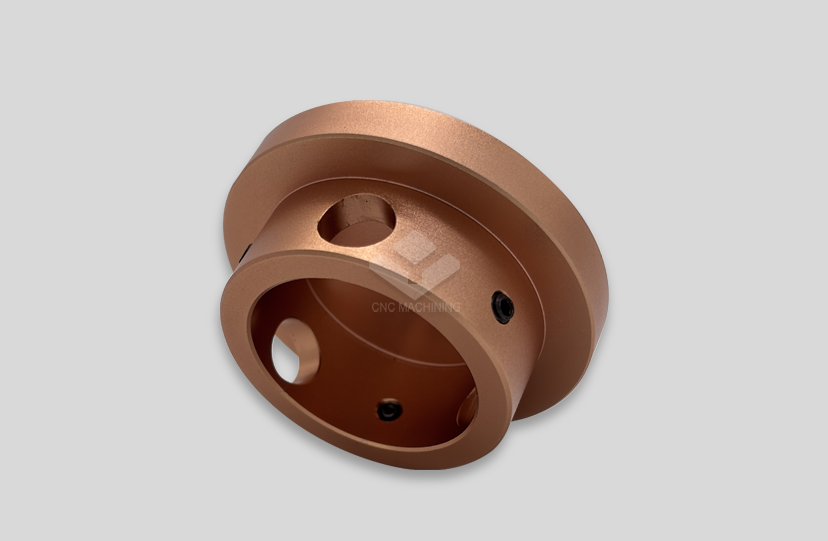
Companies that make medical instruments use CNC cutting and electroplating to make parts with precise shapes and safe finishes. Surgical tools made from stainless steel are plated with nickel or chrome, which protects them from corrosion by strong chemicals used for cleaning while keeping the cutting edges sharp. Combining cutting and surface finishing into a single supply chain makes it easier to coordinate and speeds up the start of new products.
How to Choose the Right Custom CNC Machining Supplier
Essential Certifications and Technical Capabilities
Quality badges show that a provider is dedicated to following strict procedures and always making things better. In ISO 9001, basic quality management systems are shown. In AS9100, rules for traceability and configuration management are added that are specific to aircraft. Medical device companies should give more weight to partners that have ISO 13485 approval. This will make sure that they follow all FDA and foreign rules.
Check more than just certificates to see how technically skilled someone is. Does the supplier's tech team have more than fifteen years of experience with machines? Can they suggest cheaper alternatives to the materials that won't hurt the performance? When engineers talk to each other directly, there are no mistakes that cause parts to be rejected or dates to be missed. We keep working together by looking over plans before giving quotes and offering changes to the design that make it easier to make.
Evaluating Pricing Transparency and Lead Time Reliability
It's bad for project funds and ties with suppliers when there are hidden costs. Ask for prices that break down the costs of materials, time spent cutting, the wear and tear on tools, and the steps needed for finishing. Know that tight standards, unusual materials, and complicated shapes need special tools and slower feed rates, which affects the price. Transparent sellers tell you about these things up front instead of adding extra fees at delivery.
Lead times must match up with project plans. A provider that says they can turn around simple parts in three days shows they can respond quickly. On the other hand, realistic deadlines for complicated assemblies keep work from being rushed and quality from being compromised. Our team usually finishes making samples within a week, and we offer faster services for prototypes that need to be made right away. Procurement managers can make better plans when they know about capacity limits and production lines.
Comparative Supplier Analysis and Customer Feedback
Custom CNC Machining reputation in the field is important. Look for companies that work in similar fields and have confirmed case studies that show they have the right kind of experience. A machining partner who is great at making consumer electronics might not know enough about regulations for medical implants. On the other hand, an aerospace-only seller might find it hard to meet the cost goals and number flexibility needed for industrial automation projects.
Testimonials from customers show the pros and cons of a business. Instead of just giving general praise, find particular performance markers like the percentage of on-time deliveries, the rate of defects, and the time it takes to answer engineering questions. Procurement managers should ask for examples from clients who have worked on similar projects and directly ask about how to solve problems when they come up.
Overcoming Common Challenges in Custom CNC Machining Procurement
Addressing Tolerance Interpretation and Specification Clarity
Ordering Custom CNC Machining drawings that aren't clear leads to expensive mistakes. Managers in charge of buying things need to make sure that engineering teams list the important measures using the right geometric standards for measurements and tolerances. It's possible for a feature marked with ±0.1mm to work properly with less strict limits, which would save money and time. If you don't specify the surface finish needed on closing surfaces, on the other hand, leaks and field failures can happen.
These problems are found before production by having customer engineers and machine experts work together on design reviews. During the quotation process, talking about areas of high material stress, limited tool access, and checking methods keeps shocks at bay. We ask customers to give us functional needs instead of just measurements. This lets our team come up with the best ways to make things that balance cost, quality, and delivery time.
Building Effective Communication Protocols
Language hurdles and different time zones make it hard for people in different time zones to work together in global supply lines. Setting up clear rules for conversation lowers these risks. Set up a single point of contact on each side who can make expert choices. Use shared tools to make changes to drawings and keep track of revisions in real time. Make sure that everyone is using the most up-to-date information.
Regular reports on the project's progress keep everyone in the loop. For long production runs, weekly success reports keep plan changes from being made at the last minute, which would have an effect on operations further down the line. When quality problems arise, they are reported right away with picture proof and measurement data, which allows for quick root cause analysis. Our one-on-one communication model cuts out the middleman and puts customer experts in direct contact with our manufacturing specialists, so problems can be solved quickly.
Risk Mitigation Through Quality Assurance and Contingency Planning
Even great providers have problems from time to time. Contingency buffers for prototype stages and dual-source qualification for key production parts are both important parts of good buying strategies. Before agreeing to bigger orders, make sure the process works by asking for first article inspection reports with full measurement data. Checkpoints for in-process checking find problems early, when fixing them costs the least.
When following the rules is important, material tracking becomes very important. Each package must come with a mill certificate that lists the materials used and their mechanical and chemical qualities. Proof of agreement can be found in records of heat treatment, measures of plating thickness, and salt spray test results. We keep detailed records of our quality control, and if a problem is noticed within a month, we'll remanufacture it within a week and pay for the shipping, so the customer doesn't have to pay anything extra.
Future Trends Shaping Custom CNC Machining in Niche Markets
Industry 4.0 Integration and Smart Manufacturing
Custom CNC Machining in specialty markets: Future Trends using Industry 4.0 and smart manufacturing together. IoT-enabled machines send performance data to analytics platforms all the time. These platforms use the data to predict tool wear, find the best cutting settings, and plan preventative repairs that will be done before problems happen. AI programs look at past production data and suggest ways to improve processes that cut down on cycle times without lowering quality. Because of these improvements in technology, prices are lower, lead times are faster, and customers get more consistent results.
Machine vision and laser scanning are used in automated inspection systems to check the accuracy of dimensions faster than by hand and keep full quality records. Digital twins mimic machining processes before they are actually done. This helps find problems like crashes or deflections before they happen. These features are especially helpful for complicated shapes that are hard to program with regular methods, making more patterns possible.
Localized On-Demand Manufacturing Networks
Distributed production models make transportation easier and cut down on carbon emissions. Regional machine networks move capacity closer to customer engineering teams instead of putting all of the production in faraway factories. Because they are close, they can work together face-to-face during the development process and respond more quickly to changes to the design. Local clients can now get samples the same day they order them, which speeds up the decision-making process.
On-demand production cuts down on the costs and risks of failure that come with keeping stock. Procurement managers don't keep a lot of extra special parts on hand; instead, they order just the right amount at the right time to match the plan for assembly. Cloud-based platforms link design files, available capacity, and transportation planning, making the process of getting a part from the CAD model to the customer smooth. Suppliers who put money into digital systems and flexible business models will benefit from this change.
Strategic Supplier Development and Partnership Models
Transactional buying relationships give way to strategic agreements where sellers help come up with ideas for products by sharing their tech knowledge. Early input helps find ways to cut costs, make things easier to make, and use different materials before the plans are set in stone. These partnerships are made official with joint development deals, which align incentives around creativity instead of just unit price.
Long-term relationships let suppliers buy specialized tools, committed capacity, and quality standards that are made to fit the needs of each customer. Commitments to buy a lot of something make these investments worthwhile because they keep prices stable and give you priority ordering. When procurement companies build these kinds of connections, they get a competitive edge through faster development processes, better quality, and a supply chain that can handle problems in the market.
Conclusion
Custom CNC Machining using computer-controlled processes has completely changed how niche businesses create and make unique parts. When you combine the ability to change materials and shapes quickly with the ability to make things, you can come up with new ideas that weren't possible before. When purchasing managers know how to set clear standards, understand what machines can do, and build strategic relationships with suppliers, they can gain big competitive benefits. Custom CNC Machining will continue to be a key part of making new products in the aircraft, medical, automobile, electronics, and industrial equipment industries as digital technologies and distributed manufacturing networks change. To be successful, you need to find a balance between technical needs and business facts. You also need to work with suppliers who are more like partners in production than just sellers.
FAQ
What materials work best for custom CNC machining projects?
What kinds of materials do Custom CNC Machining projects work best with? Strong mechanical qualities make metals like aluminum alloys, stainless steel, brass, and titanium easy to work with. For specific uses, high-performance plastics like PEEK, Delrin, and nylon withstand chemicals and keep electricity from flowing. The choice of material is based on its purpose, such as its power, ability to withstand high temperatures, and compliance with regulations.
How do tight tolerances affect project costs and timelines?
How do tight specifications change the prices and schedules of a project? When tolerances are tight, cutting speeds have to be slowed down, tools have to be changed more often, and more checking steps have to be added. This makes the cost and wait time go up. Things that are toleranced to ±0.01mm cost a lot more than things that are toleranced to ±0.1mm. Working together on design reviews can help you figure out which features really need close attention and which ones can get by with normal limits.
Can CNC machining replace 3D printing for prototyping?
Can Custom CNC Machining be used for testing instead of 3D printing? Compared to most 3D printing technologies, Custom CNC Machining makes things from real production materials that have better mechanical qualities and surface finishes. Subtractive manufacturing makes working prototypes that can be used for validation testing and trial production runs without sacrificing material quality. Additive manufacturing is better at making parts with complex internal geometries.
Partner with RYH for Your Custom CNC Machining Needs
RYH is ready to be your reliable Custom CNC Machining supplier. With seventeen years of experience making high-quality products and technical know-how that turns difficult requirements into reliable parts, they are the best at what they do. Our model of direct contact between engineers clears up any confusion, and our quick reaction protocols get quotes to you within hours and samples to you within a week. We take care of projects from the first samples to mass production, keeping standards of less than one micron for both metals and plastics, and making sure they are FDA-compliant and fully certified. Our fast remanufacturing promise takes care of any quality issues quickly, and global door-to-door delivery makes sure your parts get to you on time. Contact bill@bldmachining.com right away to talk about how our precision machining services can help you speed up the development of your next idea. Visit ryhkj.aixdb.cn to learn more about our full range of services and find out why top companies in the electronics, aircraft, medical, and car industries trust RYH to provide them with mission-critical parts.
References
1. Gibson, I., Rosen, D., & Stucker, B. (2021). Additive Manufacturing Technologies: 3D Printing, Rapid Prototyping, and Direct Digital Manufacturing. Springer International Publishing.
2. Kalpakjian, S., & Schmid, S. R. (2020). Manufacturing Engineering and Technology (8th ed.). Pearson Education.
3. Society of Manufacturing Engineers. (2019). Fundamentals of CNC Machining. SME Media.
4. Groover, M. P. (2020). Fundamentals of Modern Manufacturing: Materials, Processes, and Systems (7th ed.). John Wiley & Sons.
5. American Society for Quality. (2018). Quality Management Systems for the Aerospace Industry: AS9100D Explained. ASQ Quality Press.
6. Medical Device Innovation Consortium. (2022). Precision Manufacturing Standards for Medical Device Components: Regulatory and Technical Guidelines. MDIC Publications.