What is 5-axis CNC machining? A Full Guide
5 Axis CNC Machining is one of the most important tools ever made for making things very precisely. These days, procurement managers, design engineers, and operations leaders need to know about this advanced machining power for business reasons. Getting tolerances down to the micron level on difficult forms, cutting setup times by up to 70%, and getting rid of the mistakes that happen when things are moved around a lot are all problems that this technology solves that didn't seem possible before. In the aircraft, medical device, automobile, and robotics industries, 5 Axis CNC Machining is now the usual way to make parts that need to be both 3D and the right size. What you need to know about this technology to choose the best places to buy things and understand how it can change your supply chain is in this guide.
Understanding 5-Axis CNC Machining
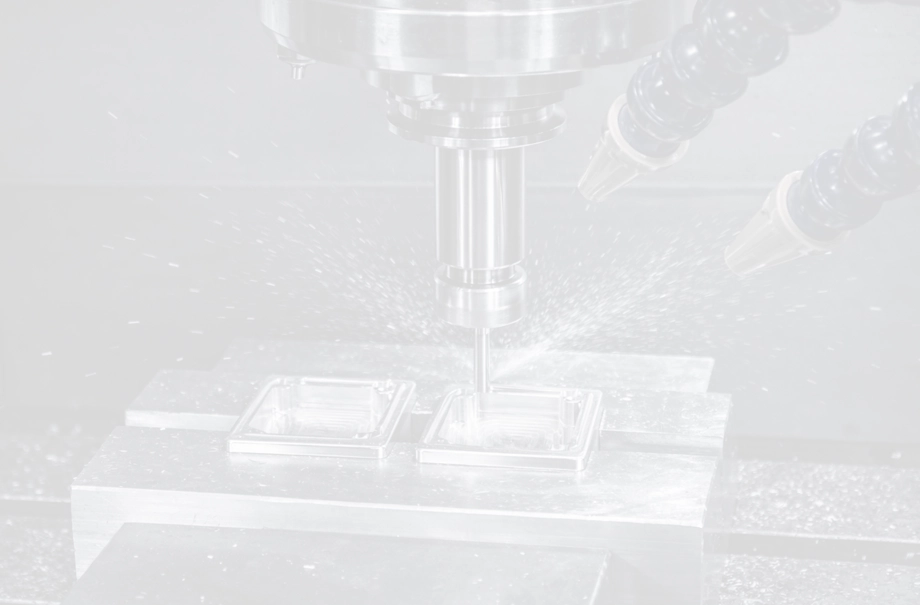
 A cutting tool can move along five different directions at the same time. This is what 5 Axis CNC Machining is all about. More often than not, these are the standard X, Y, and Z linear axes, along with two rotational axes named A and B. The tool can approach a subject from almost any angle because it can move in more than one direction. This means it doesn't need to be set up more than once, which is a problem with traditional 3-axis operations. When making an undercut or complex curve part for a turbine blade, it is very important to be able to tilt and move the part or spindle head while it is being cut.
You'll mostly see two main types of equipment or suppliers when you look at them. It is possible for the workpiece to rotate on two axes with the table/table configuration. This makes the machine footprint small enough for parts that are smaller and denser, like those in surgical instruments or drones. The head/table setup lets you rotate the spindle head while the table moves. This makes it easier to work on bigger parts for spacecraft or car batteries. Machinery from Haas, DMG Mori, and Makino can work with control systems from well-known brands like Fanuc, Siemens, and Heidenhain. When it comes to speed, accuracy, and working with different tools, each brand has its own pros and cons. Getting to know these configurations helps procurement teams figure out what suppliers can do and how to make sure that the project's needs are met by the factories.
How Simultaneous Axis Movement Changes Manufacturing
With the old way of cutting, you need more than one setup to reach the faces of different parts. This leads to mistakes in placement and longer wait times. Because it can move on 5 Axis CNC Machining, the machine can handle complicated shapes all at once. When this is done, less work has to be done by hand, the surface is more even, and standards are higher for more complicated parts. The part comes in with fewer problems and can be used more often in production because of this.
Evaluating Machine Configurations for Your Application
Based on the size of the part, how stiff the material is, and how complicated the design is, you should use either table/table or head/table. When the head can move in different ways, small medical parts are more stable, and when the table spins, big aircraft brackets are more stable. When looking into suppliers, it's important to find out how their machines are set up and how they control them. These things directly affect the levels of accuracy that can be reached, the quality of the finish on the surface, and the adaptability of the programs.
Key Benefits and Advantages of 5-Axis CNC Machining
When it comes to measuring, speed, and being able to guess how much something will cost, 5 Axis CNC Machining really makes a difference. The part stays in place the whole time, so there are no mistakes in alignment, and the tolerance stacks get smaller. The surface finish gets a lot better as the approach angles of the tools are always being improved. This is because it lowers tool deflection and chatter marks. Fewer parts will be returned, delivery dates will be shorter, and the cost of rework will go down. This is good for buying teams that have to work with limited funds and short deadlines.
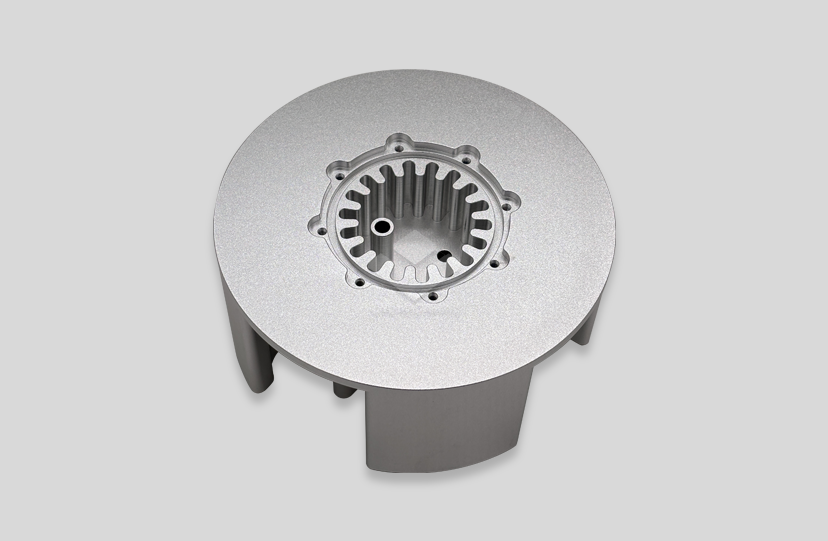
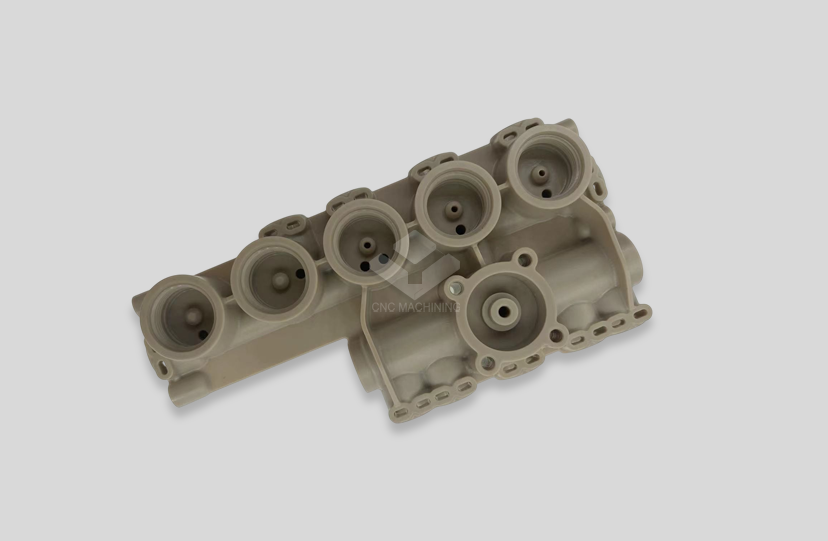
Things that need to be accurate and complicated are the best places for this technology to be used. 5 Axis CNC Machining is used by aerospace companies to make rotor blades and structural parts that need to be able to handle very high temperatures and a lot of forces. Implants made of materials that are FDA-approved and have safe finishing on the outside are made with it. It is used by car companies to make samples of battery cases and housings for sensors, where it is important to keep the weight down and the heat down. People who make moulds rely on it to make injection moulds with complex cooling lines and fine details. It only takes three to seven days to make samples, which is great for teams that need to make prototypes quickly and correctly.
So, here are the main benefits that directly address problems in procurement:
• Reduced Setup Time and Error: With single-setup machining, the workpiece doesn't have to be moved, which can lead to mistakes in geometry and wasted machine hours. If you compare this to 3-axis choices, it can cut wait times by up to 50%.
• Enhanced Surface Quality: Using the right approach angles and keeping the tool engaged all the time lowers tool marks and increases surface roughness. This means that you don't have to do as many secondary finishing operations, which saves you money.
• Access to Complex Geometries: You can machine undercuts, compound angles, and deep cavities without having to make your own fixtures or use EDM. The cost of making tools goes down, and designers have more freedom.
• Material Waste Reduction: When you work with expensive alloys like titanium or Inconel, it's especially important to have efficient toolpaths and fewer setups because they mean less scrap.
These advantages solve real problems: engineering teams gain confidence in manufacturability during design reviews, procurement managers secure shorter lead times without sacrificing quality, and quality assurance departments see fewer dimensional nonconformities. When you compare service providers, make sure they have case studies that show how their 5 Axis CNC Machining skills shortened cycle times or raised first-pass yields on projects like yours.
Comparing 5-Axis CNC Machining with Other Methods
 When you know how 5 Axis CNC Machining fits in with 3-axis and 4-axis systems, you can decide when to use it and when to stick with faster methods. A 3-axis machine is best for holes that need to be made and flat things. You can move the tool along the X, Y, and Z lines. It's an affordable way to make a lot of simple parts like brackets and plates. An extra axis that spins around the X-axis is part of a 4-axis machine. You can make simple cuts at right angles and cylinders without moving the piece of work. This is a good way to make parts that are rotational, like housings or shafts.
3- and 4-axis machines can't make parts with complex curves, deep holes that can only be reached from an angle, or features on multiple faces that aren't lined up. 5 Axis CNC Machining can make these parts better. For 3-axis operations, tolerances get closer to ±0.005". For 5 Axis CNC Machining operations, they should be ±0.0005" or better, but this depends on how well the machine is built and how skilled the operator is. Machine cycles that don't need to be set up over and over again are where speed gains are seen, not in raw cutting rates.
When to Choose 5-Axis Over Conventional Methods
A 5 Axis CNC Machining is likely to give you a better return on investment (ROI) if your part needs more than two setups on a 3-axis machine. This is because it needs less handling, shorter wait times, and more uniform measurements. To get a better idea of how much machining costs per hour, you should also look at how much it costs per part, taking into account setup work, tool design, and the chance of scrap. 5 Axis CNC Machining is often more cost-effective for prototyping and small-scale production, even though it costs more per hour. This is popular in R&D, medical devices, and aircraft. It cuts down on the time needed to finish a project and the amount of work that needs to be redone.
Budgeting and Decision Criteria
Find out what kinds of machines the person you want to hire has, how complicated their control systems are, and how much experience they have with the shapes and materials you need for your project before you hire them. Ask for proof of the programming and quality methods, as well as records of dimensional checks and material approvals. It's better to work with suppliers who know CAM, let engineers talk to each other directly, and do good DFM analysis than with suppliers who only do raw cutting.
The 5-Axis CNC Machining Process Explained.
Engineers make a CAD model while the product is being developed. This is the first step in the process. It could be a STEP, IGES, or local file. Our team goes over these models with your engineers to see if there are any issues that could make them hard to make, such as thick walls, trouble getting to tools, or tolerance callouts that are too high for the process to handle. With this early DFM consultation, changes don't cost too much, and the 5 Axis CNC Machining project moves along faster.
CAM code takes the 3D models and turns them into toolpaths that work with all five directions of the machine at the same time. Software programs like Mastercam, Siemens NX, and Autodesk Fusion 360 help make sure that toolpaths don't run into each other, model cutting processes, and shorten cycle times. Programming for rotary work is much harder than programming for three-axis work, and you need to know a lot about how the rotary axis works and how to handle tool center points to do it well. It finds mistakes in the programming before the metal is cut, so less metal is wasted, and the machine is down for less time.
Material Versatility and Quality Assurance
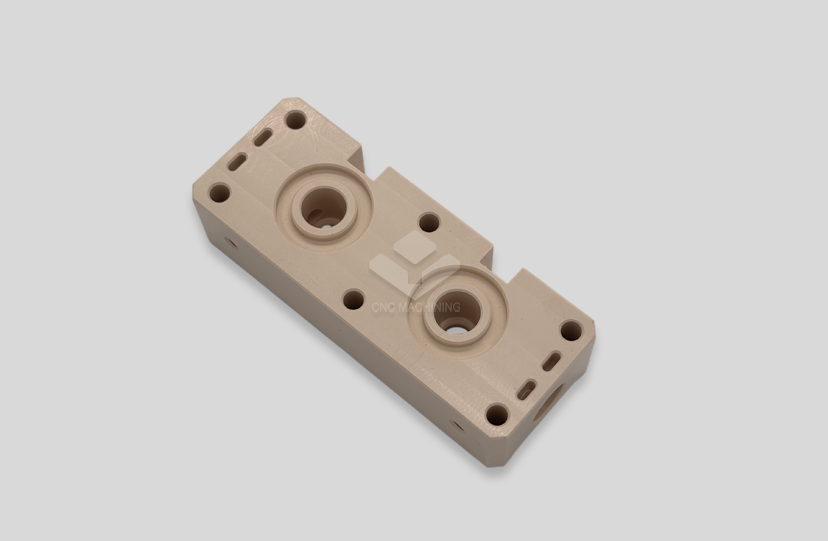
Aluminium alloys (6082 and 7075) are used to make lightweight structural parts. Stainless steels (316 and 316L) are used to make medical devices that don't rust. Titanium is used for aerospace parts. And engineering plastics (PEEK and Ultem) are used to make housings that keep heat in. For each object, there are different ways to cut it, use tools, and keep the water moving. As part of quality control, coordinate measuring machines (CMMs) are used to check the sizes of things, the roughness of the surface is tested, and material certifications can be linked to mill test reports. We keep records that follow FDA rules, ISO 13485 standards, and AS9100 standards for use in medicine and space.
Programming Challenges and Solutions
When you program on more than one axis, you need to pay close attention to the length of the tool, the moving axis alignment, and the workpiece coordinate systems in 5 Axis CNC Machining. It gets harder to keep the tool, spindle, and fixtures from running into each other as they move through three-dimensional space. Skilled programmers use simulations to check for clearances and find the best approach angles. To maintain high surface quality and extend tool life, this ensures that toolpaths remain smooth and efficient. When comparing companies, find out about their CAM software, the experience of their programmers, and their ability to customise post-processors. These factors directly affect part quality and delivery reliability.
Procuring 5-Axis CNC Machining Services and Solutions
You can't just compare hourly rates when picking a 5 Axis CNC Machining supplier. People who work in procurement should check how well technical information is shared, how much engineering help is available, and how strict the quality testing is. Find suppliers that let you talk to manufacturing engineers directly. These engineers should be able to look over your drawings, suggest different materials, and give you advice on tolerances before they give you a quote. Fewer changes need to be made to the plan, and the product can be on the market faster.
Lead times change based on the size and difficulty of the job. Prototype samples are usually sent out within three to seven days for parts that aren't too complicated. They can be sent out in as little as three days for parts with better shapes. How big a production run is depends on how many items are in the batch, whether the materials are available, and whether the schedule can be changed. It is important for everyone involved in a project to understand what is expected of them and when it needs to be completed. This is true from the quote step to the final review.
Pricing reflects multiple variables: material type and cost, part complexity measured in machining hours, required tolerances and surface finishes, inspection and certification requirements, and order volume. A complicated aerospace bracket made of titanium with tolerances of ±0.0005" costs a lot more per unit than a simple aluminium prototype with standard tolerances. But the extra money is worth it because the parts meet strict performance and regulatory standards. To compare suppliers accurately, ask for quotes that break down the costs of material, machining, finishing, inspection, and shipping.
Engineers at our company have an average of 15 years of technical experience and are able to fully customise production from client drawings. We can make both metallic and non-metallic parts for prototyping and low-to-medium volume manufacturing. Our one-on-one communication model cuts out the middlemen and lets us solve problems and improve designs in real time. We keep certifications for material traceability, dimensional tolerances per ISO 2768, and surface treatments such as anodising and salt spray testing. If quality problems happen within the same month, we offer fast remanufacturing—usually within one week—with free shipping. This shows that we value partnerships over transactional relationships.
Conclusion
5 Axis CNC Machining used to be used only in aerospace, but now it's a common way to make things that need to be precise, complex, and efficient. For procurement teams and engineering leaders, knowing what it can do, how it can be configured, and how to evaluate suppliers has a direct impact on the success of a project and the resilience of the supply chain. The technology shortens setup times, improves measurement accuracy, and opens up design options that drive innovation in medical devices, automotive systems, industrial automation, and more. As manufacturing partnerships become more strategic, choosing suppliers who combine advanced machining capabilities with engineering collaboration and quality assurance gives them advantages that go beyond individual parts.
FAQ
What types of parts are best suited for 5-axis machining?
A few examples of parts that work best with this method are turbine blades, medical implants with anatomical contours, automotive sensor housings, mould inserts with conformal cooling channels, and prototype assemblies that need to be very precise. If your design needs more than two setups on a 3-axis machine or has undercuts that can't be reached with standard tools, 5 Axis CNC Machining is likely to give you the best mix of quality and speed.
How does 5-axis machining accelerate production turnaround times?
With single-setup operations, you only have to move and check the alignment of the parts once, instead of doing all of these steps several times. This cuts down on the overall cycle time and the chance of mistakes while the parts are being handled. For prototyping, finishing complex parts in one operation can often cut lead times in half compared to traditional methods.
Can the same machine handle both prototyping and final production?
It is possible for modern 5 Axis CNC Machining systems to do both production runs and prototype validation. The main difference is how the programs are optimised and how the processes are validated. For prototypes, speed and design verification are more important than reducing cycle time and making sure quality is consistent across batches.
Partner with RYH for Advanced 5 Axis CNC Machining Solutions
Navigating the complexities of precision manufacturing requires a 5 Axis CNC Machining supplier who understands not just machining, but your entire product development lifecycle. At RYH, we combine 9 years of manufacturing experience with direct engineer-to-engineer communication, eliminating the misunderstandings and delays common with intermediary-based suppliers. Our team reviews your drawings, provides DFM analysis, and recommends material and tolerance optimizations that improve manufacturability and reduce costs. We deliver prototype samples within one week—often as fast as three days—and support flexible low-volume production without minimum order penalties. Whether you need FDA-compliant medical components, aerospace-grade titanium parts, or rapid prototyping for product validation, our customization-focused approach ensures your specifications translate into precision components that meet your quality standards. Contact us today at bill@bldmachining.com to discuss your project requirements and discover how our 5 Axis CNC Machining capabilities can accelerate your time-to-market.
References
1. Smith, J. A., & Chen, L. (2021). Advanced Multi-Axis Machining: Principles and Applications. Industrial Press.
2. Manufacturing Technology Institute. (2022). "5-Axis CNC Technology: Industry Standards and Best Practices." Journal of Precision Engineering, 48(3), 112-128.
3. Roberts, M. D. (2020). CNC Programming for Multi-Axis Machines. McGraw-Hill Education.
4. Aerospace Manufacturing Association. (2023). "Procurement Guidelines for Precision Machining Services." AMA Technical Report Series, Volume 17.
5. Wilson, K., & Patel, R. (2022). "Comparative Analysis of 3-Axis, 4-Axis, and 5-Axis Machining Economics." International Journal of Manufacturing Systems, 39(2), 245-263.
6. National Institute of Standards and Technology. (2021). Dimensional Tolerances and Surface Finish Standards in CNC Machining. NIST Special Publication 800-45.