What is CNC Turning? How Does It Compare to Other Processes?
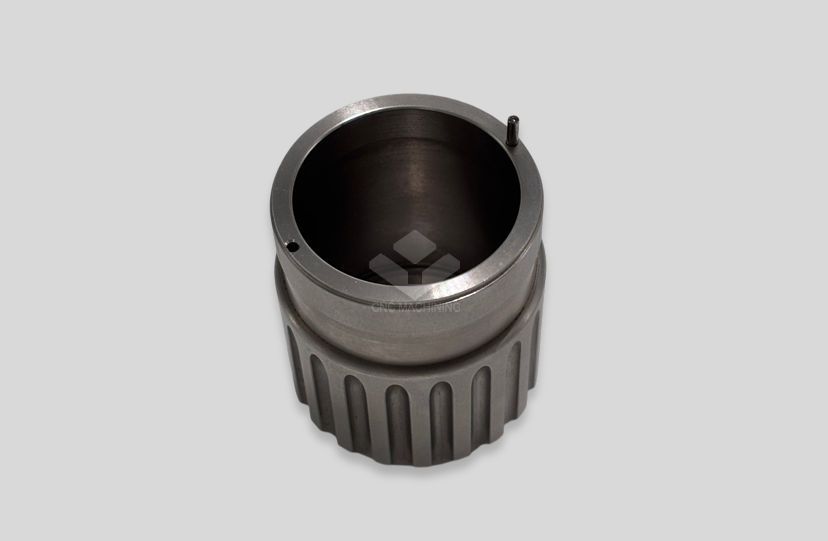
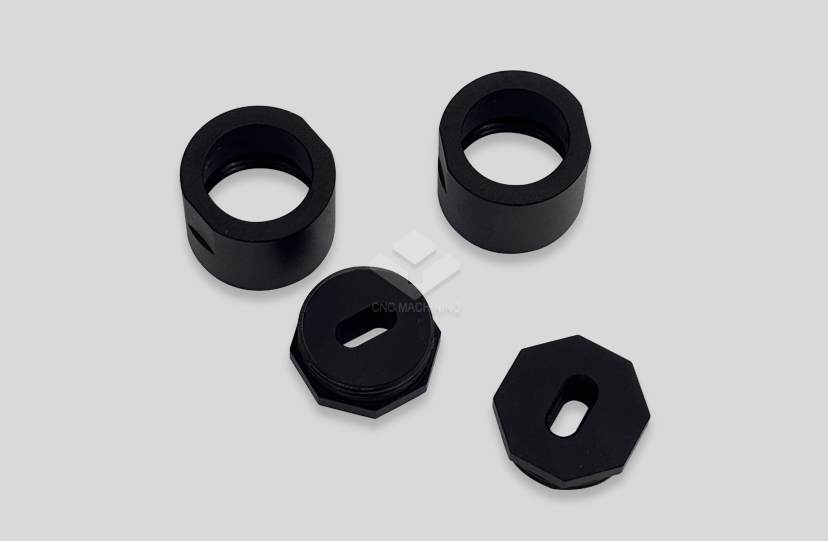
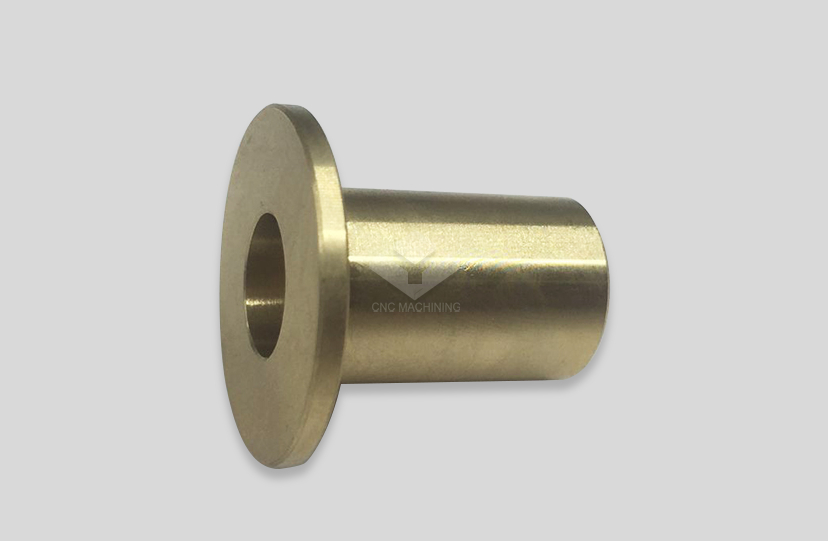
CNC turning is a precision machining process that uses computer-controlled lathes to rotate workpieces against cutting tools, creating cylindrical components with exceptional accuracy. Unlike manual operations, this automated approach delivers consistent dimensional tolerance, smooth surface finishes, and high repeatability across production runs. The process excels at manufacturing shafts, bushings, threaded connectors, and other rotationally symmetric parts used in automotive assemblies, medical instruments, and industrial automation. By leveraging multi-axis capabilities and carbide tooling, CNC turning transforms raw metal bars or plastic rods into functional components that meet stringent quality standards demanded by engineering-driven industries.
Understanding CNC Turning
The Core Workflow and System Architecture
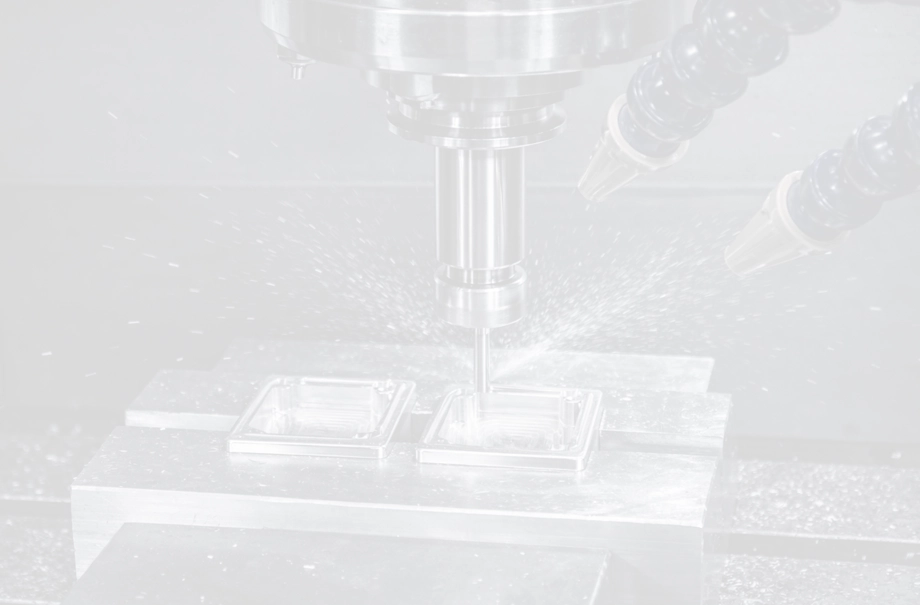
A design engineer starts the process by putting 2D or 3D CAD models or sketches into the CNC Turning machine. The machine reads preset toolpaths and places carbide or ceramic inserts with accuracy down to the micron level. The spindle spins the part at speeds between 500 and 5,000 RPM, depending on how hard the material is. Turret-mounted tools do things in a certain order: roughing cuts quickly remove extra material, final passes get the part to the right size, and special plugs make threads or grooves without having to move the part. When compared to hand methods that need multiple fittings, this one-setup method reduces the total number of mistakes.
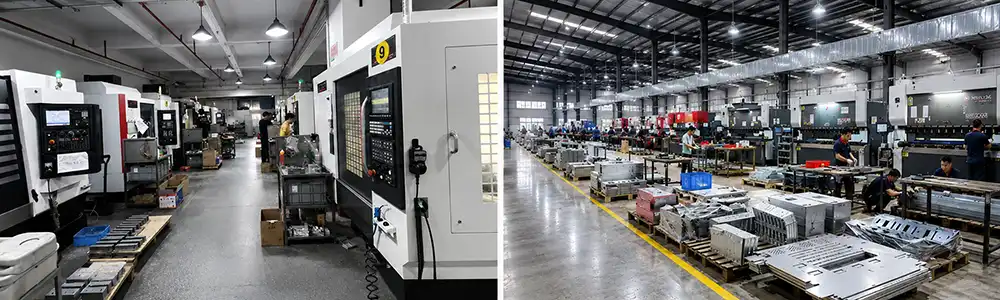
We have 15 CNC Turning and turning-milling machines with live tooling and sub-spindles, allowing us to make complex geometries without the need for additional processes. Before they are used in production, incoming stainless steel 304 bars are checked with an analyzer to make sure they have the right alloy makeup. During machining, our engineers keep an eye on how chips form and how tools wear out. They then change the cutting settings in real time to keep the surface roughness at 1.6 or higher.
Materials and Their Machining Characteristics
Aluminum metals like 6061-T6 are great at moving heat and chip air, so they can handle fast feed rates of up to 0.4 mm per turn without losing their shape. Grades of stainless steel like 304 and 316L need to be cut at slower speeds and with high-pressure coolants to keep them from becoming too hard. Titanium Ti-6Al-4V needs special tools because it doesn't conduct heat well, which keeps the heat at the cutting edge and speeds up insert wear.
Brass is easier to machine than other metals because it makes continuous chips that make automatic handling systems easier to use. Engineering plastics like PEEK and Delrin are easy to make, but you need to use sharp tools and keep the temperature under control to keep them from melting or changing shape while they cool. Choosing the right material has a direct effect on the limits that can be achieved. For example, aluminum can hold ±0.02 mm over 100 mm of length, but titanium parts longer than 200 mm may need intermediate stress-relief processes to keep them from warping.
Achievable Precision and Secondary Operations
Thanks to closed-loop servo systems and heat adjustment algorithms, modern CNC lathes can keep their positional accuracy within ±0.005 mm and their consistency better than ±0.002 mm. Because of this level of accuracy, bearing journals, seal surfaces, and hydraulic valve spools can be made with concentricity mistakes below 0.01 mm, which stops leaks or early wear. When you do secondary processes like threading, you get combined ISO metric or ANSI thread forms with class 6H internal or 6g external tolerances. Electropolishing gets rid of surface flaws down to Ra 0.2 for pharmacy equipment, while knurling adds textured designs to make things easier to hold on to.
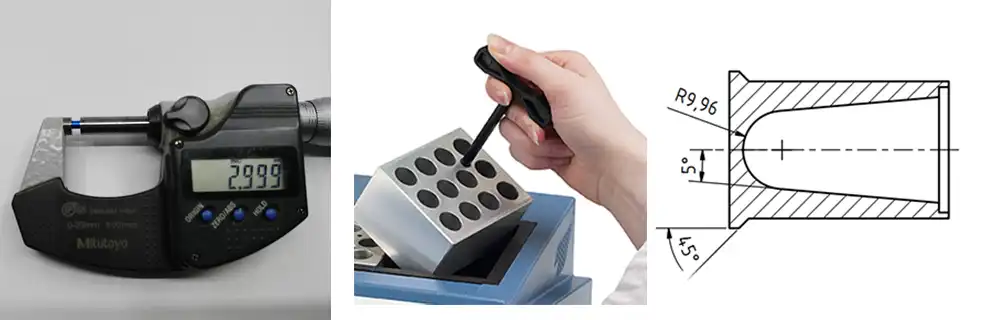
As part of our quality control process, we use coordinate measuring tools and optical comparators to check all of the important metrics one hundred percent of the time. Passivation treatments are done on parts according to ASTM A967 standards. These treatments create safe chromium oxide layers that keep parts from rusting in sea or chemical processing settings. All the necessary paperwork, like material approvals, dimensional reports, and surface finish data, needs to be sent with the goods in order to meet the ISO 9001 traceability standards that aircraft and medical device makers demand.
Comparing CNC Turning to Other Machining Processes
CNC Turning Versus CNC Milling
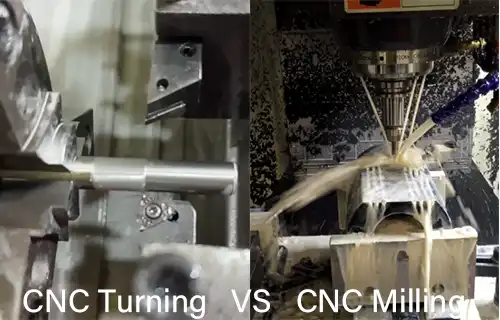
For prismatic forms with pockets, slots, and flat surfaces, CNC milling is the best method because it uses spinning cutters that move across fixed workpieces. CNC Turning is the most common way to make parts with central axes, like motor shafts or hydraulic pistons, because fixed tools can shape cylinder features while the workpiece is being turned. They work well together. For example, complicated parts are often started on a lathe to set the base sizes before being moved to a mill for cross-hole drilling or keyway cutting.
When you turn a cylinder, the surface finish is better than when you mill it because the constant circular action gets rid of the tool path transitions that leave marks. When making a lot of simple shapes, turning machines run faster because the moves that don't cut are shorter. Milling, on the other hand, is the best way to make parts with uneven features or many angled areas that can't be reached by tools that are positioned radially.
Automation Advantages Over Manual Lathe Work
The person using a manual lathe needs to know how to use hand wheels and levers to change the feed rates, depth of cut, and tool angles. As workers get tired or have different ideas about what the blueprints mean, measurements may change by 0.05 mm or more between batches. By running the same toolpaths over thousands of cycles, CNC systems get rid of human error, which is very important for car suppliers that make brake parts, because limits directly affect vehicle safety.
With CNC technology, setup times are cut down a lot. Instead of resetting mechanical stops and changing backlash compensation, you have to send a new G-code program when you want to switch from one part design to another. This adaptability works well for R&D teams that are making prototypes and contract makers who are handling small orders for a variety of clients. Manual lathes are still only cost-effective for one-time repairs or teaching settings where the time it takes to set up the machine is longer than the time it takes to cut the metal.
Grinding and Drilling as Complementary Processes
When you grind, an abrasive wheel contacts the workpiece and removes material. You can get surface finishes below Ra 0.4 and hold tolerances within ±0.005 mm on sharpened steels above 50 HRC. Using ceramic or CBN inserts, turning can finish-machine hardened materials, but grinding is better for the final size of bearing races or gauge blocks, where the accuracy of the measurement depends on the consistency of the surface. The process doesn't use much cutting force, so thin parts like precision pins or alignment dowels don't bend.
Drilling makes axial holes that are either straight across from or at an angle to the spindle plane. This is usually done as a second step after turning to set the outside sizes. To drill deep holes for gun barrels or coolant tubes, you need special tools and ways to get rid of chips that aren't possible with regular turns. As an example, a hydraulic valve body might go through turning for external threads, drilling for fluid ports, and grinding for sealing surfaces. This shows that the choice of process is based on specific needs rather than a general preference for betterness.
How to Choose the Right CNC Turning Solution for Your Business
Evaluating Production Requirements and Part Complexity
When defining lathe skills, procurement managers should look at yearly volume forecasts and the variability in the mix of parts. When you need to make more than 10,000 units a year, you should buy a CNC Turning solution like Swiss-type sliding-headstock machines that cut down on cycle time by cutting both the front and back ends at the same time. Standard 2-axis lathes with quick-change tooling are best for trial work or special orders of less than 100 pieces. This is because they save money on setup costs.
The difficulty of the part also affects the choice of machine. Simple bushings or spacers only need basic turning and facing operations, which can be done with simple tools. For parts with internal holes, cross-holes, and eccentric features, you need a 3-axis or turn-mill center with live tools and a Y-axis. We walk design engineers through manufacturability reviews, finding physical features that make production take longer or need special fittings. Then we suggest changes to the design that lower costs without sacrificing function.
Supplier Evaluation Beyond Price Quotations
Lead time response is what sets trading sellers apart from manufacturing partners. Our engineering team gives quotes within 24 hours and sends prototype samples within three to seven days. This gives product makers time to make sure the samples fit and work properly before committing to making the production tools. This speed is very important when releasing new models of equipment or reacting to problems in the field that need replacement parts right away.
When looking for precision parts, quality assurance infrastructure is more important than hourly cutting rates. Suppliers who can't check their products while they're being made may send out batches with mistakes that aren't found until they're put together and show problems like interference fits or leaks. We use statistical process control on important dimensions and change the offsets of the tools before the variations go beyond 50% of the tolerance bands. Material traceability using heat lot numbers and mill test reports makes sure that suppliers of medical devices or defense companies that are subject to regulatory checks are following the rules.
As much as machine accuracy, how well people communicate has a big effect on the success of a project. Engineers should talk directly to each other so that unclear drawing notes or vague finish standards are not misunderstood. Our team recently worked with a company that makes EV battery housings and used 3D modeling to find a problem with tolerance stack-up. They suggested a design change that got rid of the need for extra cutting and cut the cost of each piece by 18%. With this kind of proactive technology help, suppliers become development partners who do more than just fill purchase orders.
CNC Turning Procurement and Cost Considerations
Technical Specifications for Accurate Quoting
Complete technical paperwork is the first step in a successful CNC Turning buying process. Instead of using general alloy names that let lower grades be used, material requirements should link to industry standards, like ASTM B348 for titanium and AISI 304 for stainless steel. Every important part must have dimensional tolerances; general terms like "standard machining tolerances" lead to disagreements when the customer and the provider have different ideas about what they mean.
Both the choice of tools and the cycle time are affected by the surface finish standards. When you specify Ra 3.2, you can get higher feed rates and longer tool life than when you specify Ra 0.8, which means you have to make more closing passes. Thread callouts should include class fit designations and inspection criteria. For example, "M10 x 1.5 thread" is not as specific as "M10 x 1.5-6H thread per ISO 965-1, gauged with GO/NO-GO plug gauges." Giving 3D STEP files along with 2D drawings clears up any questions that might have about complex contours or blended radii that look fuzzy in orthographic views.
In CNC Turning, through setup depreciation, batch size has a big effect on unit price. It takes the same amount of programming and first-article review to make 10 pieces as it does to make 1,000 pieces. This means that for small sales, the cost per piece is higher because of these set costs. We set our prices so that economies of scale work out, but we also make sure that prototype numbers are still possible. This is because we know that today's 25-piece development order could turn into regular production volumes once plans are finalized and production starts up.
Identifying Reliable Contract Manufacturing Partners
There are many online markets full of machining sellers, but checking their claims of capability takes more than just looking at their website portfolios. Ask for process capability studies that show Cpk values above 1.33 for tolerance-critical dimensions. This will show how well the provider centers the process and controls variation. Ask for customer references from people in the same business as you. For example, a shop that does great work with parts for farm equipment might not have the strict paperwork requirements that pharmaceutical clients need.
Lead time promises should take into account how long it really takes to get materials and wait in line. Promises of three-day delivery on rare metals like Inconel 718 show either a risk of stock gambling or a lack of knowledge about how the supply chain really works. We keep a smart stock of popular grades like aluminum 6061 and stainless 304, and we let clients know about longer lead times when projects call for titanium or PEEK, which need to be ordered from a source.
Quality dispute settlement methods show how honest a provider is. If you report a problem within 30 days, our policy covers the costs of remanufacturing it, and we'll pay to ship you new parts within a week. When compared to sellers who charge return fees or argue dimensional reports without giving countermeasures, this promise lowers the risk of procurement. Clear problem-solving builds trust, which makes customers more likely to share output forecasts and combine their supplier bases.
Future Outlook and Trends in CNC Turning
Integration of Smart Manufacturing Technologies
IoT-enabled sensors now keep an eye on spindle shaking, cutting force, and tool temperature in real time. They send this information to cloud analytics platforms, which use it to predict when a tool will break before it loses its shape. This proactive approach to maintenance in the CNC Turning sector cuts unexpected downtime by 35% compared to reactive approaches that only fix problems after they happen. When the material's hardness changes, adaptive control systems change the feed rates automatically. This keeps the chip loads constant, which improves tool life and surface finish quality.
Machine learning systems look at past production data to figure out what the best cutting settings are for new part shapes. Instead of depending on machinists' knowledge or values from a manual, these systems connect material grades, tool coatings, and coolant strategies to outcomes like cycle time and tool wear rates that can be observed. Early users say that AI-driven recommendations improve throughput by 20% and cut tooling costs by 15%. This is because the suggestions work better than the usual methods.
Growing Demand Across Strategic Sectors
Aerospace companies are asking for more and more turned parts for UAV power systems and tools for deploying satellites. Titanium and Inconel are good choices for these parts because they are lightweight and don't rust. As medical devices get better, they need smaller and smaller turned parts for things like surgery robots and implantable sensors. These parts must have tolerances of less than ±0.01 mm and be made of safe materials that have been approved by the FDA.
The output of electric vehicles is growing very quickly, which is good for companies that make battery thermal control parts, motor shaft kits, and charge connector housings. These apps focus on high-volume repeatability and just-in-time delivery, which are in line with the concepts of lean production in the automotive industry. Builders of automation equipment need custom-turned parts for precision bearings, rotary unions, and linear motors so that next-generation industrial robots can handle fragile electronic circuits.
Problems with workforce development still exist because experienced machinists leave faster than new graduates from trade schools can replace them. By partnering with community schools and investing in apprenticeship programs, businesses can be sure to have access to skilled workers who know how to use both traditional and digital production tools. Companies that train expert staff and improve their tools become chosen suppliers that can handle precision turning projects that get more complicated.
Conclusion
For the production of cylindrical parts in a variety of businesses, CNC Turning offers unmatched accuracy, consistency, and speed. Its automation benefits over human methods, along with its abilities that work well with milling and grinding, make it an essential tool for modern production. For procurement to go well, there needs to be clear technical communication, reasonable lead time standards, and partnerships with providers who offer strong quality systems and engineering support. As smart manufacturing technologies and sector-specific demand change, companies that carefully invest in advanced turning skills and train their employees will remain ahead of the competition when it comes to making precision parts that meet strict performance standards.
FAQ
What materials work best with CNC turning processes?
CNC Turning lathes can work with a lot of different types of materials, such as aluminum alloys, stainless steels, titanium, brass, industrial plastics, and composites. Aluminum is great for making electronic housings because it is easy to shape and keeps heat in. Grades of stainless steel like 304 and 316L don't rust, which makes them useful for medical and naval uses. Titanium is good for aircraft parts that need to be strong but light. Because it is easy to machine and kills germs, brass is perfect for fluid control parts. Engineering plastics like PEEK and Delrin are used in places where chemical protection or electrical insulation is needed. The choice of material is based on its mechanical properties, how it will be used, and any legal standards that are specific to the purpose.
How does CNC turning achieve tighter tolerances than manual methods?
Computer numerical control gets rid of human error by using pre-programmed toolpaths that are carried out with servo-driven accuracy. Closed-loop feedback systems compare the real position of the tool to the numbers that were given, and they fix any differences within microseconds. Thermal correction methods take into account how much the machine expands during long production runs. As cutting edges wear down, automated tool measurement systems change the angles. This keeps the sizes of thousands of parts the same. This methodical approach gives repeatability within ±0.002 mm, whereas manual methods have errors of more than ±0.05 mm due to operator fatigue and subjective measurements. This is especially important for aerospace and medical device parts where dimensional accuracy directly affects safety and regulatory compliance.
What factors influence CNC turning service pricing?
Programming time and tooling needs are affected by how complicated the part is. For example, simple bushings are cheaper than parts with multiple thread types and strict concentricity requirements. Choosing the right material affects both the price of raw materials and the conditions for cutting. For example, titanium needs special tools and slower speeds than aluminum. The size of the batch spreads the setup costs out over more units. For example, making 1,000 pieces spreads fixed costs out better than making 10 prototypes. Cycle time is based on the surface finish and the limits that need to be met. For example, to get a Ra of 0.8 with ±0.01 mm margins, more finishing passes are needed. Adding process steps is done by secondary actions such as sewing, knurling, or passivation. Lead time urgency may result in extra fees for booking production outside of normal business hours.
Partner With RYH for Expert CNC Turning Solutions
RYH can handle even the most difficult CNC Turning jobs because they have been doing them for 16 years. Each of our engineers has more than 15 years of technical experience. They work directly with your design team to make sure the product can be made, suggest materials, and solve any spec problems before production starts. We run 15 cutting-edge CNC Turning and turning-milling machines that can work with industrial plastics, titanium, stainless steel, and aluminum in small batches or in large batches. Material checking with a spectrometer, in-process CMM testing, and quality paperwork that meets ISO 9001 standards are all good for every project. We can quote you within 24 hours and send you samples within a week, whether you need threaded hydraulic fittings, precision bushings, or complex turned parts. As a reliable CNC Turning maker, we offer door-to-door global shipping and remanufacturing support to make sure quality. Get in touch with bill@bldmachining.com right away to talk about how our engineering-driven method can turn your drawings into precision-turned parts that go above and beyond your goals.
References
1. Kalpakjian, S., & Schmid, S. R. (2014). Manufacturing Engineering and Technology (7th ed.). Pearson Education.
2. Groover, M. P. (2020). Fundamentals of Modern Manufacturing: Materials, Processes, and Systems (7th ed.). John Wiley & Sons.
3. Society of Manufacturing Engineers. (2016). Tool and Manufacturing Engineers Handbook: Machining (Volume 1). SME Publishing.
4. Tlusty, J., & Smith, S. (2018). Advanced Machining Processes: Innovative Modeling Techniques. CRC Press.
5. American Society of Mechanical Engineers. (2019). ASME B1.1-2019: Unified Inch Screw Threads. ASME Standards.
6. International Organization for Standardization. (2017). ISO 1101:2017 – Geometrical Product Specifications (GPS). ISO Standards Catalogue.