Type II vs Type III Anodizing for CNC Machined Parts
1.The Origin of Type II vs Type III Anodizing for CNC Machined Parts
Anodizing is one of the most common surface treatments for CNC machined aluminum parts. By creating a controlled oxide layer on the aluminum surface, anodizing improves corrosion resistance, surface hardness, and appearance.
According to different performance requirements, anodizing is mainly divided into Type II anodizing and Type III hard anodizing.
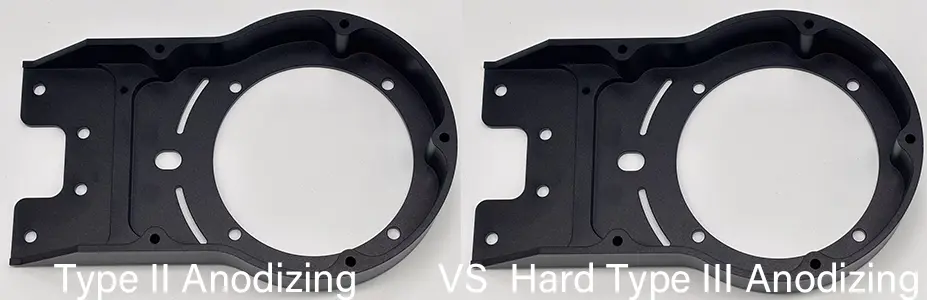
Type II anodizing for CNC Machined Aluminum Parts was developed as a general-purpose aluminum finishing process. It provides good corrosion protection, stable appearance, and excellent color options, making it widely used for CNC machined housings, covers, and precision aluminum components.
Type III anodizing, also known as hard anodizing, was developed for applications requiring higher wear resistance and thicker oxide layers. Compared with Type II, it provides a harder and more durable surface for mechanical components exposed to friction or harsh environments.
For CNC machining manufacturers, selecting the correct anodizing type is an important part of aluminum part design and manufacturing.
2. Difference Between Type II and Type III Anodizing for CNC Machined Aluminum Parts
The main difference between Type II and Type III anodizing is the thickness, hardness, and application requirements of the oxide layer.From the appearance and color, it is difficult to distinguish between Type II anodized and Type III hard anodized CNC machined aluminum parts.
For CNC machined aluminum parts, Type II anodizing normally produces an oxide layer around 5–25 μm. It provides excellent corrosion resistance and maintains good dimensional stability, making it suitable for most aluminum components.
Type III hard anodizing creates a much thicker oxide layer, usually around 25–70 μm. The thicker coating significantly improves wear resistance and surface hardness, which is important for mechanical parts requiring long service life.
However, thicker anodizing also requires engineers to consider dimensional changes before CNC machining. Since the oxide layer grows both inward and outward from the original aluminum surface, critical dimensions should be carefully controlled during the machining process.
Another important difference is color selection.
Based on RYH's experience with CNC machined aluminum parts, Type II anodizing provides many color choices, including black, red, blue, gold, and other customized colors.
However, Type III hard anodizing of CNC Machined Parts has more limitations due to its thicker oxide structure. In practical production, the most common Type III colors are:
· Black
· Silver
· Natural aluminum color
These colors are widely selected for industrial components where performance is more important than decorative appearance.
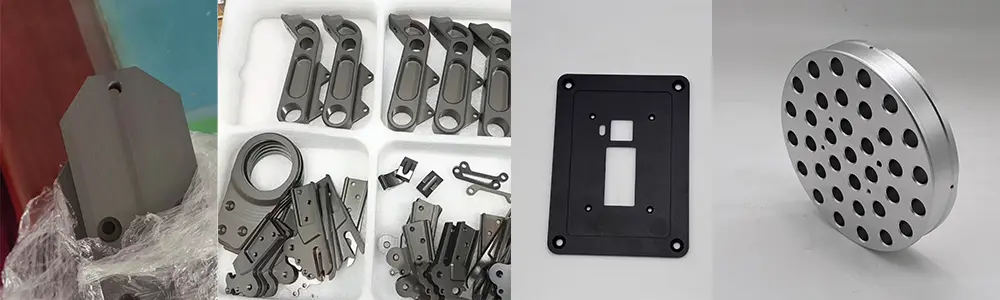
3. Why Some CNC Machined Aluminum Parts Require Type III Instead of Type II Anodizing?
When engineers select anodizing for CNC machined aluminum parts, the decision should not only consider appearance. The working environment, contact conditions, and expected service life are also important factors.
Type II anodizing of CNC Machined Parts is suitable for general aluminum components that require corrosion protection and attractive appearance. However, for mechanical parts exposed to continuous friction, impact, or harsh environments, Type II may not provide enough surface protection.
This is where Type III hard anodizing becomes a better choice.
The main advantage of Type III hard anodizing is its excellent wear resistance. The thicker oxide layer creates a harder surface that can reduce surface damage caused by repeated contact and movement.
Typical applications include:
1. Industrial Equipment Components
Many industrial machines contain aluminum parts that frequently contact other components. Hard anodizing helps improve durability and reduce maintenance frequency.
2. Precision Mechanical Components
For CNC machined aluminum parts with sliding surfaces, positioning surfaces, or repeated assembly requirements, Type III provides better long-term stability.
3. Robotics Components
Robotic systems often require lightweight aluminum structures with high durability. Hard anodized aluminum parts can maintain surface performance during continuous movement.
4. Fixtures and Tooling Parts
Manufacturing fixtures and tooling components may experience repeated clamping and friction. Type III hard anodizing helps extend their working life.
At Shenzhen Ruiyihang Technology Co., Ltd (RYH), we focus on precision CNC machining of aluminum components. We are not an anodizing factory, but we work with experienced finishing partners to provide suitable surface treatment solutions after machining.
Our process focuses on:
· CNC machining accuracy
· dimensional control before anodizing
· surface preparation
· communication with anodizing suppliers
· final quality inspection
Both Type II anodizing and Type III hard anodizing will slightly affect the final dimensions of CNC machined aluminum parts, and the dimensional impact is different between the two processes. Therefore, RYH considers anodizing requirements during the CNC machining stage to ensure the final anodized parts meet the required tolerances.
Choosing the correct anodizing type is not only a surface finishing decision. It is part of the complete CNC aluminum manufacturing process.