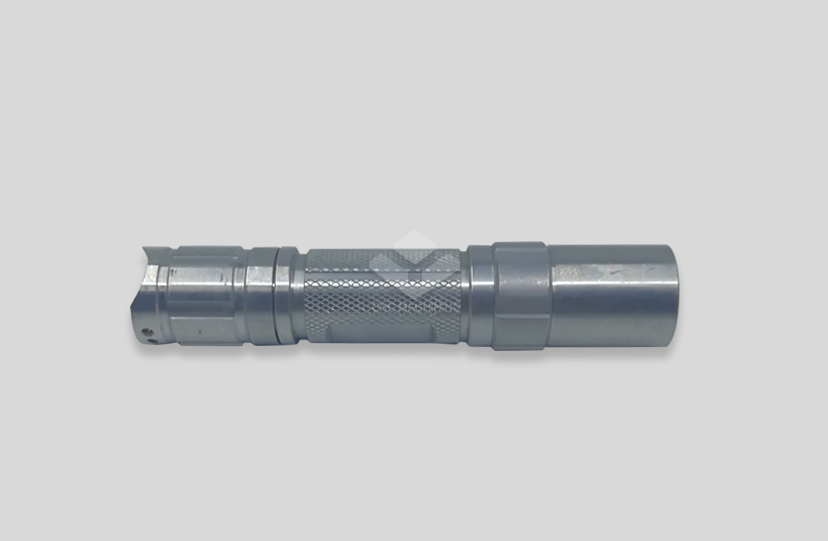
When is CNC Swiss Screw Machining Right?
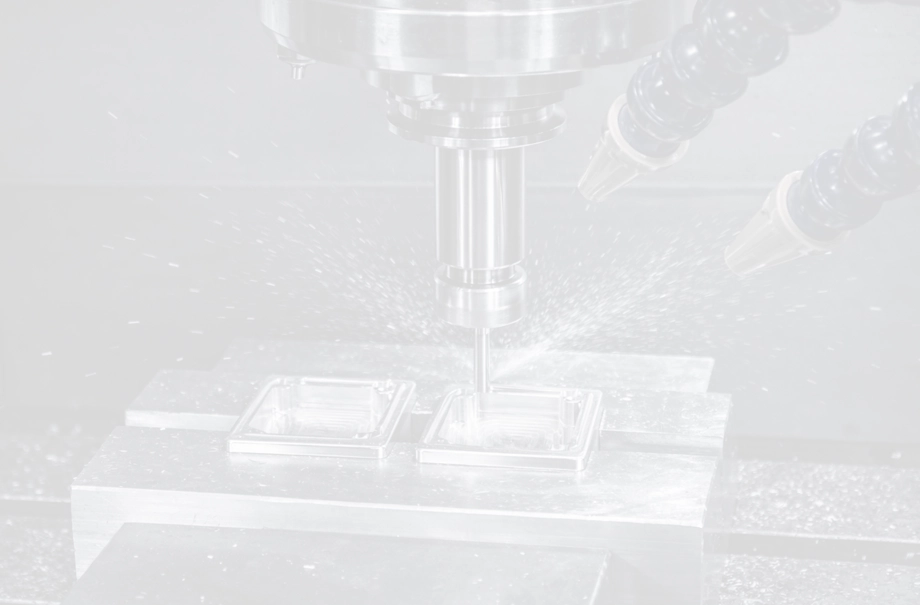
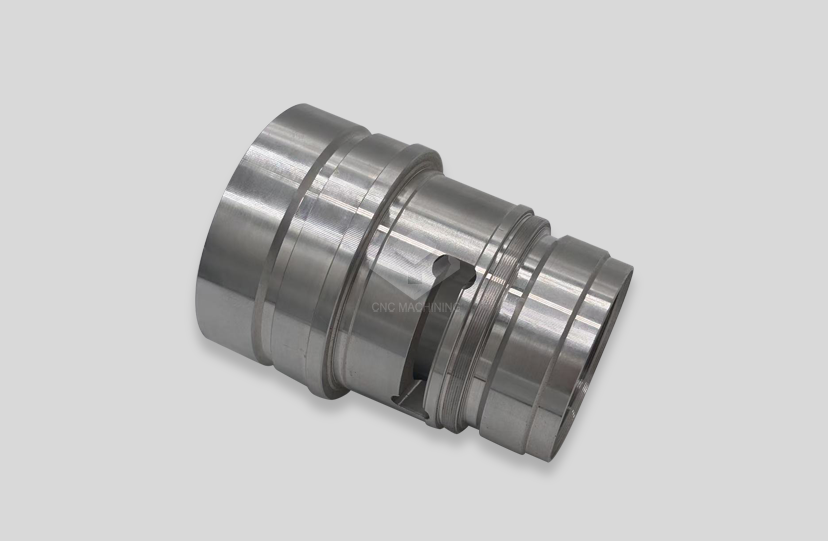
When your project needs precise parts with diameters usually less than 25 mm, tight tolerances up to ±0.01 mm, and great surface finishes, CNC Swiss screw machining is the way to go. This unique method works especially well for making small, complicated parts that need to be accurately measured and made over and over again. Swiss Machining works best in fields like aircraft, medical devices, electronics, and equipment where quality standards and complicated parts are important. When traditional turning can't get the job done precisely or when you need stable batch stability across hundreds or thousands of similar small-diameter parts, this way makes sense.
Understanding CNC Swiss Screw Machining
What makes Swiss turning different from other types of CNC machining is how the workpiece moves while it is being cut. The cutting tool moves while the subject stays still in standard machining. In Swiss-type lathes, the opposite is true: the material slides through a guide bushing that is close to the cutting zone, and several tools work at the same time from different angles.
How Does Sliding Headstock Technology Work?
The guide bushing is only a few millimetres away from the cutting tool and holds the piece in place right where the cutting takes place. This closeness greatly lowers shaking and bending, which is especially important when working with thin parts. The headstock keeps pushing material through the bushing, which lets the machine stay precise even on parts with length-to-diameter ratios higher than 10:1. With this setup, cutting tasks are possible that would chatter or deform on a normal lathe.
Material Compatibility and Tolerance Capabilities
Swiss-type CNC lathes can work with a wide range of materials, such as brass, aluminium 6061, titanium alloys, stainless steel SS316, and special engineering plastics. Each material has its own properties. For example, stainless steel needs coolant to run properly and tools to be very sharp. Brass, on the other hand, machines smoothly with little tool wear. We regularly get limits of ±0.01 mm on stainless steel parts, and the surface roughness stays below Ra 0.8 μm. These skills come from the fact that Swiss tools are set up rigidly and provide a controlled cutting environment.

Material Selection Considerations
The procurement teams have to match the qualities of the materials to the needs of the applications. SS316 stainless steel is very resistant to rust, which is important for medical implants and naval uses. Aluminium is used in aircraft parts because it has a good strength-to-weight ratio. Because it conducts electricity well and is easy to work with, brass is still often used for electrical connectors. When it comes to mechanical qualities, legal compliance, and cost, our research team talks directly with clients to suggest the best materials.
Benefits and Applications of Swiss Screw Machining
When you look at how well and how quickly something is made, you can see the benefits of Swiss turning. This method gives real benefits that translate straight into lower costs and better product performance in a number of areas.
Precision and Surface Quality Advantages
Standard lathes have a hard time making things that are the same size all the way through, but Swiss machines can. The guide bushing support system keeps the accuracy of the cut throughout the cutting process by limiting the movement of the workpiece. Using more than one tool at the same time cuts down on cycle time and improves the alignment of features. Our clients in the medical device industry really like the smooth surfaces that can be made without having to do extra polishing. Parts come out of the machine that meet strict requirements for surgical instruments and implantable devices.
Industry-Specific Applications
Swiss-machined parts are used by companies that make medical equipment for things like catheter systems, bone screws, and tooth implant abutments that need to be biocompatible and accurate, and for Swiss Machining, this precision process also serves aerospace bushings, pins, and gear components with tight tolerances and traceability, electronics housing parts, standoffs, and connector pins with accurate threads and smooth finishes, and automotive fuel injection parts, sensor housings, and gearbox components where consistency across thousands of units is critical. Aerospace manufacturers get bushings, pins, and gear parts that need to be made with tight standards and be able to be tracked. Companies that make electronics need housing parts, standoffs, and connecting pins with accurate threads and smooth finishes. Swiss-turned fuel injection parts, sensor housings, and gearbox parts are used in automotive systems where consistency is important across thousands of units.
Comparison with Traditional CNC Methods
Traditional CNC turning works well for parts with larger diameters and easier shapes, but it has trouble with parts that are too thin. Because the sliding headstock doesn't need tailstock support or steady rests, Swiss Machining cuts down on setup time. Being able to do multiple operations at once, like turning, cutting, threading, and knurling, without having to move the part around, makes it easier to use and more accurate. When making complex small parts, cycle times are 30–50% shorter than with traditional methods.

When to Choose CNC Swiss Screw Machining: Decision Factors?
To make the right manufacturing choice, you need to look at a number of linked factors that affect both the technical and financial success of the idea. When procurement workers understand these factors, they can choose the best process for their needs.
Part Geometry and Size Requirements
Swiss Machining works well with parts that have widths between 0.5 mm and about 25 mm. Our machines can handle parts in this size range easily. This method works best for parts that have many different sizes, exact grooves, fine threads, or complicated shapes running along their length. Swiss machines with multiple axes can make parts that need holes that aren't in the center, cross-drilling, or complex milling operations. On the other hand, conventional equipment may be a better way to process parts with larger diameters or few features.
Production Volume Considerations
Swiss turning is useful in a number of different production situations. Single-setup and quick turnaround are great for prototyping. We can usually finish sample production within a week, and for simple designs, it can happen as quickly as three days. Due to less setup and handling time, small batch production runs of 50 to 500 pieces are more cost-effective than traditional ways. The stability and repeatability that Swiss tools offer are used in high-volume production to make sure that every thousandth part fits the first part within micron-level tolerances.
Cost and Lead Time Analysis
The costs to set up Swiss Machining may be higher than those for conventional turning at first, but the costs per piece drop a lot as more are made. Being able to finish parts in one step gets rid of the need for extra steps and the costs that come with them. Because there are fewer processes, scheduling is easier, and there is less work-in-process material, which shortens lead times. During the quotation process, our engineering team does Design for Manufacturability (DFM) research to find ways to improve designs that lower costs and shorten production times.
Quality and Performance Standards
In some situations, the level of accuracy that can only be reliably provided by Swiss Machining is needed. Our ISO 9001-certified methods help make medical device parts that need materials that are FDA-approved and quality control records. Coordinate measuring machines (CMM) give full inspection reports with dimension data to aerospace applications that need material certifications and full traceability. Our quality method includes checking the materials that come in, using micrometres and optical devices to check the work as it's being done, and doing one last check before sending the goods out.
Comparison of Swiss Machining Services and Providers
Choosing the right manufacturing partner has a big effect on the success of the project in more ways than one. How quickly production goes and how well problems are solved depends on how well procurement teams work with their sources.
Evaluating Technical Capabilities
Six Swiss-type CNC lathes are used at our plant to make precise parts out of aluminium and stainless steel, and for Swiss Machining, these multi-axis machines can produce complex geometries without repositioning, but the equipment's capability depends on the skill of the operators—our experienced machinists bring over 12 years of precision part experience to every project, and we offer comprehensive component solutions by adding secondary operations like deburring, polishing, passivation, anodising, and sanding to our machining services. With their many axes, these tools can make complicated shapes without having to move parts around. It doesn't matter how good the equipment is as long as the people who are using it are skilled. Our skilled machinists bring over 12 years of experience making precise parts to every project. We offer full component solutions by adding secondary operations like deburring, polishing, passivation, anodising, and sanding to our machining services.
Communication and Engineering Support
When you have direct access to factory experts, you can avoid the misunderstandings that lead to mistakes in design and production delays. Our customers talk to the technicians who set up jobs and program machines directly. This openness lets people quickly figure out how to solve problems and make designs that work best with the limitations of manufacturing. We let procurement teams see how parts are being machined through photos and videos, which boosts their trust in process control and quality oversight.
Support for Emerging Companies
Established suppliers don't always want to work with new companies or engineering teams. We are always looking for ways to work together with new businesses, because we know that today's small order for a sample could turn into tomorrow's production deal. Our expert help goes beyond manufacturing and includes suggestions for materials, advice on how to improve tolerances, and comments on structural design. New businesses can get their products on the market quickly with the help of quick responses and flexible minimum order quantities.
Value-Added Services
In addition to cutting metal, we offer services that make buying things easier and shorten the time it takes to finish a project. As part of global logistics support, small items can be shipped from door to door, which takes away the need to coordinate foreign freight. Our remanufacturing promise covers any quality problems that are reported within the same month. We'll pay to ship new parts for defective parts within one week. When needed, shipments come with material certifications, dimensional inspection reports, and compliance paperwork.
Technical Aspects and Specifications to Consider

When buying professionals know the technical details that define Swiss Machining's capabilities, they can more accurately describe what they need and evaluate source quotes. These specs have a direct effect on both the quality of the part and the cost of making it.
Tolerance Standards and Capabilities
Standard tolerances for Swiss-machined parts are usually ±0.02 mm for aluminium and ±0.01 mm for stainless steel, but tighter control can be achieved when needed. We use ISO 2768 middle grade as a starting point unless the customer's models show stricter needs. Calibrated micrometres, bore gauges and pin gauges are used to check all critical dimensions one hundred percent of the time. For first-article inspection and statistical process control during production runs, CMM inspection gives full measurement proof.
Surface Finish Specifications
Our Swiss-turned parts have surface finishes that are as-machined and get Ra 0.8 μm on stainless steel and Ra 1.6 μm on aluminium without any extra work being done. For better results, polishing is needed, and we do that here at our shop for important areas. Surface roughness affects both how it looks and how well it works. Smoother finishes make moving parts less likely to stick together and make them less likely to rust. Before they are anodised, aluminium parts are sandblasted to make the surface texture uniform and help the coating stick better.
Machine Operating Parameters
Spindle speeds on Swiss lathes can reach 10,000 RPM, which makes it easy to cut small diameters and finish the surface to a high standard. Feed rates change depending on the hardness of the material and the finish quality that is wanted. For example, to keep the work from getting too hard, stainless steel needs slower feeds than brass. Choice of tool affects both the quality of the part and the cost of production. In production runs, carbide plates make tools last longer, but high-speed steel tools are better for making samples because they are more flexible. To find the best balance between quality and speed, our engineers tweak the cutting parameters based on the properties of the material and the complexity of the shape.
Drawing Format and Documentation
We can read expert models that are saved as PDF, DWG, STEP, or IGS files. When compared to 2D drawings alone, three-dimensional CAD models allow for more accurate programming and fewer mistakes in interpretation. Full paperwork should list the type of material, the required surface finish, the most important measurements with their respective limits, and any unique inspection or certification needs. Before giving a quote, our team looks over the drawings to make sure they can be manufactured. They look for potential problems and suggest changes that make production more efficient without affecting the function of the part.
Conclusion
In conclusion, for projects that need small, precise parts with great surface quality and accuracy in their dimensions, Swiss screw machining is the best way to make them. This unique process is useful because it cuts down on cycle times, improves consistency, and lets you make complex geometries in just one setup. Picking the right tools and working with seasoned suppliers who offer engineering help during the whole design and production process are both important for success. Understanding when Swiss Machining is better than other methods helps buying teams make smart choices that combine quality needs with cost and delivery concerns.
FAQ
What size range is suitable for Swiss machining?
Swiss-type lathes are great for making parts with small diameters, usually between 0.5 mm and 25 mm. Our machines can work with parts in this size range and make parts that are very accurate and can be used over and over again. Most of the time, larger diameter parts are cheaper to machine on regular CNC lathes.
What are the advantages of Swiss machining over conventional turning?
Swiss turning supports the item better while it's being cut, which lowers shaking and deflection. Tighter tolerances, better surface finishes, and great stability in dimensions across production runs are all possible with this setup. Using multiple tools at the same time cuts down on cycle time compared to standard lathes where tasks are done one after the other.
How do you achieve high precision in Swiss machining?
The guide nut keeps the material close to the cutting zone, which improves accuracy by reducing displacement. Setting up the machine rigidly, using the best cutting settings, and keeping the surroundings under control all make accuracy even better. As part of our quality system, we check parts as they are being made and again before they are shipped to make sure they meet the requirements.
Why use aluminum for Swiss machining?
Aluminium works well when it's machined at high speeds, which lets small, precise parts be made quickly. This material has a great strength-to-weight ratio that is useful in technology and aircraft. Aluminium can have different surface processes, such as anodising, which makes it look better and make it less likely to rust while keeping the dimensions tight.
Why is brass suitable for Swiss machining?
Brass is cheap for making small, precise parts because it cuts easily and doesn't wear down tools quickly. The naturally lubricating nature of the material lowers cutting forces and lets you get fine surface finishes without having to do any extra work. Brass is great for making connectors and instrumentation parts because it is good at conducting electricity and doesn't rust.
Partner with RYH for Expert Swiss Machining Solutions
Precision Swiss Machining services from RYH are backed by technical knowledge and quality security that manufacturing workers can trust. Our six Swiss-type CNC lathes are experts at making parts out of stainless steel SS316 and aluminium 6061 that are up to 25 mm in diameter and have surface finishes below Ra 0.8 μm. They can hold tolerances of ±0.01 mm. Talking to our experienced engineers—who have worked in precision cutting for an average of 15 years—directly will make sure that your ideas are best for production before they start. We help with projects from rapid prototyping (samples in 3–7 days) to mass production, and we always follow ISO 9001 quality standards. Seeing how the process is going through photos and videos of machining gives you confidence in the control of the process. Our technical team offers useful solutions that are tailored to your needs, whether you're a well-known maker or a new company making innovative goods. You can talk to our engineering team about your project at bill@bldmachining.com, or you can go to ryhkj.aixdb.cn to find out how working with a dedicated Swiss Machining source can help you make better products faster.
References
1. Swiss Machining Technology Institute. Precision Tolerances in Swiss-Type CNC Turning: Standards and Best Practices. Journal of Manufacturing Engineering, 2022.
2. American Society of Mechanical Engineers. Material Selection Guide for Medical Device Components: Stainless Steel and Titanium Applications. ASME Technical Publication, 2021.
3. National Institute of Standards and Technology. Surface Roughness Measurement Standards for Precision Machining. NIST Manufacturing Extension Partnership, 2023.
4. International Organization for Standardization. ISO 2768: General Tolerances for Linear and Angular Dimensions. ISO Standards Catalogue, 2020.
5. Society of Manufacturing Engineers. Comparative Analysis of Swiss Turning versus Conventional CNC Machining. SME Manufacturing Technology Series, 2022.
6. Aerospace Industries Association. Quality Control Requirements for Precision Components in Aerospace Applications. AIA Industry Standards Document, 2021.